4 min read


© The Indian Express Pvt Ltd



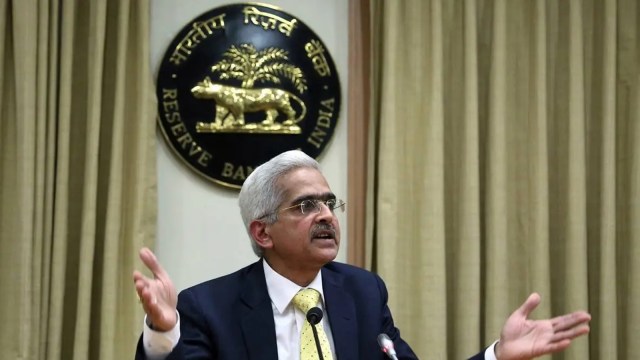 RBI Governor Shaktikanta Das
 Reserve Bank of India Governor Shaktikanta Das on Thursday said the central bank has shared a whitelist of lending apps with the Centre. The Union IT Ministry is expected to soon take action against illegal loan apps that are not on the list, The Indian Express has learnt.
In a two-part investigation published on November 20-21, The Indian Express had reported how dubious loan apps advertise on Instagram and Facebook, and, despite whatever filters the platforms claim to use, many such apps, including those red-flagged by the government, continue to offer their services. It had also reported that the RBI initially did not have a whitelist of registered loan apps, or even a negative list which is updated.
Speaking at the Mint BFSI Summit and Awards on Thursday, Das said the RBI had collected a list of loan apps from its regulated entities — banks and NBFCs — and given it to the Ministry of Electronics and IT.
“But, the problem is with illegal lending apps. We have already shared a list with the government. Whenever we come across any further problem, we give it to the government and there is active engagement between the RBI and concerned ministries of the government and law enforcement agencies. Coordination meetings are held regularly between these agencies to take appropriate measures against illegal lending apps,” Das said.
A senior IT Ministry official confirmed that the RBI had sent a list of “valid” lending apps. “The RBI has been working on a list of valid lending apps for a while, but has sent us a new list of loan apps that are being used by registered entities like banks and NBFCs after your report came out. We will take action accordingly,” the official told The Indian Express.
Over the years, fraudulent firms have mushroomed on the back of rapid growth in digital lending. While there are no official estimates, industry players said the illegal lending market could be at least $700-800 million. The Indian Express has reported around a dozen cases since 2020, where some of those caught in the trap of illegal loan apps had allegedly died by suicide.
The RBI’s action comes as the IT Ministry — prompted by The Indian Express investigation — last month directed social media platforms to take “additional measures” to ensure that they don’t host advertisements of fraudulent loan apps, warning that the “consequences” will be the “sole responsibility” of such intermediaries/ platforms.
In an advisory issued to online platforms like Meta’s Facebook and Instagram, and Google, the ministry had asked them to ensure compliance within seven days. “The IT Ministry has been discussing the issue for several months with the RBI, but we have recently intensified our effort to find a solution to this problem,” Minister of State for Electronics and IT Rajeev Chandrasekhar had said at the time of issuing the advisory in December.
The IT Ministry is also learnt to be preparing a course of action to deal with the menace of illegal loan apps. Last October, it had suggested that the RBI could design detailed know-your-customer (KYC) norms for lending apps, similar to the process that users have to follow before opening a bank account, in a process called Know Your Digital Finance App (KYDFA).
Last November, Banking Secretary Vivek Joshi had chaired a meeting with government stakeholders where it was decided, for the second time, that a whitelisting of digital lending apps will be done after consultation with relevant stakeholders.
As part of a months’ long investigation into dubious loan apps, The Indian Express had spoken to a range of stakeholders including borrowers, fintech intermediaries, government functionaries, big tech companies and former RBI officials.
A number of victims caught in the crosshairs of these apps pointed towards a common narrative: In the absence of any government and regulatory norms, online platforms carry out little due diligence, letting fraudsters openly advertise predatory loan apps.