2 min read
© IE Online Media Services Pvt Ltd



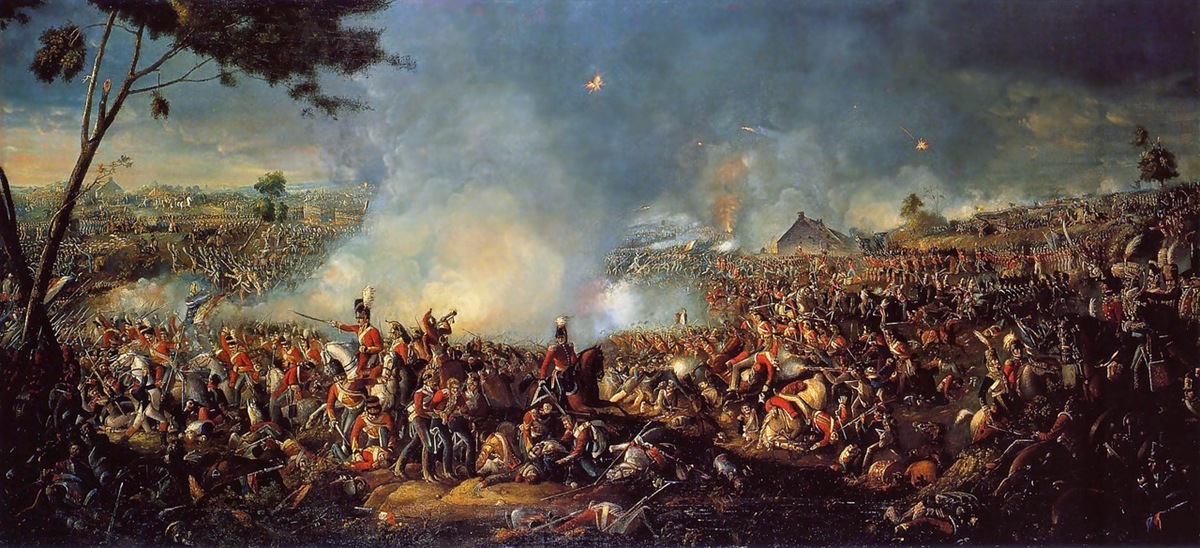 Battle of Waterloo by William Sadler. WikiMedia Commons
The Bihar election is long over. But what brings me to it is one of the headlines that still lingers in the memory. ‘Modi will meet his Waterloo in Bihar’ did not catch my attention for its novelty or flair. That the reporter attributed it to RJD chief Lalu Prasad was an eye opener. Well, nothing personal but that sent me on a hunt going to the root of the battle that has given English a few idiomatic expressions.
The Battle of Waterloo was fought between British under the Duke of Wellington and Prussians on the one hand and the army of Napoleon Bonaparte on the other. Waged in Waterloo in present day Belgium on 18 June 1815, it ended the winning spree of Napoleon and proved a watershed in the history of Europe. A few days after his defeat, Napoleon was arrested and exiled to St Helena.
‘Battle of Waterloo’, therefore, refers to a fierce battle fought in close combat between armies in predetermined positions as it happened in 1815. To ‘meet one’s Waterloo’ implies an end to someone’s dominant position, an end to a winning spree or a decisive moment changing the course of events.
Author Arthur Conan Doyle, was the first to refer to someone meeting their Waterloo, in Return of Sherlock Holmes, 1905: “We have not yet met our Waterloo, Watson, but this is our Marengo.” This refers to the Battle of Marengo in Italy in which Napoleon’s forces were surprised by an Austrian attack and came close to defeat.
An interesting expression which still defies consensus as to its actual implication is “the Battle of Waterloo was won on the playing fields of Eton”. Attributed to Duke of Wellington, himself an Etonian, it signifies the importance of sports and discipline in enabling someone to achieve rare feats. To some, it also suggests to describe the privileged environment of elite private schools in the UK and the US.
As for Lalu Prasad’s words, we will keep our fingers crossed.