
Opinion Whose Ambedkar
Those who stake claim over his legacy must first acknowledge its radical and transformative content



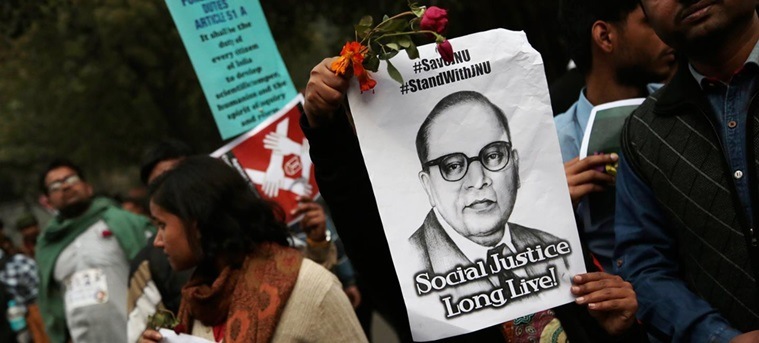 Photo for representational purpose
During his long battle against inequality and injustice, Babasaheb Ambedkar found himself alone in many difficult moments. But on his 125th birth anniversary today, there are several claims of ownership of his legacy. Not just Dalits, but even those who had an uneven relationship with him on the political right, left and centre, now compete to champion, and appropriate, Ambedkar. To the extent that it promises to bring his politics and his ideals alive, this contest is welcome.
Most recently, the suicide of Rohith Vemula on the Hyderabad Central University campus has revived a national conversation on unresolved Dalit issues and concerns.

At the heart of this discussion is a question: Is the Indian state and society responsive to the oppression Dalits continue to face more than six decades after the nation adopted Ambedkar’s Constitution? There is enough evidence to suggest that intolerably high levels of discrimination persist in governance structures and educational institutions.
Institutional remedies are often ignored or flouted. For Ambedkar, the principle of democratic practice was not limited to one man, one vote — it was also one value. A national imagination that is still constrained and limited by the lines etched by caste hierarchy continues to turn a blind eye to Ambedkar’s axiom of democracy.
There is a national consensus on the necessity of a programme of affirmative action for the uplift of Dalits, but at the same time, affirmative action has been reduced to negotiations over quotas. Rather than progress towards the transcending of caste, political parties seem to be further hardening caste identities to win office.
Caste was not meant to be a virtuous value in the “Prabuddha Bharat” Ambedkar imagined, but a marker of discrimination that needed to be softened and erased through state intervention.
For long, the Congress, by virtue of its invitation to Ambedkar to chair the Constitution Drafting Committee and become the law minister in Prime Minister Nehru’s cabinet, has sought the loyalty of his followers. But the politicisation of Dalits, another of Ambedkar’s achievements, has now forced other parties too to address and respond to this electorally influential constituency. Engaging with Ambedkar must be about recognising the historical infirmity of caste inequality and framing remedies. The competition for Ambedkar’s legacy, hopefully, will be a move in this direction.
 Share
Share


