
Opinion Evolving ties
Changing geopolitical circumstances and economic interests have brought India-UAE relations a long way
 PM Modi with the Crown Prince of Abu Dhabi



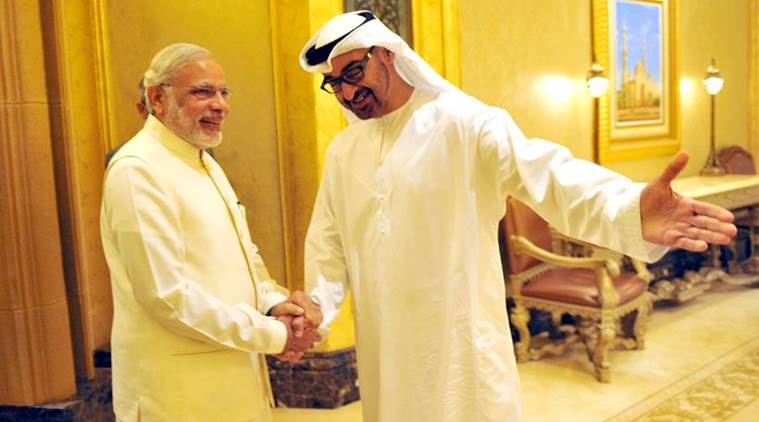 PM Modi with the Crown Prince of Abu Dhabi.
For eight hours on Christmas Day in 1999, as India’s government pleaded, Sheikh Zayed bin Sultan Al Nahyan’s regime, just one of two in the world that had diplomatic relations with the Taliban, stoically refused to do anything to stop Indian Airlines flight IC-814 and the terrorists who had hijacked it from flying on to Kandahar. There would be no effort to disable the aircraft, no commando operation; India’s ambassador to the United Arab Emirates was not even allowed inside the military base where the aircraft had landed. It is a testament to how much the wheels of history have moved that Al Nahyan’s grandson, Sheikh Mohammad bin Zayed Al Nahyan, was India’s guest of honour on Republic Day.
The India-UAE joint statement issued on Thursday assails entities and states which “use religion to sustain and sponsor terrorism against other countries”, and called on government to “control the activities of the so-called non-state actors”. There was condemnation, too, of the efforts of some countries to give “religious and sectarian colour to political issues”.

The UAE’s embrace of this position is driven not from pious principle, but fraught geopolitical circumstances. Across the Persian Gulf, regional power Iran has repeatedly threatened to close the Straits of Hormuz should conflict break out with Saudi Arabia or the United States. The UAE is also besieged by the long war unleashed by the jihadist movements they once lavishly funded, who in turn gave birth to organisations like the Islamic State and al Qaeda.
The monarchs of the Persian Gulf base their legitimacy on religion — the UAE still practices savage theocratic punishments, like death by stoning, and have jailed women for reporting rape — but the realisation has dawned that using religion as an instrument of foreign policy has catastrophic consequences.
For the UAE’s élite, this has meant forging a more pragmatic foreign policy. Earlier UAE rulers saw Pakistan, part of the US-led Western security umbrella, as a reliable partner, and cultivated a deep economic and security relationship with it. Today, Pakistan seems a less than sound bet. Beset by internal strains, Pakistan failed to come to the aid of patron Saudi Arabia in its war against Iran-backed rebels in Yemen, and has been unable to crush jihadists operating from its soil across West Asia.
Perhaps as important, as the United States becomes increasingly hydrocarbon independent, India has become an important energy buyer. For India, with its need for capital to fuel the development of infrastructure, the UAE’s massive sovereign wealth funds also offer great opportunities. India will have to take care, though, to avoid becoming enmeshed in the region’s toxic sectarian power politics.
 Share
Share


