3 min read
Stay updated with the latest - Click here to follow us on Instagram

Journalism of Courage



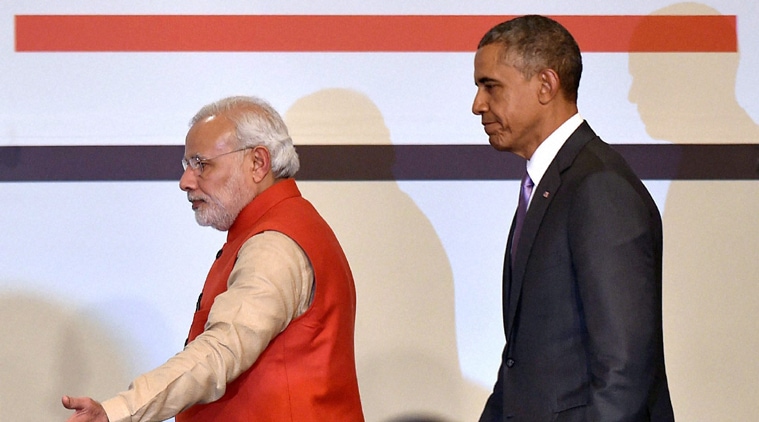 PM Modi seemed not only willing but eager to redefine India’s relationship with the US at a time China is on the rise economically, militarily and politically.
When President Obama landed here, he brought a long list of issues to discuss, like energy and trade. But when he and Prime Minister Narendra Modi sat down to talk, the first 45 minutes were dominated by just one: China.
Obama and his aides discovered to their surprise that Modi’s assessment of China’s rise and its impact on the greater strategic situation in East Asia was closely aligned with their own. Just as they did, Modi seemed increasingly uneasy about China’s efforts to extend its influence around the region and interested in a united approach to counter them.
He agreed to sign a joint statement with Obama chiding Beijing for provoking conflict with neighbours over control of the South China Sea. He suggested reviving a loose security network involving the United States, India, Japan and Australia. And he expressed interest in playing a greater role in the Asia-Pacific Economic Cooperation forum, where India could help balance China’s influence.
Modi seemed not only willing but eager to redefine India’s relationship with the US at a time China is on the rise economically, militarily and politically.
“There has been a lot of ambivalence in India about China, just as there has been in the US,” said K Shankar Bajpai, a former ambassador to the US and China. “Now, both sides are clearer about their own interests and better understand that those interests are similar.”
If that proves enduring, it could signal a shift more consequential than any specific deals or statements signed during Obama’s stay here. In effect, American officials hope the two powers can do much more together than the US could do alone to restrain China’s ambitions and preserve the postwar order in the region.
The possibility of an Indo-American partnership tilted against it clearly aggravated China this week. A commentary in Xinhua dismissed what it called a “superficial rapprochement”. Global Times warned that the US was setting a trap for India.
Obama’s conversation with Modi on China was “really qualitatively different” than past discussions with Indian leaders, according to a senior US official. “I really was struck that he took a similar view to us,” the official said.
Modi’s suggestion of fresh security cooperation linking the two with Japan and Australia would bring back a short-lived effort involving the four democracies that began in 2007. Known as the Quadrilateral Security Dialogue, it drew protests from China and was abandoned a year later with a change of government in Australia.
Modi’s determination to play a greater role in Asian affairs, a policy known as “Act East,” coincides with Obama’s own so-called pivot to Asia. The two countries had been moving toward consensus on China for years, but that was particularly solidified by events of the last year, analysts said.
Stay updated with the latest - Click here to follow us on Instagram