2 min read
Stay updated with the latest - Click here to follow us on Instagram

Journalism of Courage



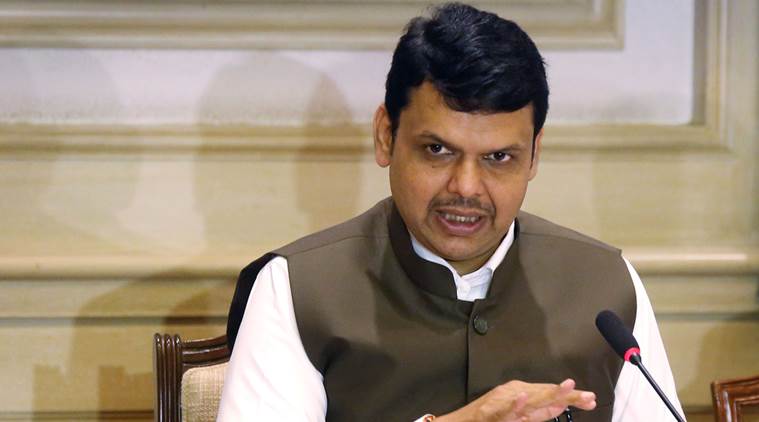 Maharashtra CM Devendra Fadnavis (File)
The state government is working on an economic model to bring down the dependence of people on agriculture for their sustenance by providing alternative modes of employment. At present, 50 per cent population is dependent on the agriculture sector in the state.
It has become inevitable to explore avenues beyond the conventional agriculture practices to bridge the gap between dependence on agriculture sector and shrinking employment capability, Chief Minister Devendra Fadnavis said on Saturday.
He said, “At present, 50 per cent of the state population is dependent on income through the agriculture sector. But agriculture sector’s contribution to state gross domestic production (GSDP) is only ten per cent.” Therefore, corrective steps are needed, he said.
This can be done by creating infrastructure for agro-industries, allied sectors and services sectors. The government has stressed on imparting skill development to open avenues linking employment to industries, he added.
The chief minister, while addressing the 16th edition of the Indian School of Business Leadership Summit at Hyderabad, presented a picture of social-economic and agriculture reforms and challenges in Maharashtra.
He said, “Despite 40 per cent of the country’s big dams located in Maharashtra, our irrigation potential stood at 18 per cent for last six decades. Therefore, after taking the charge of government three years ago, I switched to water conservation projects. The Jalyukta Shivar helped to make 11,494 villages drought free.”
The convergence of 14 departments under the central command proved beneficial in effective utilisation of available resources and enforcement of policies, he observed.
Highlighting the corruption challenges in the administration and the system, Fadnavis said digitalisation played an important role in weeding out financial leakages and human manipulations in implementation of public welfare schemes. “In the 20th century, roads were an index to determine development of a nation. Whereas, 21st century would be marked by development which is digitally driven,” he remarked.
The digital platform has helped in enhancing communication and connectivity in remote villages in hilly terrains like Melghat and helped to bring development to villagers doorsteps, he added.
Stay updated with the latest - Click here to follow us on Instagram