


Tags:


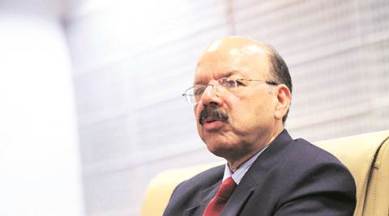
The EC has made three times more seizures related to polls in five states compared to the assembly polls in 2012, Chief Election Commissioner Nasim Zaidi has said. In an interview with Ritika Chopra and Maneesh Chhibber , Zaidi added that there have not been pure hate speeches this time. Excerpts:
Has demonetisation impacted black money use in the five state elections?


The government has repeatedly disagreed with EC’s proposal seeking legal powers to cancel elections in case of voter bribery. Why is the Law Ministry unconvinced?
Everybody has his or her wisdom. In our wisdom, we feel it should be done. They feel otherwise. They have asked us to continue using Article 324 (to deal with voter bribery), but we have said we need proper legal cover just as in the case of booth capturing.
We have taken up the proposal (with the government) for the third time. The Commission will cancel elections only on the basis of the report of the returning officer and observers and some credible evidence that there was large-scale distribution of money to voters. The investigation will be conducted in the same manner as booth capturing. So, in the Commission’s view it’s incorrect to say that bribery stands on a different footing than booth capturing.
In the last one year, you have held two meetings with the Law Secretary and sent several reminders on pending electoral reforms. Only two have been accepted during this time. Are you personally happy with the progress made?
You always wish more could be done.
Arvind Kejriwal has repeatedly challenged EC’s authority. His party even accused the EC for going too soft on Manohar Parikkar for making similar comments. Do such comments erode EC’s goodwill?
Individual matters are dealt with differently depending on the facts and circumstances of the case. With regard to what you just referred, the two cases were found to be different in the Commission’s judgment. There were some reactions (on the EC’s decision) from some people. But as far as the Commission is concerned the matter stands closed.
Can you elaborate why the EC felt both the cases were different? Why was an FIR ordered against Kejriwal and not against Parrikar even though the remarks made were similar?
The remarks made were similar yet they were different. In terms of the examination of their speeches, the two cases were found to be different.
Do you think the Model Code of Conduct needs statutory backing to deal with such cases more effectively?
In my own experience, the only other alternative (to Model Code of Conduct) is to have a law to regulate such behaviour. But action under law has no time limit. We have seen that one can register an FIR, but the case might only get resolved closer to the end of the Assembly term. I don’t think that would have any effect on the conduct and behaviour of political leaders.
Do you think there should be a time frame within which election petitions should be disposed of?
There is a time limit or, rather, a preferred time limit already given within which an election petition should be decided. We would definitely like for a specific time limit to be set for disposal of such cases otherwise they lose relevance. The Commission has already taken up the matter of dedicating courts for election petitions.
Why hasn’t the Commission acted against hate mongering in UP the way it did in 2014 by banning Amit Shah and Azam Khan from campaigning?
In 2014, those cases were definitely cases of hate speech which were repeated. We felt that repeated violation would result in disturbance of communal harmony. So we decided that time has come to prohibit their campaigns. To be fair, this time pure hate speech in which communities are made to fight against each other, have not been brought to the notice of the Commission. There may have been tangential references but not pure hate speeches. If the situation in this election had warranted, we would have definitely acted in the same way but the Commission hasn’t found such similarity.
What about PM’s tangential references such as “Shamshaan” and “Kabristan”?
We have issued a strong a very strong advisory recently and it has had a desirable effect. For the past week we haven’t heard anything (communal statements).
Should there be a separate provision under the Representation of the People Act to deal with hate speeches?
Yes. The matter was before the Supreme Court which has been referred to the Law Commission and they are examining the proposal. We also agreed that there should be a separate provision for hate speeches.
The government’s announcement on electoral bonds has been criticised for encouraging anonymity in political funding and mask whatever little transparency exists in the current system. Your views on this.
I haven’t been able to read the fine print. We haven’t got a copy of the proposed scheme, so I can’t comment on what the scheme is. Our stand is that any scheme that brings about a reduction in anonymity is welcome.
But this encourages anonymity…
Like I’ve told you already, anything which reduces anonymity will be welcome.
The EC’s decision on the SP dispute was the fastest resolution of a symbol dispute in the institution’s history. What prompted the EC to not hold further hearings and pass its verdict within two weeks of the complaint?
Both factions had provided us with complete documents. They approached us on time. When we fixed a date for hearing both factions agreed to be present and they even complete their arguments by top lawyers. Nobody asked for adjournment. Moreover, everybody requested that the decision must before the onset of the notification of elections in UP. So what should have been done under such circumstances? Should we follow a very cautious approach and freeze the symbol? We thought that in the interest of the electoral democracy we should take a decision if all facts are available before us. I won’t say whether it was fast or slow. The decision was made at the right pace in the given circumstances.
The EC has written to CBDT about the 255 political parties deleted from its list. Has the department responded? Also, will this be a regular exercise?
After this election is over, we will start a new set of screening of those political parties which have not contested between 2006 and 2016.
Although the EC has expressed its willingness to conduct simultaneous polls, the government has repeatedly said that the onus of building political consensus for this step is on EC. Your comment.
We have given our views to the Parliamentary Committee and Law Ministry. As far as building political consensus is concerned we have no formal communication from the government on this.


