6 min read
Stay updated with the latest - Click here to follow us on Instagram

Journalism of Courage



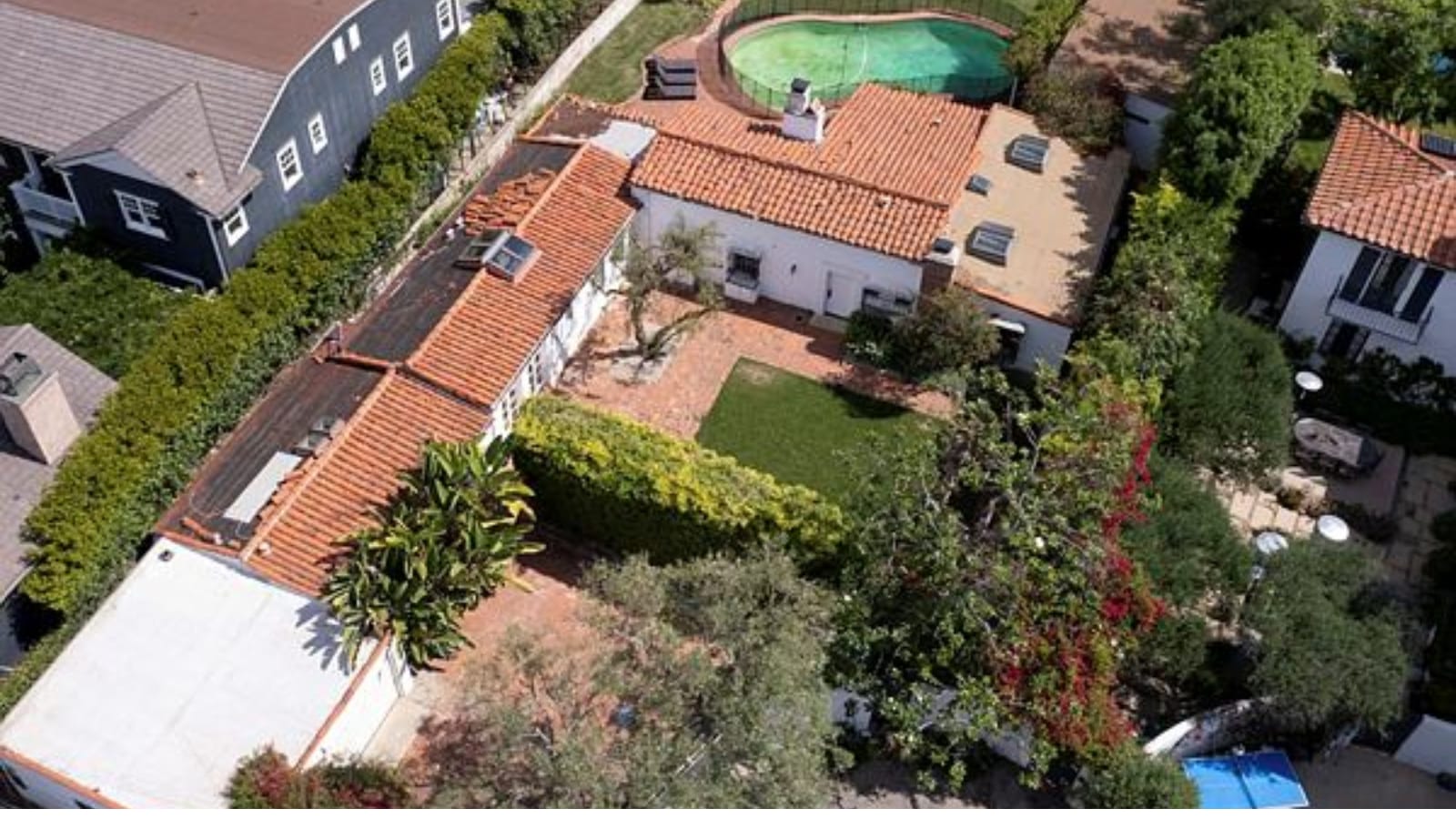 View of Marilyn Monroe's Spanish Colonial-style former house in Los Angeles, California, US. (Reuters)
The home where Marilyn Monroe lived and died was designated a local historical landmark in a unanimous vote by the Los Angeles City Council on Wednesday, ending a monthslong battle to save the Spanish Colonial-style house from demolition.
The council voted 12-0 to add the house to its roster of properties deemed to be of historical significance.
The designation was backed by the City Council’s land use management subcommittee and the city’s cultural heritage commission.
“There is no other person or place in the city of Los Angeles as iconic as Marilyn Monroe and her Brentwood home,” said Traci Park, the City Council member who introduced the proposal to make the home a landmark. “To lose this piece of history, the only home that Marilyn Monroe ever owned, would be a devastating blow for historic preservation and for a city where less than 3% of historic designations are associated with women’s heritage.”
The four-bedroom house joins a list of about 1,300 sites that Los Angeles has deemed to be significant to its history and culture, about 444 of which are private residences, according to the city.
The vote came weeks after a judge in Superior Court in Los Angeles County, California, denied an injunction request by the owners, who were seeking to stop the historical designation. Brinah Milstein and Roy Bank accused the city of “backroom machinations” during what they said was a rushed process, according to court documents, and they said the city violated its own codes and conspired with third parties to secure the designation. The owners’ lawsuit against the city is pending and a trial-setting conference is set for Aug. 13.
Milstein and Bank had also argued that designating the house as a landmark would lead to an increase in visitors. The house is concealed by a painted brick wall and is not visible from the street, but that has not stopped fans from leaving flowers or trying to get a glimpse.
In a statement, Peter C. Sheridan, a lawyer for Milstein and Bank, said the designation was “yet another step in an admittedly biased, unconstitutional and rigged process” and accused Park of ignoring constituents who “are adamantly against the designation of the home.”
Fans and landmark preservationists have argued that the house is an important part of Hollywood history, and of Monroe’s legacy.
“She represents the magic of Hollywood and Los Angeles,” said Terrence London, 39, a resident of downtown Los Angeles who spoke at the City Council meeting in favor of preserving the house and making it easier for tourists to see it from the street. “Marilyn Monroe’s own design has its print on the house. That’s historic.”
Monroe, a pop culture icon in the 1950s, bought the 2,900-square-foot hacienda for $75,000 in the spring of 1962, after her divorce from playwright Arthur Miller and just as she was wrapping up what would be her final project, the film “Something’s Got to Give.”
The house, which is believed to have been built in 1929, is in a set of 25 cul-de-sacs known as the Helenas that are valued for their privacy, and provided just that for the world’s most famous actress. According to the city’s application, Monroe had traveled to Mexico to buy furniture and décor from local artists, as well as a variety of painted ceramic tiles for the kitchen and bathrooms.
The house, which is partly inlaid with ceramic tile, became known as Cursum Perficio, which in Latin loosely translates to, “I end the journey.”
Monroe’s time in the Brentwood neighborhood of Los Angeles would be short. She died of a drug overdose in August 1962, six months after she moved in. The private world she created at home was revealed in photographs after her death, including of the police standing guard over a serene, kidney-shaped pool that was lined with palm trees.
Lawyers for Milstein and Banks had argued that Monroe’s permanent address was in New York City at the time of her death, and that her time in Brentwood was not significant enough to qualify for historic status. They had also argued that the house had been substantially altered since the time of Monroe’s death more than 60 years ago.
According to city ordinances, a designation does not prohibit demolition, relocation or alteration, but it does require a rigorous review process by the heritage commission. Milstein, an heir to a wealthy real estate family, and Bank, a reality television producer, own the property next door to the Monroe house and had planned to demolish it and combine the properties.
Milstein and Banks bought the house last July for $8.35 million through a limited liability corporation, Glory of Snow Trust, according to property records, and applied for a demolition permit shortly after. As word of the looming demolition spread in the Brentwood community, the Los Angeles City Council voted unanimously in September to start the historic designation process, triggering a temporary stay of the demolition permit.
The couple had offered to relocate the Monroe house to make it publicly accessible. The Brentwood Community Council, an organization that represents about 35,000 people including homeowner and business groups, and several other homeowners associations in the area had opposed the designation and backed relocating the house.
Park, the City Council member, said she was working with the property owners to move the home and was “hopeful” that they could reach an agreement. A lawyer for the couple refuted that assessment and said their efforts to work with Park had gone unanswered.
She also said that she was introducing a motion to evaluate tour bus restrictions near the home to address the neighborhood’s concerns about traffic and safety.
“But today,” she said, “let’s preserve this essential piece of LA’s history and culture.”
Stay updated with the latest - Click here to follow us on Instagram