8 min read
Stay updated with the latest - Click here to follow us on Instagram

Journalism of Courage



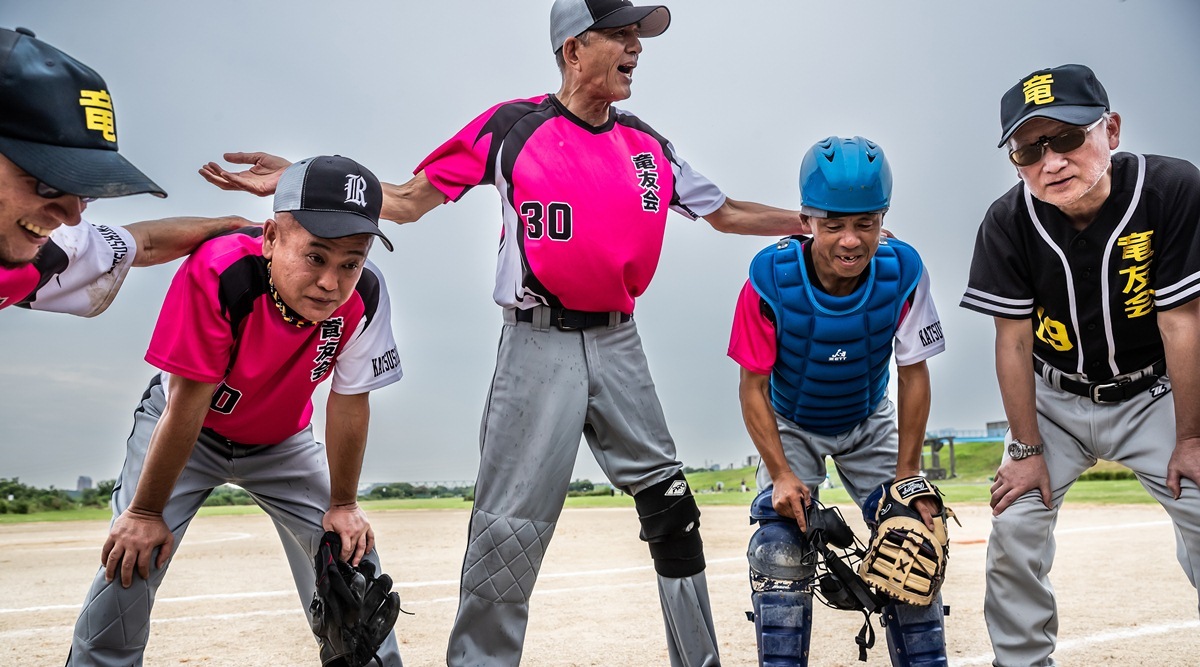 Yuji Ryuzaki, center, with other members of the Ryuyukai softball team at a game in suburban Tokyo, July 3, 2022. Ryuzaki established the Ryuyukai in 2012 to help his former colleagues build new lives. (Photo: The New York Times)
 Written by Ben Dooley and Hisako Ueno
On paper, the Ryuyukai were the most fearsome team in Japanese softball. A sort of mutual aid society for retired gangsters, the club had racked up nearly a century of hard time. The manager had been a top mob consigliere; the relief pitcher, who took the field in hot pink shoes, had once been sent to kill him.
But on a cloudless day in March 2022, these hardened ex-cons met their match: the Parent Teacher Association of Nakanodai Elementary School. The PTA showed no mercy, hitting pitch after pitch out of the scruffy park in suburban Tokyo. Midway through the game, the scorekeeper stopped counting.
Losing is nothing new for Japan’s iconic gangsters, the yakuza. For more than a decade, they have been suffering one defeat after another.
As late as the 1990s, yakuza numbered around 100,000. Their businesses — scams, gambling and prostitution rackets — were illegal, but the groups themselves were not. Fan magazines chronicled their exploits. The groups had business cards and listed addresses. They gave Halloween candy to children and distributed relief supplies after disasters.
But today’s yakuza are a shell of what they once were. The same demographic forces wearing down other Japanese industries have also hit organized crime. An aging population has made it hard to find young recruits — more Japanese gangsters are in their 70s than in their 20s — and has diminished the once-thriving demand for the yakuza’s services.
Society, too, has become less tolerant of them. The authorities have carried out a relentless legal assault on the criminal underworld. Crime is both less profitable and riskier. In 2021, a court sentenced the head of the most violent syndicate to death, a first that sent shock waves through the mob’s executive class.
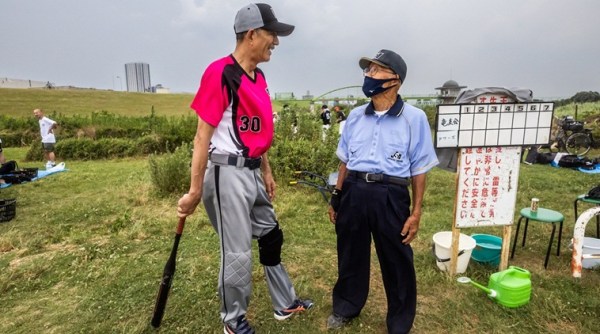 Yuji Ryuzaki, left, of the Ryuyukai softball team, speaks with an umpire before a game in suburban Tokyo. In the club’s early days, some umpires hesitated to call strikes and outs against the team. (Photo: The New York Times)
All of that has made crime a less attractive career option. Over the last decade, the yakuza’s rolls have plummeted by nearly two-thirds, to 24,000.
Many have struggled to reintegrate. Tattoos, missing fingers and long criminal records limit job opportunities and make it difficult to fit in. Japanese laws discouraging business with the yakuza effectively stop them from taking care of necessities like opening a bank account, getting a phone plan or renting an apartment until they can prove they’ve been out of the yakuza for five years.
Yuji Ryuzaki, the softball team’s manager, established the Ryuyukai in 2012 to help his former colleagues build a new life.
Ryuzaki had quit the yakuza in the early 2000s. During his 72 years, he has been a member of a nationally ranked high school baseball team, a Buddhist priest, a model and an actor. He had sold jewels, imported luxury goods from Hong Kong and worked as a beautician. And he had — of course — been a top executive in a Tokyo affiliate of the Yamaguchi-gumi, Japan’s largest mob organization.
Over the decades, he largely stayed behind the scenes. He didn’t look like a stereotypical yakuza. He was afraid of needles, so he had never been tattooed. He had managed to keep all of his fingers. His first conviction was for getting mixed up in an argument at Tokyo Disneyland, he said. Not very yakuza.
The idea for the softball team sprang from a chance encounter with Katsuei Hirasawa, a member of Parliament from a working-class Tokyo neighborhood where yakuza were once a part of the social fabric.
The anti-yakuza laws of recent years were well intentioned but “discriminatory,” Hirasawa said, arguing that they pushed people toward recidivism. Softball could help prevent that, he said, by keeping idle hands busy while building discipline and a sense of community.
Ryuyukai membership offered more tangible benefits, too. Ryuzaki and an associate, Takeshi Takemoto, worked to put the team’s members up in housing and connect them with the kind of tough, temporary employment — construction, roadwork, sewer maintenance — that pays a living wage and doesn’t ask too many questions.
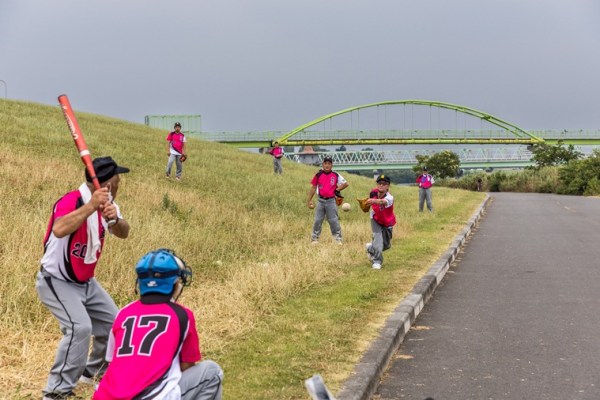 Members of the Ryuyukai softball team practice before a game in suburban Tokyo, on July 3, 2022. (Photo: The New York Times)
The season got off to a slow start. One team was a no-show. Another delivered a clobbering that rivaled the PTA’s. The Ryuyukai didn’t seem to mind. They showed up early each time to practice their fielding and smoke.
While some teams played with nearly military precision, the Ryuyukai were clearly there to have fun. When a player fumbled an easy ground ball or stopped running halfway to second base, Ryuzaki jokingly cursed him out in a salty yakuza patois.
In the club’s early days, some teams were intimidated by the former gangsters, Ryuzaki said. Umpires hesitated to call strikes and outs against them.
They worked on blending in. Ryuzaki traded the club’s black uniforms for gray and electric pink, hoping to project a friendlier image. The league’s director praised the team for helping to clean up the field after games. One year, they even won a league championship, cementing their position as part of the scene.
“In sports, there are rules,” the captain of another team said after a close loss. “As long as everyone follows them, it’s not a problem.”
Not every player on the Ryuyukai was a yakuza. There were a few broad-shouldered ringers in their 20s; a college friend of one of Ryuzaki’s employees, who cowered when he made an error; and a group of older men who owed unspecified “favors” to Ryuzaki and Takemoto.
For those who had been gangsters, though, the team’s rules were clear: New members must prove they have quit the yakuza.
The process of leaving can be difficult; traditionally, it cost a finger joint. Nowadays, members can buy their freedom or sometimes just request early retirement for something as prosaic as a bad back. The announcement is faxed to gang offices around the country. Some of the Ryuyukai’s members carry a photo of the document on their phones as proof of their excommunication.
But over the course of the season, it became clear that the team’s story — and the line between in and out of the mob — was not so straightforward.
Ryuzaki believes it’s unrealistic to expect people to completely sever ties to their old lives. Socially, it would be difficult to turn down an invitation to a wedding or a funeral, he said.
He himself has kept one foot firmly in gangland. Yakuza bosses call him frequently, asking for advice or for help smoothing over a conflict. The police, too, sought him out for updates on gang activity.
The Ryuyukai’s season ended on a humid October afternoon with a 15-0 loss. The opposing team’s pitcher, a rare woman in the league, fired balls over the plate with a ferocity that made the Ryuyukai’s players jump back.
At lunch afterward, Ryuzaki couldn’t stop coughing. He needed treatment for lung disease after years of smoking. He huffed on an inhaler and cleared his throat.
He seemed unruffled by the loss. Or a season with just two wins. COVID had stopped the players from practicing. They would get their title back someday. And besides, winning wasn’t the point.
“People have to stay busy or they fall back into bad habits,” he said.
This article originally appeared in The New York Times.
Stay updated with the latest - Click here to follow us on Instagram