4 min read
© IE Online Media Services Pvt Ltd



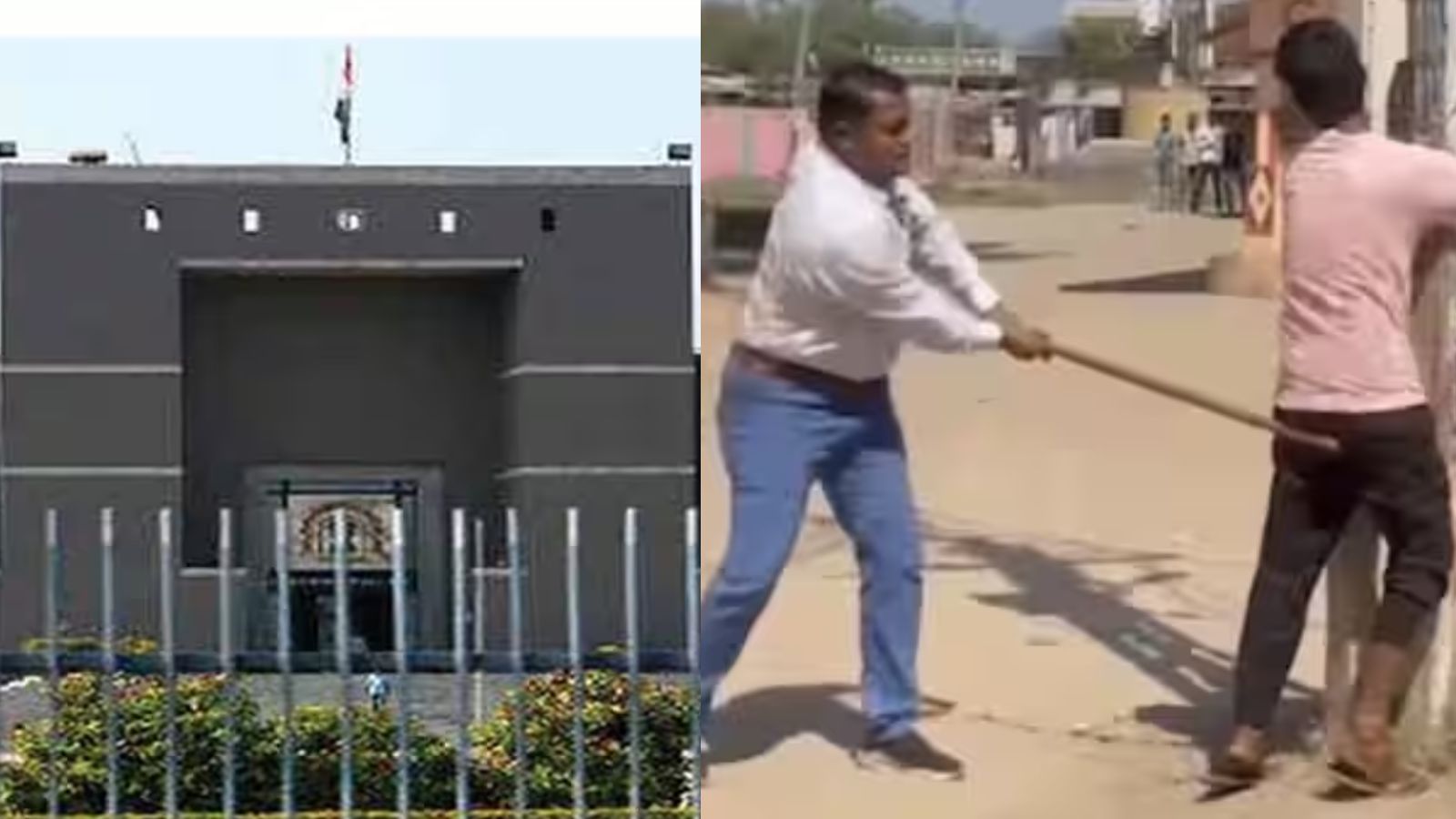 The incident grabbed public attention after videos surfaced on social media of the police publicly flogging several of the said men at the village square following the incident (File Photo)
 The Gujarat High Court Thursday sentenced four policemen, accused of publicly flogging some minority community members Kheda in October last year, to 14 days of imprisonment. The court, however, stayed the order for three months following a request from the accused, so as to appeal against the sentencing.
1 What is the verdict?
The division bench has sentenced four of the accused police officials to 14 days of imprisonment, along with a fine of Rs 2,000 in default of which there would be further imprisonment of three days. The court also directed that they present themselves before the registrar judicial of the Gujarat High Court within 10 days of receipt of the order, following which the registrar judicial shall accordingly refer them to the appropriate judicial authority.
However, the verdict was, however, stayed for three months following a request from the counsel for the accused cops, senior advocate Prakash Jani.
2 What was the incident in October 2022?
Video clips purportedly showing a man flogging those arrested for allegedly pelting stones at a garba event on the night of October 3, 2022, in Gujarat’s Kheda district triggered outrage with the person involved being identified as a police officer.
The clips show at least four-five men being held, one after the other, by a group of men in plainclothes against an electricity pole at a chowk and being flogged with a lathi by one man with a holstered gun on his belt. Those flogged are then seen folding their hands before a cheering crowd before being directed by the men in plainclothes to get into a police van nearby.
According to the police complaint, a mob of 150-200 people allegedly attacked a garba event at Undhela village by pelting stones inside a Swaminarayan temple and allegedly “hurting religious sentiments”. The police also confirmed that all the ten who were arrested for allegedly disrupting the garba the previous night were from the minority community.
3 Who moved the Gujarat High Court?
Jahirmiya Malek (62), Maksudabanu Malek (45), Sahadmiya Malek (23), Sakilmiya Malek (24) and Shahidraja Malek (25) had then moved the Gujarat High Court with a contempt petition against 13 police personnel, accusing them of flogging and illegal detention and submitting that the police officials violated the guidelines as enshrined under the Supreme Court judgment of DK Basu versus the State of West Bengal, which provides for guidelines to be followed by police during arrest and detention. The victims also sought to be compensated for the infringement of their rights.
4 Gujarat HC made the conviction under:
The high court, after directing an inquiry report from a magistrate in Nadiad, initiated contempt proceedings under Section 2 (b) (civil contempt) read with Section 12 (punishment for contempt) of the Contempt of Courts Act, against four accused police officials – A V Parmar, D B Kumavat, Laxmansinh Kanaksinh Dabhi and Rajubhai Dabhi.
5 What did the Gujarat HC say in its verdict?