20 min read

© IE Online Media Services Pvt Ltd



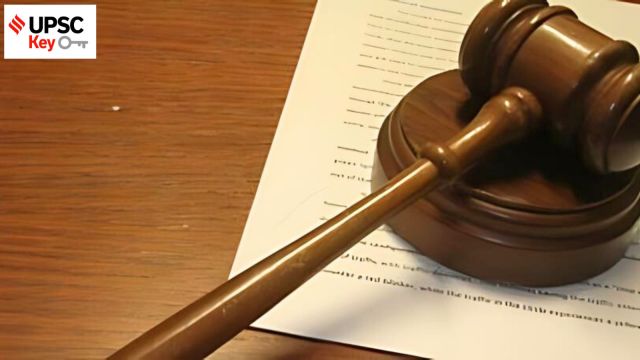 The top court has to decide whether the right to be forgotten is a fundamental right and, if so, how it relates to other fundamental rights guaranteed by the Constitution of India. Know more in our UPSC Key.
 🚨 Attention: UPSC Key is now all 7 Days a Week!🚨
Important topics and their relevance in UPSC CSE exam for July 29, 2024. If you missed the July 28th, 2024 UPSC CSE exam key from the Indian Express, read it here.
🚨 The Indian Express UPSC Essentials brings to you the July edition of its monthly magazine. Click Here to read. Share your views and suggestions in the comment box or at manas.srivastava@indianexpress.com🚨
UPSC Syllabus:
Preliminary Examination: General issues on Environmental ecology, Bio-diversity and Climate Change – that do not require subject specialisation.
Mains Examination: GS-III: Conservation, environmental pollution and degradation, environmental impact assessment.
What’s the ongoing story- Cereal grains have overtaken sugarcane as the primary feedstock for the production of ethanol used in blending with petrol.
Prerequisites:
— What is Ethanol?
— What is Ethanol Blending?
— Read about the National Policy on Biofuel 2018.
Key takeaways:
— This is the first time that the contribution of grains to India’s ethanol production has surpassed 50% — from 27.1% in 2022-23, 16.7% in 2021-22, 13.6% in 2020-21, 9.2% in 2019-20, 5% in 2018-19 and zero in 2017-18.
— Ethanol is 99.9% pure alcohol that can be blended with petrol. This is unlike the 96% extra neutral alcohol that goes to make potable liquor or the 94% rectified spirit used in paints, cosmetics, pharmaceuticals and other industrial products.
— The Narendra Modi-led government has targeted 20% ethanol blending in petrol by 2025. That ratio for all-India averaged 13% this supply year till June, as against 12.1% in 2022-23, 10% in 2021-22 and only 1.6% in 2013-14.
— Alcohol production involves fermentation of sugar using yeast. In cane juice or molasses, sugar is present in the form of sucrose that is broken down into glucose and fructose. Grains contain starch, a carbohydrate that has to first be extracted and converted into sucrose and simpler sugars, before their further fermentation, distillation and dehydration to ethanol.
— Till 2017-18, ethanol was being produced only from so-called C-heavy molasses, the dense dark brown liquid byproduct containing sucrose that mills cannot economically recover and crystallise into sugar.
— The ethanol blended petrol (EBP) programme received a boost in 2018-19, when the Modi government enabled mills to produce it from an earlier ‘B-heavy’ stage molasses (leaving less sugar available for crystallisation and more for fermentation) and directly from whole cane juice/ syrup. Mills were paid higher prices for the ethanol produced through these routes to compensate them for revenues foregone from reduced/nil production of sugar.
For Your Information:
— Ethanol is produced by fermentation of residues of crops like corn and sugarcane. The ethanol after fermentation is mixed with petroleum, which dilutes the latter and reduces the emissions. Ethanol-10 or E10 is the most common blend in which 10 per cent composition is Ethanol.
Points to Ponder:
— What is Ethanol Blending Program (EBP)?
— What is the Significance of Ethanol Blending?
— What are the issues and challenges associated with the Ethanol Blending?
Post Read Question:
(1) With reference to ethanol, consider the following statements:
1. Ethanol yields from grains are higher than from molasses.
2. Under the ethanol blending programme, the government has fixed the target of 20% blending of ethanol with petrol by 2025.
Which of the statement(s) given above is/are correct?
(a) 1 only
(b) 2 only
(c) Both 1 and 2
(d) Neither 1 nor 2
Other Important Articles Covering the same topic:
Ethanol+petrol: How to blend more and blend better
UPSC Syllabus:
Preliminary Examination: Current events of national importance and Environment
Mains Examination: GS-II, GS-III: Government policies and interventions, Conservation, environmental pollution and degradation, environmental impact assessment.
What’s the ongoing story- Four years after a high-powered committee appointed by the Supreme Court rejected construction of the Netala bypass road on the Uttarkashi-Gangotri route under the Chardham project, the Border Roads Organisation (BRO) is going ahead with the contentious alignment and has sought forest clearance from an environment ministry panel citing “active landslide sites” on the old route, The Indian Express has learnt.
Prerequisites:
— What is the Chardham Project?
— Mapwork: Location of Yamunotri, Gangotri, Kedarnath and Badrinath, Important wildlife sanctuaries and National Parks in the region.
— Read about the Border Roads Organisation (BRO).
Key takeaways:
— The 8.7-km bypass alignment, proposed between Hina and Tekhla on NH-34 in Uttarkashi district, was rejected by the committee in its July 2020 report to the Supreme Court on grounds of adverse environmental and social impacts.
— The 900-km Chardham project is underway to widen and improve highways connecting four pilgrimage centres — Yamunotri, Gangotri, Kedarnath and Badrinath — and the Supreme Court granted it conditional clearance in 2021.
— The project also falls in the fragile Bhagirathi Eco-Sensitive Zone (BESZ), a 4,157 sq km expanse between Gangotri and Uttarkashi town. The BESZ was notified in 2012 to protect River Ganga’s ecology and watershed near its origin.
For Your Information:
— The term Char Dham refers to the four holy places in Uttarakhand state, which are Yamunotri, Gangotri, Kedarnath, and Badrinath. These four destinations are believed to be the abode of gods and goddesses and are considered highly sacred by Hindus.
Points to Ponder:
— What is the significance of the Chardham Project?
— What is an Environment Impact Assessment?
— What are the environmental concerns associated with the Chardham Project?
Post Read Question:
(2) Consider the following statements:
1. Chardham project comprises improvement of 5 existing National Highways (NHs) connecting Chardham
2. Char Dham refers to the four holy places in Uttarakhand and Himachal Pradesh.
Which of the statements given above is/are correct?
(a) 1 only
(b) 2 only
(c) Both 1 and 2
(d) Neither 1 nor 2
Other Important Articles Covering the same topic:
Char Dham Yatra: A comprehensive guide to the sacred pilgrimage
UPSC Syllabus:
Preliminary Examination: Indian Polity and Governance- Constitution, Political System, Panchayati Raj, Public Policy, Rights Issues
Mains Examination: GS-II: Governance, Constitution, Polity
What’s the ongoing story- Last week, the Supreme Court agreed to hear a case whose outcome will likely shape the contours of the “right to be forgotten”, known in European information privacy regulation as the “right to erasure”, in India. The top court now has to decide whether the right to be forgotten is a fundamental right and, if so, how it relates to other fundamental rights guaranteed by the Constitution of India.
Prerequisites:
— What is the ‘right to be forgotten’?
— What is right to privacy?
— Read about the K S Puttaswamy judgment.
Key takeaways:
— A three-judge Bench headed by Chief Justice of India (CJI) D Y Chandrachud will hear a challenge against a Madras High Court ruling that on February 27 directed legal search portal Indian Kanoon to take down a judgment in a 2014 rape and cheating case.
— The right to be forgotten can be loosely described as the right to remove one’s digital footprint (from Internet searches, etc.) where it violates the right to privacy.
— In May 2014, the Luxembourg-based Court of Justice of the European Union (CJEU), the highest court in matters concerning the application and interpretation of EU law, affirmed that there exists a right to be forgotten.
— Informational self-determination — an individual’s right to control and limit her personal information — is now widely recognised in EU law. Article 17 of the EU’s General Data Protection Regulation (GDPR) describes the right to erasure. From victims of so-called “revenge porn” to individuals whose personal cases are on the Internet, the right to be forgotten is a crucial remedy.
— In India, there is no statutory framework that prescribes the right to be forgotten. However, not all constitutional rights need to be written in black and white. Until the 2017 judgment in Justice K S Puttaswamy v Union of India — in which the apex court explicitly recognised the right to privacy as a fundamental right, placing it as a facet of the right to life, right to equality, and the right to freedom of speech and expression — there were also questions on the right to privacy.
— A concurring opinion in the Puttaswamy ruling by Justice S K Kaul mentions the right to be forgotten. Justice Kaul said that this right “does not mean that all aspects of earlier existence are to be obliterated… It would only mean that an individual who is no longer desirous of his personal data to be processed or stored, should be able to remove it from the system where the personal data/ information is no longer necessary, relevant, or is incorrect and serves no legitimate interest”.
Points to Ponder:
— What are the origins of right to be forgotten?
— What are the concerns associated with the right to be forgotten?
— What steps have been taken by the govrenmnet to protect the privacy of individuals?
Post Read Question:
(3) ‘Right to Privacy’ is protected under which Article of the Constitution of India?
(a) Article 15
(b) Article 19
(c) Article 21
(d) Article 29
Other Important Articles Covering the same topic:
Does the right to be forgotten include taking down verdict? Supreme Court to decide
UPSC Syllabus:
Preliminary Examination: Current events of national and international importance
Mains Examination: GS-I, GS-II: Art and Culture; Important International institutions, agencies
What’s the ongoing story- The World Heritage Committee (WHC) on Friday decided to include the Palestinian site of Tell Umm Amer in both the UNESCO World Heritage Site List and the Lost of World Heritage in Danger during its 46th session in New Delhi.
Prerequisites:
— What is a World Heritage Site?
— How many Indian sites are on the World Heritage site list?
— Read about the UNESCO and its functions.
Key takeaways:
— Also known as the ‘Monastery of Saint Hilarion’, the site lies in the Gaza Strip which continues to reel under Israel’s relentless assault.
— Situated on the coastal dunes of the Nuseirat Municipality, just 10 km south of Gaza city, the ancient Christian monastery was founded in the fourth century by Hilarion the Great (291-371 CE), considered by some to be the father of Palestinian monasticism.
— With Israel’s ongoing onslaught reducing much of the Gaza strip to rubble, monuments and sites of cultural significance have not been spared either. This is why Tell Umm Amer’s inclusion in the aforementioned UNESCO lists matters.
— The World Heritage Convention of 1972, of which Israel is a party to, sets out duties for identifying, protecting, and preserving World Heritage sites. Crucially, states cannot take any deliberate measures which are likely to cause direct or indirect damage to this site.
— The inclusion on the list of World Heritage in Danger automatically opens the door to enhanced international technical and financial assistance mechanisms to guarantee the protection of the property and, if necessary, to help facilitate its rehabilitation, the UNESCO statement on Friday said.
For Your Information:
— India is hosted the 46th World Heritage Committee Meeting for the first time at Bharat Mandapam in New Delhi.
—The logo of the meeting is inspired by the World Heritage Site of Hampi.
— The tagline of the logo is सह नौ यशः, which means “May our Glory Grow” in English. The tagline has been derived from the ancient Sanskrit scripture ‘Taittiriya Upanishad’, which is a testament to our ancestors’ wish for growth for one and all.
Points to Ponder:
— How is a World Heritage Site selected?
— What is the significance of the World Heritage List?
— What is the role of UNESCO in protecting the World Heritage?
Post Read Question:
(4) Consider the following properties included in the World Heritage List released by UNESCO: (UPSC CSE 2024)
1. Shantiniketan
2. Rani-ki-Vav
3. Sacred ensembles of the Hoysalas
4. Mahabodhi Temple Complex at Bodhgaya
How many of the above properties were included in 2023?
(a) Only one
(b) Only two
(c) Only three
(d) All four
UPSC Syllabus:
Preliminary Examination: Social Development
Mains Examination: GS-II: Government policies and interventions; Education
What’s the ongoing story- The Centre launched the NIPUN (National Initiative for Proficiency in Reading with Understanding and Numeracy) Bharat Mission on July 5, 2021. The mission has seen energetic implementation in many states, with a new framework for the foundational stage of education developed and released well before frameworks for other stages.
Prerequisites:
— Read about the National Education Policy (NEP 2020) and Right To Education (RTE) Act, 2009.
— What is the NIPUN Bharat Mission?
— What are the constitutional provisions concerning education?
Key takeaways:
— This framework includes teacher training oriented towards the new goals, specially designed teaching-learning materials for use by children and teachers in early grade classrooms, etc. But in addition to these in-school efforts, there are a set of interlinked social and demographic trends which, if leveraged, could provide a boost to the NIPUN efforts.
— The data on education levels of mothers with children between ages 4 and 8 — the target age of the NIPUN mission — show a steep rise over the last decade.
— However, young women in India are not joining the labour force at a rate comparable to the rest of the educated world. According to latest data from the Periodic Labour Force Survey (PLFS) 2022-23, the over-all female labour force participation rate — LFPR shows the percentage of the population which is looking for a job — in India is only 37% (41.5% in rural, 25.4% in urban India).
— The economic implications of India’s low LFPR are debated in India’s public policy circles. There is undoubtedly scope for much improvement in this area. But educated mothers provide a uniquely positioned resource for supporting young children’s learning.
— Due to the push towards universal elementary education, India today is in a unique position to leverage young mothers’ schooling levels as a resource in their children’s journey to acquire foundational literacy and numeracy.
— The active participation of families, especially mothers, should be further encouraged to meet the goals of the NIPUN Bharat Mission. For young children to grow and thrive, nothing can be more powerful than teachers and mothers joining hands.
Points to Ponder:
— What are the issues and challenges related to education sector in India?
— What measures have been taken by the government to transform the Indian education system?
Post Read Question:
(5) Which of the following provisions of the Constitution does India have a bearing on Education? (UPSC CSE 2012)
1. Directive Principles of State Policy
2. Rural and Urban Local Bodies
3. Fifth Schedule
4. Sixth Schedule
5. Seventh Schedule
Select the correct answer using the codes given below:
(a) 1 and 2 only
(b) 3, 4 and 5 only
(c) 1, 2 and 5 only
(d) 1, 2, 3, 4 and 5
Other Important Articles Covering the same topic:
Why duration of early literacy and numeracy programmes must be increased
UPSC Syllabus:
Preliminary Examination: Current events of national importance, economic development
Mains Examination: GS-II, GS-III: Government policies and interventions, Indian Economy and issues relating to planning, mobilisation, of resources, growth, development and employment.
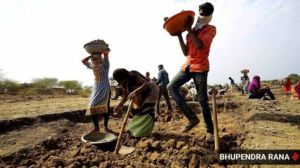
What’s the ongoing story- The Centre has sent advisories to Telangana and Andhra Pradesh governments over generation of high persondays and selection of “renovations and desilting works” under MGNREGS, which have taken up a significant portion of their expenditures.
Prerequisites:
— What is the MGNREG scheme?
— Who are eligible to benefit from the MGNREG scheme?
— How are wage rates for MGNREGS workers fixed?
Key takeaways:
— To Andhra Pradesh, ministry’s advisory to Principal Secretary, Department of RDPR on May 7 stated that in the current FY 2024-25 (till April 2024), renovation and desilting made up 69.5% of the expenditure.
— This indicates that the bottom-up approach, mandated by the Act, has not been followed, instead a top-down approach for planning of works has been taken in the state to generate high persondays and high expenditure, the advisories to both the states said, adding that a serious review is required at state-level as large expenditure has been made under renovation and desiliting.
— The advisories also said the states should focus on agriculture and allied activities and enhance the diversity of work taken up so that livelihood opportunities of beneficiaries may be improved.
For Your Information:
— Under MGNREGA, every rural household, whose adult member volunteers to do unskilled manual work, is entitled to get at least 100 days of wage employment in a financial year.
Points to Ponder:
— Who are the key stakeholders of the MGNREG scheme?
— How schemes such as MGNREGS can help alleviate distress migration?
— What is the significance of diversification of work under MGNREGS?
— What are the issues and challenges associated with the MGNREG scheme?
Post Read Question:
(6) Among the following who are eligible to benefit from the “Mahatma Gandhi National Rural Employment Guarantee Act”? (UPSC CSE 2011)
(a) Adult members of only the scheduled caste and scheduled tribe households
(b) Adult members of below poverty line (BPL) households
(c) Adult members of households of all backward communities
(d) Adult members of any household
Other Important Articles Covering the same topic:
NREGS demand not true indicator of rural distress: Survey
UPSC Syllabus:
Preliminary Examination: Current events of national and international significance
Mains Examination: GS-II, III: Government policies and interventions, Internal Security
What’s the ongoing story- A quarter of a century after the Kargil War ended, a serious reflection would suggest India’s victory or “vijay” is incomplete.
Prerequisites:
— Read about the Kargil Review Committee.
— Read about the Kargil War of 1999.
— What were the consequences of the Kargil war?
Key takeaways:
— Pakistan’s Kargil aggression in the spring of 1999, just weeks after Prime Minister Atal Bihari Vajpayee’s peace mission to Lahore, highlighted three broad challenges in the domains of defence, deterrence, and diplomacy.
— On the defence front, the Kargil surprise exposed the multiple vulnerabilities of India’s security. India did reverse the Pakistani ingress across the LoC, thanks to the extraordinary courage of officers and men. But sacrifice of its best men is no way of defending a nation’s territory; what India needed was a root and branch overhaul of its higher defence organisation, modernisation of its armed forces, upgrading its rusty defence industrial infrastructure, revitalising its intelligence mechanisms, and restructuring the decision-making on national security.
— The Kargil Review Committee headed by K Subrahmanyam produced a series of defence reforms. Over the last 25 years, Delhi did seek to restructure the national security system. But these reforms have been incremental and sub-optimal.
— The intensification of the conflict on the China frontier has highlighted India’s two-front challenge and the case for faster transformation.
— The second was the challenge of countering Pakistan’s pursuit of cross border terrorism under the shadow of its nuclear gun.
— Finally, military means alone will not bring the desired results. They need to be matched by diplomacy.
— The overall balance of power has indeed tilted in favour of India, thanks to Islamabad’s economic failures since Kargil and Delhi’s rapid growth. Many traditional friends of Pakistan, except for China and Turkey, now see India as a more valuable partner. Yet, Delhi should not delude itself that it can unilaterally define the terms of engagement on Kashmir and other disputes.
Points to Ponder:
— What reforms were taken by the government after the Kargil war?
— What are the security concerns on border areas with Pakistan and China?
— What was the recommendation of the Kargil Review Committee?
— Why modernisation of armed forces is the need of the hour?
Post Read Question:
Terrorist activities and mutual distrust have clouded India-Pakistan relations. To what extent the use of soft power like sports and cultural exchange could help generate goodwill between the two countries. Discuss with suitable examples. (UPSC CSE 2015)
Other Important Articles Covering the same topic:
| ALSO IN NEWS | |
| After setbacks, more exploration of J&K lithium block likely before another auction | India’s lithium ambitions hit a snag after the Ministry of Mines annulled the auction for the block in Jammu and Kashmir (J&K)’s Reasi district for the second time on July 25. The repeated setback has officials weighing the need for further exploration before attempting another auction, The Indian Express has learnt. The block, which holds an estimated 5.9 million tonnes of lithium ore, has failed to get auctioned off due to insufficient investor interest. |
| Manu Bhaker wins India’s first medal of Paris Olympics | Manu Bhaker made history by becoming the first female shooter from India to win an Olympic medal. She joined an exclusive club of Indian Olympic medallists, which previously had just four male shooters. |
| ANSWER KEY |
| 1. (c) 2. (a) 3. (c) 4. (b) 5. (d) 6. (d) |
Subscribe to our UPSC newsletter and stay updated with the news cues from the past week.
Stay updated with the latest UPSC articles by joining our Telegram channel – Indian Express UPSC Hub, and follow us on Instagram and X.
https://www.youtube.com/watch?v=nC4ckaj-dJI?si=yWttJGmgZJXskeBO

Read UPSC Magazine