10 min read





 UPSC Key 2022: Here's what you should be reading from the November 11, 2022 edition of The Indian Express.
Important topics and their relevance in UPSC CSE exam for November 11, 2022. If you missed the November 10, 2022 UPSC key from the Indian Express, read it here
FRONT PAGE
SC allows plea by Navlakha, grants house arrest for month
Syllabus:
Preliminary Examination: Current events of national and international importance and History of India
Main Examination:
• General Studies I: Modern Indian history from about the middle of the eighteenth century until the present significant events, personalities, issues.
• General Studies II: Structure, organization and functioning of the Executive and the Judiciary—Ministries and Departments of the Government; pressure groups and formal/informal associations and their role in the Polity.
Key Points to Ponder:
• What’s the ongoing story-THE SUPREME Court on Thursday allowed activist Gautam Navlakha, arrested in the Elgaar Parishad case, to be shifted from jail to house arrest in Mumbai for a month, imposing certain conditions, including CCTV surveillance, restrictions on use of phone, and no access to Internet.
• Who is Gautam Navlakha?
• What is ‘Elgaar Parishad’?
• And what is the case associated with ‘Elgaar Parishad’?
• Quick Recap-The case dates back to the Elgaar Parishad event held in Shaniwar Wada in Pune on December 31, 2017. A day later, as violent clashes broke out between Maratha and Dalit groups near Bhima Koregaon in Maharashtra, police alleged that the violence was instigated by “inflammatory speeches” given at the Elgaar event in Pune.
• Battle of Koregaon Bhima-Know the Historical background
• Why Battle of Bhima Koregaon symbolises long history of Dalit warriorship?
• Unlawful Activities (Prevention) Act (UAPA)-Key Highlights
• Unlawful Activities (Prevention) Act (UAPA) and Human Rights-Connect the dots
• Unlawful Activities (Prevention) Act (UAPA) and Article 22 of the Constitution-Connect the Dot
Other Important Articles Covering the same topic:
📍Who is Gautam Navlakha, soon to be under house arrest after Supreme Court relief?
📍Bhima Koregaon incident is a symbol of the long history of Dalit warriorship social mobility
📍What was the Battle of Koregaon?
EXPRESS NETWORK
Syllabus:
Preliminary Examination: History of India and Indian National Movement.
Main Examination: General Studies I: Modern Indian history from about the middle of the eighteenth century until the present significant events, personalities, issues.
Key Points to Ponder:
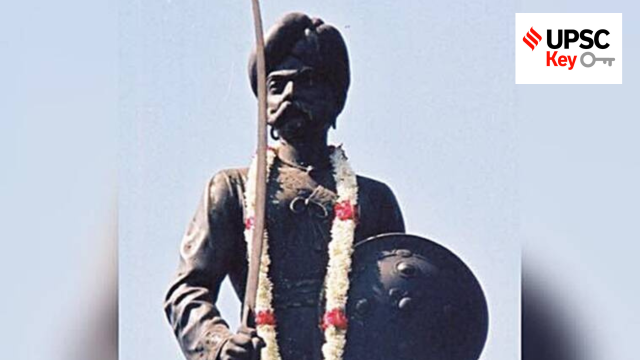
• What’s the ongoing story- Prime Minister Narendra Modi arrived in Bengaluru and unveiled a 108-feet tall bronze statue of ‘Nadaprabhu’ Kempegowda, credited to be the city’s founder. He also inaugurated Terminal 2 of the Kempegowda International Airport, which was built at a cost of around Rs 5,000 crore, and flagged off two trains, south India’s first Vande Bharat Express, and Bharat Gaurav Kashi Darshan train.
• Who was Nadaprabhu Kempegowda?
• Nadaprabhu Kempegowda was a chieftain under which rulers?
• When was the airport statue of Kempegowda planned?
• Who are the Vokkaliga?
• Why is Kempegowda so famous?
• Kempegowda and Bengaluru-Connect the dots
Other Important Articles Covering the same topic:
📍Vokkaligas, politics and symbolism: Why Kempegowda’s statue matters
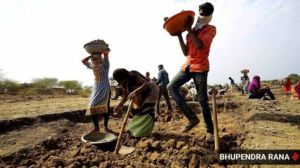
Groundwater extraction this yr down 6 bn cubic metres from ’20
Syllabus:
Preliminary Examination: Current events of national and international importance.
Mains Examination: General Studies I: Urbanization, their problems and their remedies.
Key Points to Ponder:
• What’s the ongoing story- The report — National Compilation on Dynamic Ground Water Resources Of India, 2022 — said: “The total annual groundwater recharge for the entire country as of 2022 has increased by 1.29 bcm as compared to the last assessment (2020). The total annual extractable GW resources has also increased by 0.56 bcm. The annual groundwater extraction for irrigation, domestic and Industrial uses has also decreased by 5.76 bcm during this period.”
• ‘National Compilation on Dynamic Ground Water Resources Of India, 2022’-What are the report’s High Points?
• What are the reasons for groundwater depletion?
• What are the Issues with Groundwater Management in India?
• What policy challenges does groundwater depletion impose on policymakers?
• What is the Current Situation of Groundwater in India?
• Water production and distribution system for domestic consumers in India-How water supply is done in metro Cities, Cities and in urban areas??
• India is greatly dependent on which external water resources?
• What the 2030 Water Resources Group’s report “Charting Our Water Future” predicted about India way back in 2009?
• What is the ‘per capita water availability’?
• Map work-Mark the North India Drainage Basins
• What is the National Water Policy, 2002?
• What do you understand by the term ‘water table’?
• Depleting water levels-Reason out
• How water table vary in a region-Know the Long-term reasons
• Groundwater Decline and Depletion-Know the reasons
• What initiatives has the Government of India taken?
Other Important Articles Covering the same topic:
📍UNION MINISTER OF JAL SHAKTI RELEASES REPORT OF DYNAMIC GROUND WATER RESOURCE ASSESSMENT FOR THE COUNTRY FOR THE YEAR 2022
THE EDITORIAL PAGE
Syllabus:
Preliminary Examination: General issues on Environmental ecology, Bio-diversity and Climate Change – that do not require subject specialization.
Mains Examination: General Studies III: Conservation, environmental pollution and degradation, environmental impact assessment.
Key Points to Ponder:
• What’s the ongoing story-Ajay Shankar Writes-The advanced industrial economies need to act now to decarbonise rapidly on a war footing. Their actions must match their rhetoric. That is the only hope to restrict global warming to 1.5 degrees.
• “At the ongoing COP 27 at Sharm El-Sheikh in Egypt, the IPCC has made it clear that climate catastrophe is unfolding”-here, what author is trying to convey?
• “The window of opportunity to restrict global warming to 1.5 degrees seems to be closing rapidly”-Why?
• “At the COP27 climate conference in November 2022, the international community and each country individually must set out what it has done and intends to do to limit the increase of global temperature to 1.5 degrees”-How?
• What are the expectations from COP27?
• What is the main agenda in COP27?
• What do you understand by “climate disasters” and “climate negotiations”?
• Why “climate disasters” and “climate negotiations” are much talked in the COP27?
• What are the major climate change agreements?
• What is climate change ‘Loss and Damage’?
• What is the extent of loss and damage?
• “The demand for loss and damage finance is quite old, but it has faced strong resistance from the rich and developed countries”-Why?
• How does the Paris Agreement address the loss and damage associated with climate change?
• What is the meaning of climate finance?
• What is the financial mechanism? What are the other funds?
• What is the Standing Committee on Finance? What is the long-term finance process?
• Green finance and climate finance-Compare
• Map Work-Sharm el-Sheikh
• What Is Climate Change?
• How Is Climate Change measured over time?
Other Important Articles Covering the same topic:
📍COP-27 begins: We must change the way we eat to address the climate crisis
📍With CO2 emission likely to rise, 1.5°C target getting tougher, finds report
EXPLAINED
Syllabus:
Preliminary Examination: Current events of national and international importance.
Mains Examination: General Studies II: Bilateral, regional and global groupings and agreements involving India and/or affecting India’s interests.
Key Points to Ponder:
• What’s the ongoing story- In his first visit to Moscow since the Russian invasion of Ukraine, External Affairs Minister S Jaishankar conveyed that India “strongly advocates a return to dialogue and diplomacy” and is on the side of “peace, respect for international law and support for the UN Charter”.
• The Indian position articulated by Jaishankar had a new element — he positioned India’s request from the vantage point of the “Global South”- What do you understand by the term “Global South”?
• What is considered the Global South?
• Which countries are in Global South?
• The term ‘Global South’ is more related to geography or to the economies of the countries?
• What is the Global South known for?
• What are the differences between global north and global south?
• Why External Affairs Minister S Jaishankar’s visit assumes significance?
• How is New Delhi positioning itself as a player with credibility in the Russia-Ukraine conflict?
• For India to be a mediator, four key questions need to be answered-What are those questions?
• ‘Indian diplomats have effectively negotiated in bilateral and multilateral formats, but negotiating in a crisis is a different question’-Know how India played a role of mediator?
• But why this time is different for India to be a mediator between Russia and Ukraine Conflict?
• India-Russia and India-Ukraine-Bilateral Relations (Importance of both for India)
• What is India’s concern in this entire Russia-Ukraine conflict?
• Can India take on a larger diplomatic role in the Ukraine-Russia Conflict now?
• “The history of warfare tells us that room for diplomacy opens up only when there is a deadlock on the battlefield”-Understand and discuss
Other Important Articles Covering the same topic:
📍India pushes Rupee trade beyond Russia
Content in national interest: What new TV broadcast guidelines say
Syllabus:
Preliminary Examination: Current events of national and international importance.
Mains Examination: General Studies II: Government policies and interventions for development in various sectors and issues arising out of their design and implementation.
Key Points to Ponder:
• What’s the ongoing story-Starting Wednesday, satellite TV channels in India are required to broadcast at least 30 minutes of content daily on “themes of national importance and of social relevance”. This is part of the ‘Guidelines for Uplinking and Downlinking of Satellite Television Channels in India, 2022’, which were approved by the Union Cabinet on September 28, the Ministry of Information and Broadcasting said in an order on Wednesday.
• What “Guidelines for Uplinking and Downlinking of Television Channels in India, 2022” says about public service and national interest?
• Guidelines for Uplinking and Downlinking of Television Channels in India, 2022”-Know the key highlights
• What else do the guidelines say?
• But, why ‘Guidelines for Uplinking and Downlinking of Television Channels in India, 2022’?
• What is the requirement for public service broadcasting?
• What is the rationale behind this?
• What is the definition of national interest for this purpose?
• How will compliance be ensured?
• Is anyone exempt from this obligation?
Other Important Articles Covering the same topic:
📍Must for TV: Air ‘national interest’ content, 30 minutes daily
For any queries and feedback, contact priya.shukla@indianexpress.com
The UPSC KEY Indian Express is now on Telegram. Click here to join our channel and stay updated with the latest Updates.

Read UPSC Magazine