16 min read


© IE Online Media Services Pvt Ltd



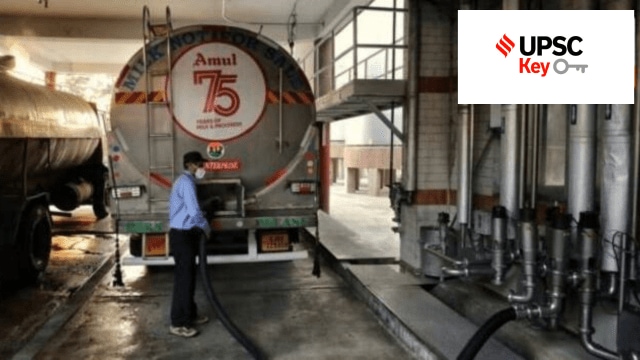 UPSC Key April 2023: Here's what you should be reading from the April 17, 2023 edition of The Indian Express (Express Photo: Nirmal Harindran)
Important topics and their relevance in UPSC CSE exam for April 17, 2023. If you missed the April 12, 2023 to April 14, 2023 UPSC key from the Indian Express, read it here
FRONT PAGE
Killed Atiq to be famous, would benefit: Cops quote assailants
Syllabus:
Preliminary Examination: Indian Polity and Governance-Constitution, Political System, Panchayati Raj, Public Policy, Rights Issues, etc.
Main Examination: General Studies IV: Ethics and Human Interface
Key Points to Ponder:
• What’s the ongoing story– As a security blanket was thrown over Prayagraj, the three youths, arrested for killing gangster-turned-politician Atiq Ahmed and his brother Ashraf Saturday night, were quoted by police saying “we wanted to finish the gang of Atiq and Ashraf and become famous” since “this would benefit us in the future”. Lavlesh Tiwari (22), Mohit alias Sunny Puraney (23) and Arun Kumar Maurya (18) were produced before a local court in Prayagraj Sunday. Gulab Chand Agrihari, District Government Counsel, said the court sent the three accused to judicial custody until April 29.
• What Commissions of Inquiry Act, 1952 says?
• Who was Atiq Ahmed?
• ‘The lengthening list of the UP Police’s encounter killings is a stain on its record. It gives the lie to the most fundamental of promises in a constitutional democracy, the assurance of due process, for all, in a system governed by the law’-Analyse
• What is encounter killing?
• Does the police has the right to commit encounter as per law?
• What is retributive justice?
• Encounter killing-Ethical or unethical?
• Encounter Killings and due process of law-connect the dots
• If you remember, the Uttar Pradesh police also killed 56-year-old gangster Vikas Dubey, in an encounter quite similar to a case that took place in Hyderabad (Telangana) in December 2019. In both instances, public sentiment was in favour of these extrajudicial executions-How Public sentiments drives encounter killings?
• On encounters killings, the Supreme Court of India ensures proper guidelines and procedures-what are those guidelines?
• What National Human Rights Commission (NHRC) says on Encounter Killings or Extrajudicial Killings?
• Do You Know-On September 23, 2014, a bench of then CJI RM Lodha and Rohinton Fali Nariman issued detailed guidelines enumerating 16 points to be followed “in the matters of investigating police encounters in the cases of death as the standard procedure for thorough, effective and independent investigation.” The guidelines came in the case “People’s Union for Civil Liberties v State of Maharashtra”, and included the registration of a first information report (FIR) as mandatory along with provisions for magisterial inquiry, keeping written records of intelligence inputs and independent investigation by bodies such as the CID.
• What is collective conscience of society?
• Why is collective conscience important?
• “Murder-for-murder frames disturbing questions”-Comment
• An eye for an eye makes the whole world blind-Decode the quote in this context
Other Important Articles Covering the same topic:
📍Atiq Ahmed’s son Asad killed: What SC, human rights commission have said on encounters
1,000 letters, 20 yrs: The struggle to find a place for sickle cell anaemia in textbooks
Syllabus:
Preliminary Examination: Economic and Social Development
Mains Examination: General Studies II: Issues relating to development and management of Social Sector/Services relating to Health, Education, Human Resources.
Key Points to Ponder:
• What’s the ongoing story-For over two decades, a bespectacled doctor working in Maharashtra’s tribal-dominated Gadchiroli district wrote more than 1,000 letters and emails to officers across 15 states, urging them to include information on sickle cell anaemia in school and college curriculum to raise awareness on this hereditary disorder. Dr Ramesh Katre’s efforts bore fruits when Union Minister Nitin Gadkari asked the University Grants Commission (UGC) to request all higher educational institutions across India to consider adding a chapter on this debilitating condition.
• What is sickle cell anaemia?
• Do You Know-Sickle cell anaemia is a genetic disorder in which red blood cells become oval shaped due to oxygen deficiency. The World Health Organization (WHO) states that Africa has the highest burden of sickle cell anaemia. According to the Centre, India has the second-highest burden of this condition in the world. An estimated 30,000-40,000 children born every year suffer from this disorder. The condition is especially widespread among India’s tribal population, where one in 86 infants suffers from this condition. Of the 15 states that share the highest incidence of this disease, Maharashtra tops the chart.
• What is the burden of disease?
• Why is Sickle Cell anaemia so under-diagnosed and how can it be prevented?
• For Your Information-The Finance Minister also announced a mission to eliminate sickle cell anaemia by 2047. The programme will include awareness, counselling and universal screening of seven crore people aged up to 40 years in affected tribal areas.
• India’s Health Budget-Know the Statistics
• Public Health Systems in India-Know the Background
• Current state of India’s health infrastructure- What World Bank data says?
• COVID-19 Pandemic and India’s Healthcare System-Connect the dots
• Steps required to strengthen the existing state of Health infrastructure in India
• What do you understand by Universal Health Coverage (UHC)?
• PM Atma Nirbhar Swasth Bharat Yojana and Ayushman Bharat Scheme-Key Highlights
• Is there any explicit/implicit recognition of the right to health or healthcare under the Constitution? (Hint:
Directive Principles of State Policy in Part IV of the India Constitution provide a basis for the right to health)
• What is Supreme Court of India stand on Right to Health?
• What are the key issues faced by the healthcare sector of India?
Other Important Articles Covering the same topic:
📍‘Sickle cell disease needs to be notified’
THE EDITORIAL PAGE
Syllabus:
Preliminary Examination: Indian Polity and Governance-Constitution, Political System, Panchayati Raj, Public Policy, Rights Issues, etc.
Main Examination: General Studies II: Salient features of the Representation of People’s Act.
Key Points to Ponder:
• What’s the ongoing story-Former CEC S Y Qureshi writes: Recently, the Election Commission of India (EC) revised the list of “recognised” national parties and state parties. It recognised the Aam Aadmi Party (AAP) as a national party, giving it a major boost before 2024, while the Trinamool Congress (TMC), Nationalist Congress Party (NCP) and Communist Party of India (CPI) lost their national party status. The country now has six national parties — the BJP, Congress, Bahujan Samaj Party, CPI(M), National People’s Party and AAP.
• What is National Party?
• What are the conditions for recognition as a national party in India?
• How Election Commission of India defines National Party?
• How many national parties are there in India?
• The Election Symbols (Reservation and Allotment) Order, 1968, stipulates the criteria for recognition as a national or state party-know the criteria
• Where does the AAP fit into this scheme?
• Aam Aadmi Party recognised as National Party-what criteria has the party fulfilled to become the National Party?
• What is a State Party?
• What are the basic requirement to be recognised as a state party?
• National Party and State Party-compare and contrast
• What are the other national parties?
• Why the Trinamool Congress (TMC), Nationalist Congress Party (NCP) and Communist Party of India (CPI), lost their national party status?
• For Your Information-Acting under the Election Symbols (Reservation and Allotment) Order, 1968, which stipulates the criteria for recognition as a national or state party, the EC’s order said AAP had fulfilled the requirement of being a recognised state party in four or more states. According to Paragraph 6C of the order, amended with effect from January 1, 2014, a party will continue to be a national or state party if it fulfils the criteria laid down in Paragraphs 6A and 6B in the “next election”, after the one in which it “got recognition”. Among other conditions, Paragraph 6A states that a state party must get at least 6% of the votes polled in the last Assembly election and at least two MLAs; or 6% vote share and one MP from that state in the last Lok Sabha election; or 3% of the total seats in the Assembly or three seats, whichever is more. Similarly, Paragraph 6B states that a national party must get at least 6% vote share in four or more states in the last Lok Sabha or Assembly elections and have at least four MPs; or at least 2% of the seats in the Lok Sabha, with its candidates having been elected from at least three states.
• A party can avail of certain benefits on being recognised as a national party-what are the benefits?
• Do You Know- In Janata Dal (Samajwadi) v Election Commission of India, 1996, the Court held that the EC has the power to rescind the recognition of a national party if that party failed to fulfil the conditions prescribed under the Symbols Order. Furthermore, the Court, in Subramanian Swamy v Election Commission of India, 2008, had considered the argument as to whether a symbol reserved for a party due to grant of recognition under the Symbols Order becomes a part of its identity in the minds of the voters and, therefore, should not be taken away due to subsequent de-recognition. The Court rejected the contention and held that the EC had every right to deprive a political party of its symbol due to its dismal performance in the elections.
Other Important Articles Covering the same topic:
📍AAP gets national party tag, but NCP, TMC, CPI lose status
THE IDEAS PAGE
Syllabus:
Preliminary Examination: Economic and Social Development-Sustainable Development, Poverty, Inclusion, Demographics, Social Sector Initiatives, etc.
Main Examination: General Studies III: Indian Economy and issues relating to planning, mobilization, of resources, growth, development and employment.
Key Points to Ponder:
• What’s the ongoing story-Ashok Gulati writes: Let me start by complimenting the Reserve Bank of India (RBI) team, especially its Monetary Policy Committee (MPC) for “the pause” in raising repo rates in its last meeting. RBI Governor Shaktikanta Das put it very appropriately when he said that the decision should be seen as a pause, not a pivot, and the Bank is open to any further increases in repo rates if inflation remains defiant.
• Although this pause was against the majority view in the market, it has served two important purposes-what important purposes?
• According to the Author, what is the nature of CPI inflation?
• How CPI inflation, is likely to behave if India is hit by El Nino, and if monsoon remains at 96 per cent or 94 per cent of the Long Period Average (LPA) as predicted by IMD and Skymet lately?
• How the prospect of El Nino hitting India sometime towards the later half of monsoon season has created a new uncertainty about kharif crops?
• According to the Author, food inflation can be contained even below 5 per cent in FY24-how?
Other Important Articles Covering the same topic:
📍Explained: What is the ‘Long Period Average’, IMD’s benchmark for monsoon prediction?
EXPLAINED
Syllabus:
Preliminary Examination: Economic and Social Development-Sustainable Development, Poverty, Inclusion, Demographics, Social Sector Initiatives, etc.
Main Examination: General Studies III: Issues related to direct and indirect farm subsidies and minimum support prices; Public Distribution System- objectives, functioning, limitations, revamping; issues of buffer stocks and food security; Technology missions; economics of animal-rearing.
Key Points to Ponder:
• What’s the ongoing story– The current price inflation in milk is mainly due to a shortage of fat. It has led dairies to hike full-cream milk prices or to cut fat content through rebranding of existing products. Also, milk does not attract GST, while fat and powder used in reconstitution does, an anomalous situation for which the consumer ultimately pays.
• The current price inflation in milk-know in brief?
• What are the factors responsible for price inflation in milk?
• For Your Information-The current price inflation in milk has mainly to do with a shortage of fat. It has led dairies to increase full-cream milk prices more or to cut down fat content through rebranding of existing products. There have even been reports of branded ghee and butter disappearing from store shelves.
• ‘More immediate reason for rising fat prices is exports’-why?
• ‘October-March is normally the ‘flush’ season in milk, when supply exceeds demand’-Discuss
• Milk is included under goods and services tax-True or False?
• Milk doesn’t attract any goods and services tax. But skim milk powder (SMP) is taxed at 5% and milk fat at 12%-Why?
Other Important Articles Covering the same topic:
📍What is the Amul-Nandini row in Karnataka and how do the two brands compare in its dairy market?
Syllabus:
Preliminary Examination: History of India and Indian National Movement.
Main Examination: General Studies I: Indian culture will cover the salient aspects of Art Forms, literature and Architecture from ancient to modern times.
Key Points to Ponder:
• What’s the ongoing story-Prime Minister Narendra Modi on Thursday (April 14) referred to the Uttaramerur inscription in Kanchipuram, Tamil Nadu, while discussing India’s democratic history, PTI reported. “India is the world’s oldest democracy, it is the mother of democracy. There are numerous historical references to this. An important reference is Tamil Nadu,” Modi said. “The inscription found there is like a local constitution for the gram sabha. It tells how the assembly should be run, what should be the qualification of members, what should be the process to elect the members, and how a member would be disqualified.”
• Where is Uttaramerur?
• Map Work- Uttaramerur
• What does the inscription say?
• For Your Information-The famous inscription from Parantaka I’s reign is found on the walls of the Vaikunda Perumal Temple. The inscription gives details of the functioning of the local sabha, i.e. the village assembly. A sabha was an assembly exclusively of brahmans and had specialised committees tasked with different things. The Uttaramerur inscription details how members were selected, the required qualifications, their roles and responsibilities, and even the circumstances in which they could be removed.
• Describing how the sabha shall be constituted, what exactly the inscription says?
• The inscription describes a number of important committees within the sabha with their own distinct functions-what are those?
• Is this an example of a democracy?
• Do You Know-While the Uttaramerur inscription gives details of local self-governance, on closer inspection, it is far from a truly democratic system. Not only does it restrict sabha membership to a tiny subsection of land-owning brahmans, it also does not have true elections. Rather, it chooses members from the eligible pool of candidates through a draw of lots. What the Uttaramerur inscription details is a system of local self-government, outside the direct authority of the king. Furthermore, for all intents and purposes, the inscription is like a constitution – it describes both the responsibilities of members of the sabha as well as the limitations to the authority of these members. If the rule of law (rather than rule by personal diktat) is an essential component of a democracy, the Uttaramerur inscription describes a system of government which follows just that.
Other Important Articles Covering the same topic:
Army fighting paramilitary in Sudan — why?
Syllabus:
Preliminary Examination: Current events of national and international importance.
Main Examination: General Studies II: Effect of policies and politics of developed and developing countries on India’s interests, Indian diaspora.
Key Points to Ponder:
• What’s the ongoing story– At least 100 civilians have been killed and 1,100 people, including combatants, have been wounded in Khartoum, the capital of Sudan, since fierce fighting broke out between the country’s army and paramilitary forces on Saturday, according to the Sudanese Doctors Union. Among those killed is an Indian national identified as Albert Augustine, who was hit by a stray bullet, the Indian Embassy in Khartoum said. Augustine, 48, belonged to Nellippara village in Kerala’s Kannur district and was a security manager with a company in Sudan.
• What is the origin of the Sudan conflict?
• Map Work-Sudan
• Tussle between Army and RSF-Why?
• ‘The battle between the army and RSF has likely made Sudan’s transition to democracy more difficult’-Discuss
Other Important Articles Covering the same topic:
📍Sudan: Three UN food workers among 59 killed, many injured as clashes go on
Collecting voice samples to aid investigation: process and legality
Syllabus:
Preliminary Examination: Indian Polity and Governance-Constitution, Political System, Panchayati Raj, Public Policy, Rights Issues, etc
Main Examination: General Studies II: Government policies and interventions for development in various sectors and issues arising out of their design and implementation.
Key Points to Ponder:
• What’s the ongoing story– Last week, Congress leader Jagdish Tytler appeared before the Central Bureau of Investigation (CBI) to submit samples of his voice in connection with his alleged role in three murders in Delhi’s Pul Bangash area by a mob during the 1984 anti-Sikh riots. The CBI said it had fresh evidence in the case, for which Tytler’s voice had to be corroborated with a particular speech he made 39 years ago.
• How is a voice sample taken?
• How does a matching voice sample help the police’s case in court?
• When was it first used?
• What were the past cases in India where voice samples were collected?
• What is the legality behind collecting voice samples?
Other Important Articles Covering the same topic:
📍1984 riots: Tytler appears before CBI to give voice sample
For any queries and feedback, contact priya.shukla@indianexpress.com
The Indian Express UPSC Hub is now on Telegram. Click here to join our channel and stay updated with the latest Updates.

Read UPSC Magazine