28 min read


© IE Online Media Services Pvt Ltd



 UPSC Key October 2023: Here's what you should be reading from the October 11, 2023 edition of The Indian Express
 Important topics and their relevance in UPSC CSE exam for October, 11, 2023. If you missed the October, 10, 2023 UPSC CSE exam key from the Indian Express, read it here
FRONT PAGE
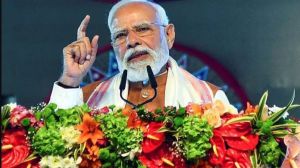
Netanyahu calls Modi who tells him: India with Israel in this difficult hour
Syllabus:
Preliminary Examination: Current events of national and international importance.
Mains Examination: General Studies II: Effect of policies and politics of developed and developing countries on India’s interests, Indian diaspora.
Key Points to Ponder:
• What’s the ongoing story-In their first phone conversation since the Hamas attack on Israel, Prime Minister Narendra Modi told Israel’s Prime Minister Benjamin Netanyahu Tuesday that “people of India stand in solidarity with Israel in this difficult hour”. Thanking Netanyahu “for his phone call and providing an update on the ongoing situation”, Modi, in a post on X later, said “India strongly and unequivocally condemns terrorism in all its forms and manifestations” — remarks reiterated in a statement by the Prime Minister’s Office.
• “The Prime Minister’s remarks have been perceived as backing Israel completely in the wake of the terror attacks”-Analyse
• What specific statements or positions did the Indian government or officials express regarding the ongoing developments in Israel?
• “The India-Israel relationship has blossomed in the last decade or so in the framework of a robust strategic partnership, and the personal chemistry between Modi and Netanyahu has been visible in their bilateral engagements”-Examine India and Israel bilateral relations
• “The political focus on India’s current solidarity with Israel masks the extraordinary transformation of Delhi’s ties with the Arab world in the last decade”-Connect the dots between India, Arab world and Israel
• What is India’s Middle East policy?
• What are the diplomatic challenges for New Delhi in the context of Arab-Israeli relations?
• What has been the response of the Arab world to the recent confrontation between Hamas and Israel?
• For Your Information-The UAE and Bahrain, which signed the US-brokered Abraham Accords with Israel, have criticised the attacks by Hamas.
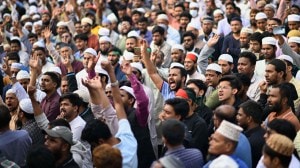
Diplomats, especially from the Arab countries, have noticed the MEA silence — the only tweets and the PMO/MEA statement so far have been about expressing solidarity with Israel, and the “terrorist attacks” on Israel. At least three diplomats from the Arab countries, including an ambassador, said they were expecting a more balanced and nuanced statement from the MEA. “The Indian diplomats just crafted a fantastic (G20) joint communique which was a superb example of a diplomatic balancing act. They have been doing that for the last year-and-a-half on the Russia-Ukraine war. They have the skills, but we haven’t seen those skills in the last four days,” a diplomat from one of the Arab countries told The Indian Express Tuesday.
In West Asia, India has deep strategic ties with Israel on the one hand, and Saudi, UAE, Qatar, Iran and Egypt – to name a few – on the other hand.
There are an estimated 90 lakh Indians living and working in the West Asia region, and India imports more than 50 per cent of crude from the region. It also has high ambitions in terms of connectivity projects, articulated recently during the announcement of the India-Middle East-Europe Economic Corridor.
So, it has to strike a balance between the two sides of the aisle in the deeply divided and polarised West Asia region.
For now, that is South Block’s defence. Sources said the Hamas attacks on Israeli civilians has divided the Arab world, and there is no united front there as well.
The UAE late Sunday issued a statement slamming the Hamas attack as a “serious and grave escalation”. The UAE Foreign Ministry statement said it was “appalled” by reports Israeli civilians were taken as hostages from their homes, but avoided criticism of Israel’s deadly strikes on Gaza.
“Civilians on both sides must always have full protection under international humanitarian law and must never be a target of conflict,” the ministry said.
Bahrain also criticised the attacks by Hamas, saying it constituted “a dangerous escalation that threatens the lives of civilians”.
The statement from the Bahrain Foreign Ministry also affirmed “Bahrain’s denunciation of the reported kidnappings of civilians from their homes to be taken as hostages”. It urged de-escalation of the violence that threatens regional security and stability.
Saudi Arabia has tried to strike a balance, although it did mention “Israeli occupation forces”, and was perceived to be leaning towards Palestine – there was no condemnation of the Hamas attacks.
Countries like Qatar, Kuwait and Oman have been critical of Israel.
• “Now, Delhi finds itself in an unenviable situation where it is torn between different sides: it has Israel which is a key strategic partner on one side, and a divided Arab world on the other side”-Discuss
Other Important Articles Covering the same topic:
📍Cracks visible as Arab envoys wait for Delhi word: UAE, Bahrain slam Hamas
📍Why Gandhi was against a Jewish state in Palestine
Climate change risks: Cloud over India chip dreams, Moody’s flags flood fears
Syllabus:
Preliminary Examination: General issues on Environmental ecology, Bio-diversity and Climate Change
Main Examination:
• General Studies II: Government policies and interventions for development in various sectors and issues arising out of their design and implementation.
• General Studies III: Conservation, environmental pollution and degradation, environmental impact assessment.
• General Studies III: Infrastructure: Energy, Ports, Roads, Airports, Railways etc.
Key Points to Ponder:
• What’s the ongoing story- Even as India moves to build out a domestic semiconductor manufacturing ecosystem to reduce its reliance on imports, the country’s ambition could be headed for troubled waters – it faces an overall doubling in the risk from flooding, as a consequence of climate change, in the next three decades or so.
According to Moody’s risk management solutions, by 2050, the costs of flooding are expected to rise by around 30 per cent, from water stress by 35 per cent, sea level rise by 60 per cent, and heat stress by 150 per cent by 2050 under a moderate climate change scenario.
“With India also starting to initiate policies favouring greater self-sufficiency in semiconductors, it also faces an overall doubling in the risk from flooding by mid-century,” Moody’s said in a blog.
• What exactly Moody’s risk management solutions said?
• What factors may contribute to potential challenges in the domestic semiconductor manufacturing ecosystem?
• “The year so far has been erratic in terms of weather patterns in India”-Examine
• What makes Semiconductors the most important commodities in the global market right now?
• For Your Information-Semiconductors are arguably among the most important commodities in the global market right now, with use in a myriad of sectors – from computers to cars, and airplanes to railways. Any break in supply will result in other production lines, such as cars and computers, grinding to a halt.
As the West tries to distance itself from China owing to evolving geopolitical tensions, India has pitched itself as a “trusted” alternative for electronics manufacturing. New Delhi has identified chip manufacturing as a key driver for future economic growth, and has sanctioned a $2.75 billion packaging plant currently being developed by Micron Technology.
Taiwan, which is home to over 90 per cent of the most advanced – below 10 nanometers semiconductor manufacturing capacity – could see chip plants’ costs related to climate risks rise substantially over the next 20-30 years, Moody’s said.
• What exactly India Inc have said recently?
• “Weather is the “only single business risk”-Comment
• How climate change impacts companies and their profits?
• For Your Information-WEATHER influences sales, and the bottomline. And irregular climate is an uncertainty that is biting companies plans, and profits. The year so far hasn’t made it easier for India Inc. If February was the warmest in over a century, March was unusually rainy, 26 per cent more rainfall than long-period average (LPA); August has been the driest since 1901, receiving 36 per cent less rainfall than its LPA.
• What is the evidence of climate change?
• How vulnerable is India to climate change?
• What is the macroeconomic impact of climate change on India?
• For Your Information-Climate change can adversely impact both the supply side (read the productive potential) as well as the demand side. It can stroke inflation, reduce economic output, trigger uncertainty and change consumer behaviour.
Over the years, there have been several predictions and assessments made about the impact of climate change on India’s economy. Some are listed below:
1. According to Niti Aayog in 2019, around 600 millions of India’s population are facing severe water stress, with 8 million children below 14 years in urban India at risk due to poor water supply.
2. The World Bank in 2020 said that India could account for 34 million of the projected 80 million global job losses from heat stress associated productivity decline by 2030.
3. The IPCC Working Group in 2022 stated that India is one of the most vulnerable countries globally in terms of the population that would be affected by the sea level rise. By the middle of the present century, around 35 million people in India could face annual coastal flooding, with 45-50 million at risk by the end of the century.
Typically the risks from climate change are categorised in two main ways. One is the physical risks and these include chronic issues (such as a gradual and sustained change in temperature and precipitation) as well as acute events such as extreme weather occurrences).
The second category of risks are called transition risks; simply put, these refer to economy-wide changes arising from the transition towards a low-carbon economy. This is best encapsulated by a paradox called “success is failure”. This phrase was used by Mark Carney, Governor of the Bank of England, in 2016. Carney meant that if the shift towards becoming a low-carbon economy is too rapid, it could materially damage a country’s financial stability.
• What is the extent of loss and damage?
• What is the economic cost of climate change?
• How vulnerable is India’s economy to such climate change?
• What will happen to our GDP and inflation if timely action is not taken to address climate concerns?
• Can policies provide some solutions?
• What is the supply chain for semiconductors?
• What are the steps in the semiconductor supply chain?
• Which nation holds the distinction of being the primary source of semiconductors on a global scale?
• “A key element of the partnership is the resolve to diversify the global semiconductor supply chain, which is at the centre of the rivalry between the world’s number 1 and 2 economic powers, the US and China”-What do you understand by this?
• What is semiconductor?
• What is the most basic component of a semiconductor chip?
• Semiconductors are the foundation of nearly every modern electronic gadget. Where does India stand in the semiconductor industry?
• The Government of India has undertaken several initiatives to promote electronics manufacturing-Know the important
schemes
• What are the current challenges of the semiconductor industry in India?
Other Important Articles Covering the same topic:
SC will hear pleas against electoral bonds on Oct 31
Syllabus:
Preliminary Examination: Indian Polity and Governance
Main Examination: General Studies II: Important aspects of governance, transparency and accountability
Key Points to Ponder:
• What’s the ongoing story-The Supreme Court said on Tuesday that it will hear petitions challenging the electoral bonds scheme on October 31. The 2018 scheme introduced instruments through which money could be donated to political parties in India. However, in April last year, the court had said it would take up the petitions filed by two NGOs — Common Cause and Association for Democratic Reforms (ADR) — challenging the scheme.
• What is the electoral bonds scheme?
• Electoral Bonds-Key Features
• What was the rationale behind the electoral bonds scheme?
• Why is the scheme facing a legal challenge and what are its larger criticisms?
• For Your Information-Announced in the 2017 Union Budget, electoral bonds are interest-free bearer instruments used to donate money anonymously to political parties. Simply put, anyone can donate money to political parties through them.
Such bonds, which are sold in multiples of Rs 1,000, Rs 10,000, Rs 1 lakh, Rs 10 lakh, and Rs 1 crore, can be bought from authorised branches of the State Bank of India (SBI). As such, a donor is required to pay the amount — say Rs 10 lakh — via a cheque or a digital mechanism (cash is not allowed) to the authorised SBI branch.
The political parties can choose to encash such bonds within 15 days of receiving them and fund their electoral expenses. There is no limit on the number of bonds an individual or company can purchase. If a party hasn’t enchased any bonds within 15 days, SBI deposits these into the Prime Minister’s Relief Fund.
When first announced in then Finance Minister Arun Jaitley’s Budget speech of 2017, he had said, “Even 70 years after Independence, the country has not been able to evolve a transparent method of funding political parties which is vital to the system of free and fair elections…Political parties continue to receive most of their funds through anonymous donations which are shown in cash. An effort, therefore, requires to be made to cleanse the system of political funding in India.”
Two main changes were proposed then. One, it reduced the amount of money that a political party could accept in cash from anonymous sources — from Rs 20,000 to Rs 2,000. Two, he announced the introduction of electoral bonds as a way to make such funding more transparent.
However, the fine print of the notification has revealed that even individuals, groups of individuals, NGOs, religious and other trusts are permitted to donate via electoral bonds without disclosing their details.
• Which Bank is the only bank authorised to sell Electoral Bonds?
• Electoral Bonds and associated issues
• When are the bonds available for purchase?
• Are electoral bonds taxable?
• Why were electoral bonds introduced in India?
• Why are electoral bonds being so vehemently opposed by transparency activists?
• How popular are electoral bonds as a route of donation?
• What does the Supreme Court have to say on electoral bonds?
• What is the Election Commission’s stand on electoral bonds?
• Reserve Bank of India on electoral bonds scheme?
Other Important Articles Covering the same topic:
📍Explained: Why the electoral bonds scheme has been challenged in Supreme Court
GOVT & POLITICS
SC’s role is not to micromanage all issues: CJI
Syllabus:
Preliminary Examination: Indian Polity and Governance-Constitution, Political System, Panchayati Raj, Public Policy, Rights Issues, etc.
Main Examination: General Studies II: Structure, organization and functioning of the Executive and the Judiciary
Key Points to Ponder:
• What’s the ongoing story– Chief Justice of India D Y Chandrachud Tuesday said the Supreme Court’s role is not to micromanage issues that arise across the country. He further sought to underline that local issues are best left to the High Courts.
• In what specific legal or judicial setting did the Supreme Court issue the aforementioned statement?
• “The Supreme Court’s role is not to micromanage issues that arise across the country”-Analyse
• For Your Information-“…How can we run the country like this? On every little thing… Now tomorrow we will have an IA from Maharashtra, we will have an IA from Karnataka. How do we deal with it? We have to as a court have broader functional understanding, what is the role of the Supreme Court in the nation? Not to deal with micromanagement of issues which arise all over the country. If the HC commits an egregious error, we are here. We will correct the error. If there is a violation of the law by the HC, which is obviously not likely in a given situation…” the CJI presiding over a three-judge bench remarked while hearing a matter related to captive elephants.
The main petition which raises questions on captive elephants in the light of the Wildlife Protection Act has been pending before the Court since 2014. However, more than two dozen Intervention Applications (IAs) have also been filed in the petition since then.
Tuesday, one such IA filed by a native of Kerala came up before the bench also comprising Justices J B Pardiwala and Manoj Misra.
Taking exception to what it said is the “proliferation of IAs”, the bench told senior advocate C U Singh who appeared for the applicant that he should approach the Kerala HC.
Singh said 131 captive elephants had died in the state between February and September 2022 and that a majority of them were under 50 years old. He added that after the IA was filed in November 2022 till September 23, there were 22 more recorded deaths. “There may be some unrecorded too. It’s a startlingly high rate,” he said.
But the bench pointed out that he was not the petitioner but an intervenor who was seeking substantive relief. “You are an intervenor based in Kerala. Point this out to the HC there. Because these are matters pertaining to states. We have a petition pan-India. We should make sure that the SC is not rendered dysfunctional because we spread ourselves too thin. You have a plea dealing specifically with facets that pertain to the state of Kerala. You are not even a petitioner, but an intervenor. Go to the HC, let the HC deal with it,” said the CJI.
The CJI said, “My concern is this. We are not saying that what you (petitioners) point out does not deserve (consideration)… But there are 1,000 issues which merit attention. The SC should not render itself completely dysfunctional… Also, we deal with these issues on an ad-hoc basis. Pick up an IA here, pick up an IA there, pass order. You have HCs which consist of some seasoned judges. They know the ground reality. They know the impact of passing an order disabling the use of elephants. It’s also a matter which relates to local feelings. We don’t know the ramifications of an order like this which we will pass. Judges of the HC are peculiarly suited to understand the local conditions, they understand the context in which these elephants are housed. Let them deal with the matter at a primary level. If they make an egregious error, we are here to correct those errors.”
• What is an intervention application?
• What is the history of Supreme Court in India?
• What are the Constitutional Provisions with respect to Supreme Court in India?
• The Constitution has made certain provisions to safeguard and ensure the independent and impartial functioning of a Judges-Know in detail
• Jurisdiction And Powers of Supreme Court of India-Know in detail
Other Important Articles Covering the same topic:
📍India@75, Looking at 100: A court that protects the people
EXPRESS NETWORK
Bogus work, forged bills in MGNREGS irregularities go beyond Bengal: Reports
Syllabus:
Preliminary Examination: Economic and Social Development
Main Examination: General Studies II: Important aspects of Governance and Welfare schemes for vulnerable sections of the population by the Centre and States and the performance of these schemes
Key Points to Ponder:
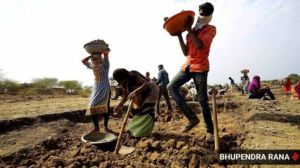
• What’s the ongoing story-While West Bengal is currently in the spotlight due to alleged irregularities in the Mahatma Gandhi National Rural Employment Scheme (MGNREGS) implementation, resulting in funds being stopped by the Centre, the National Level Monitoring (NLM) reports available with the Union Ministry of Rural Development show irregularities in implementing the rural job guarantee scheme across several states.
• What is the National Level Monitoring (NLM) report?
• What exactly National Level Monitoring (NLM) reports pointed out?
• For Your Information-According to NLM guidelines, the Rural Development Ministry can depute NLMs in three conditions— regular monitoring of major schemes, special monitoring of an individual scheme and in cases of complaints or enquiries. A special monitoring of MGNREGS was conducted in three phases during 2022-23 across the country, three separate reports of which have been compiled by Delhi-based CMI Social Research Centre.
The first report of the special monitoring of MG-NREGS by NLMs, finalised in January 2022, gives details of onsite verification. The report states, “The selection of Gram Panchayat (GP) for this Special Monitoring was done at the Ministry level however the works to be verified were to be identified by NLM Teams on a random basis. Largely, in almost all the districts, the assets created under the works verified were found existing on ground.”
However, the report highlights that of 55 MGNREGA works selected at random from the NLMs in Rajasthan’s Jhalawar district, 23 were found to be “not existing”. “NLM report for district Jhalawar (Rajasthan) has some very startling observations in this regard. The NLM Teams in 12 GPs have verified 55 MGNREGA works, selected randomly and out of them 23 works were found ‘not existing’.
NLM has observed that most of these works were Water Conservation and Water Harvesting activities like earthen check dams/bunding/pond/desilting of pond etc. whereas some works of other categories were also found not existing,” the report said.
“The NLM findings also suggest that the expenditure incurred on these works was bogus, fake bills have been produced and wages paid to the workers has been siphoned by the functionaries at different levels,” the report said. The report shows two MG-NREGS works were found “missing” on ground in Jalpaiguri,West Bengal.
The second report, finalised in May 2022, noted that out of 6,538 worksites inspected, no work had been initiated at 23 of these. “All of these works have been reported as ongoing or completed as per the MIS,” the report said. Of these 23 works, 6 were in Karnataka, 5 were in Bihar, 4 each in Punjab and Rajasthan, two in West Bengal, and one each in Himachal Pradesh and Jharkhand. Citing an example from these 23 missing works, the report noted, Gravel Road Construction found missing…On inspection of the above work site by NLM, it was found that MR [Muster Roll] has been generated on this work and a total of 1993 persondays of employment is booked against which a payment of Rs. 4.31 Lakh has made. It was found that no work/activity has been undertaken on this site. The Village Development Officer and Sarpanch of the GP failed to provide any clarification and admitted that no work has been actually undertaken,” the report said.
• Mahatma Gandhi National Rural Employment Guarantee Act (MGNREGA)-Mandate, Goals
• What are the core objectives of the Mahatma Gandhi National Rural Employment Guarantee Scheme (MGNREGS)?
• When was Mahatma Gandhi National Rural Employment Guarantee Act passed by the Indian Parliament?
• What is the relationship between the Mahatma Gandhi National Rural Employment Guarantee Act (Mahatma Gandhi NREGA) and the Mahatma Gandhi National Rural Employment Guarantee Scheme (Mahatma Gandhi NREGS)?
• In what way paradigm shift has taken place with the implementation of MGNREGA?
• Who are the key stakeholders of MGNREGS?
• What is the role of Gram Sabha and Gram Panchayat in MGNREGS?
• How is Household defined in MGNREGA?
• Issues with MGNREGA?
• What are the eligibility criteria for receiving the benefits under MGNREGA scheme?
• Mahatma Gandhi National Rural Employment Guarantee Act (MGNREGA)-Nodal Ministry
• Mahatma Gandhi National Rural Employment Guarantee Act (MGNREGA) and Social Audit
• How schemes such as MGNREGA can help alleviate distress migration?
Other Important Articles Covering the same topic:
📍Facing flak over NREGS rule changes, govt holds talks on its initiatives
A day after allowing it, SC puts abortion on hold
Syllabus:
Preliminary Examination: Indian Polity and Governance-Constitution, Political System, Panchayati Raj, Public Policy, Rights Issues, etc.
Mains Examination: General Studies II: Structure, organization and functioning of the Executive and the Judiciary-Ministries and Departments of the Government; pressure groups and formal/informal associations and their role in the Polity.
Key Points to Ponder:
• What’s the ongoing story- A day after it allowed a woman to terminate her 25-week-old pregnancy, the Supreme Court on Tuesday asked All India Institute of Medical Sciences (AIIMS) authorities to put it on hold for now.
A bench presided by Chief Justice of India DY Chandrchud noted that “AIIMS doctors are in a very serious dilemma” as they were of the view that the fetus is “currently viable” meaning that it will show signs of life and has a strong possibility of survival.
• A bench presided by Chief Justice of India DY Chandrchud noted that “AIIMS doctors are in a very serious dilemma”-Understand and decode
• The constitutional right of women to make reproductive choices in India-Know Supreme court of India’s verdict
• What is India’s law on abortion?
• Why does the legislation have this gap?
• The Medical Termination of Pregnancy Act, 1971 and The new Medical Termination of Pregnancy (Amendment) Act 2021-Compare and Contrast
• Medical Termination of Pregnancy (Amendment) Act 2021-Know the key provisions
• For Your Information-Rule 3B of Rules annexed to the MTP Act, which was amended in 2021, specify seven categories of women who are eligible for termination between 20-24 weeks. These are: survivors of sexual assault or rape or incest; minors; those who have a change of marital status during the ongoing pregnancy (widowhood and divorce); women with physical disabilities; mentally ill women; women carrying malformed foetus that has substantial risk of being incompatible with life; and women with pregnancy in humanitarian settings or disaster or emergency situations as may be declared by the government.
• Significance and importance of Medical Termination of Pregnancy (Amendment) Act 2021?
• Issues and Challenges associated with Medical Termination of Pregnancy (Amendment) Act 2021?
Other Important Articles Covering the same topic:
📍UPSC ethics simplified: abortion rights vs ethics
EXPLAINED
What hottest Sept says about climate change
Syllabus:
Preliminary Examination: General issues on Environmental ecology, Bio-diversity and Climate Change – that do not require subject specialization.
Main Examination: General Studies III: Conservation, environmental pollution and degradation, environmental impact assessment.
Key Points to Ponder:
• What’s the ongoing story-In keeping with this year’s trend — when almost every month so far has broken one or the other temperature record — September has turned out to be the hottest September ever, by a big margin. And though there are three more months to go in the year, it is looking increasingly probable that 2023 will emerge as the warmest year ever, overtaking the record set in 2016.
The extraordinary streak of record-breaking temperature events this year have not come as a surprise. Scientists had been expecting this year to be very warm, mainly because of the development of El Nino in the Pacific Ocean, even though individual events could not be predicted. The remaining three months of the year are also forecast to be warmer than usual.
• Why September has turned out to be the hottest September ever?
• For Your Information-The record-breaking temperatures in September come on the back of several similar records for other months this year. In fact, July this year was not just the warmest July, it was the warmest for any month. That means that the average global monthly temperature has never been as high as in July this year. Several days in that month broke the daily temperature records.
Before that, June was the warmest June ever, while February, March, April and May all recorded average temperatures that were in the top-five highest ever brackets for those respective months.
In addition, the three-month period between June and August was the warmest ever on record, during which temperatures everywhere across the world — not just the global average — reached levels that were made at least two times more likely by climate change.
Even in this grim scenario, September managed to carve out another dubious distinction. The average global temperature for September was 1.75 degree Celsius warmer than the average of the 1850-1900 period, the pre-industrial time that is usually considered the baseline for measuring temperature changes. No other month, not even July this year, showed such a large deviation from the pre-industrial average.
• How El Nino impacts earth temperature?
Other Important Articles Covering the same topic:
📍Global warming: Why India is heating up slower than the world average
In assault, Hamas may have targeted Israel-Saudi deal
Syllabus:
Preliminary Examination: Current events of national and international importance.
Mains Examination: General Studies II: Effect of policies and politics of developed and developing countries on India’s interests.
Key Points to Ponder:
• What’s the ongoing story- Why did the Palestinian militant group Hamas attack Israel? And why now? Experts say one reason could be to disrupt or destroy ongoing negotiations, mediated by the United States, for the normalisation of ties between Israel and Saudi Arabia. The two countries are on the cusp of signing an agreement that could potentially mark a tectonic shift in the political landscape of the Middle East. But this deal, if it comes through, will also show that the support for an independent Palestinian state is no longer a priority for the Arab world, of which Saudi Arabia is the leader.
That is something that Hamas does not want. And notably, the militants attacked southern Israel just days after the US announced that the “basic framework” of the agreement was in place. Nine hundred Israelis are now dead in the attack, and 150 have been taken hostage in Gaza. A fierce Israeli retaliation has killed almost 700 Palestinians so far.
• What is the potential deal between Israel and Saudi?
• But how will the formalisation of ties with the Saudis help Israel?
• And what’s in the deal for the United States?
• What would the Palestinians get in the deal?
• Why is the US pushing the deal now?
• So will the Israel-Hamas conflict affect the deal?
Other Important Articles Covering the same topic:
📍In Israel-Palestine conflict, why Hamas and Hezbollah have raised the issue of ‘normalisation’
For any queries and feedback, contact priya.shukla@indianexpress.com
The Indian Express UPSC Hub is now on Telegram. Click here to join our channel and stay updated with the latest Updates.
Subscribe to our UPSC newsletter and stay updated with the news cues from the past week.

Read UPSC Magazine