© IE Online Media Services Pvt Ltd
Latest Comment
Post Comment
Read Comments
 9 min read


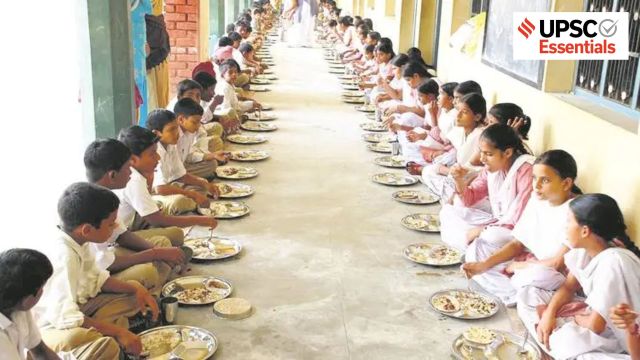 Providing breakfast under PM-POSHAN is a recommendation of the National Education Policy (NEP) 2020, which the Centre is yet to implement. (File)
From higher attendance to improving learning capabilities and protecting from long-term health risk, the school meal programmes are found to be delivering measurable gains across the country. While a cooked midday meal is provided to students from pre-primary to class 8, studies also suggest that morning hours after a nutritious breakfast can be particularly productive for tackling demanding subjects.
Reflecting this evidence, seven States and Union Territories have recently asked the Centre to consider providing breakfast under the PM-POSHAN or midday meal scheme and extend it to students up to class 12. Providing breakfast under PM-POSHAN is a recommendation of the National Education Policy (NEP) 2020, which the Centre is yet to implement.
Such measures are significant in view of India’s broader nutritional landscape. According to the United Nations’ 2025 State of Food Security and Nutrition in the World (SOFI) report released on July 28, 2025, India records the world’s highest rate of wasting among children under 5 (18.7 per cent). Equally concerning is the data on child stunting and the prevalence of anaemia among women aged 15 to 49.
India’s nutrition policies have targeted malnutrition through a combination of direct interventions and broader socio-economic measures.
As part of the Right to Life under Article 21, the Constitution recognises the Right to Food – access to adequate food and nutrition for every citizen. Article 47 of the Directive Principles of State Policy also places a duty on the state to raise the level of nutrition and public health.
The Integrated Child Development Services (ICDS) Scheme, launched in 1975, was the first holistic initiative aimed at improving child nutrition, maternal health, and early childhood development. This was followed by the National Nutrition Policy (NNP) in 1993 and the National Nutrition Mission (NNM) in 2018.
The midday meal scheme was yet another effort to deal with child malnutrition. Earlier known as the National Programme for Mid-Day Meal in Schools, or the Mid-Day Meal scheme, the Pradhan Mantri Poshan Shakti Nirman (PM POSHAN) scheme was started in 2021 and will continue till 2026.
Under the PM-POSHAN scheme, the Centre provides foodgrains, shares the material cost with the States (and the UTs of Delhi and Puducherry, which have legislatures) in a 60:40 ratio; for the States in the northeastern and Himalayan region, the ratio is 90:10. It pushes for fortification of staples with iron, folic acid, and vitamins.
The PM POSHAN also encourages donor-driven meals, known as tithi bhojan, with the idea that special food will be provided to children on special occasions. Nutrition gardens in schools are another key feature, aimed at encouraging children to engage with nature and enabling the use of fresh, school-grown produce in midday meals.
School meal programmes contribute to children’s education and nutrition in two ways: by improving access and engagement (through higher enrollment, better attendance, and reduced dropouts) and by enhancing learning capabilities through improved nutrient intake. The intergenerational benefits of these programmes are also important as India continues to fight against malnutrition.
A 2019 study by Tanika Chakraborty and Rajshri Jayaraman, School feeding and learning achievement: Evidence from India’s mid-day meal program (published in the Journal of Development Economics), also shows that prolonged exposure to school nutrition improves math and reading test scores.
Menus for the meals are largely planned at the state level, which gives them the flexibility to include local preferences and availability. Schools engage local cooks and helpers, many of whom are women from marginalised communities. The scheme also envisions reducing caste, class, religion and gender-based discrimination by encouraging children to eat together from the same kitchen.
However, several studies indicate that social discrimination still exists in various parts of the country. For instance, Ritika Khera’s article Mid-Day Meals in Primary Schools: Achievements and Challenges (published in Economic and Political Weekly in 2006) shows that such discrimination often translates into segregation of children during mealtimes based on caste, opposition to the appointment of Dalits as cooks, and debates over inclusion of eggs and meat in the meals.
As is evident, nutrition in India is shaped by social and cultural factors. The country’s diverse geography and cultural heterogeneity present unique challenges to the implementation of the PM POSHAN scheme.
A 2023 study of five government schools in Bengaluru, Karnataka, titled Contribution of mid-day meal scheme to students’ nutrition in Bengaluru, India: time to re-look (published in International Journal Of Community Medicine And Public Health), found that 1 in 3.6 children have protein deficiency routinely in their diet.
Addressing this gap would require adding more pulses, eggs, meat, dairy products, as well as nutrient-rich local foods to the menus. But the inclusion of eggs and meat remains challenging in many regions with predominantly vegetarian populations. Plant-based sources of protein are expensive and do not provide the same nutrition as animal-based products.
Direct procurement of pulses, eggs, and milk from farmer-producer organisations can help reduce cost. This model is implemented by Brazil’s National School Feeding Program (PNAE). Japan offers another example: in its school meal programmes, students eat lunch together in the classroom, take responsibility for setting up tables, fetching food from the kitchen, serving and cleaning up. In 2005, Japan also enacted a law on food and nutrition education to be included in all schools.
In fact, integrating nutrition education into the school curriculum will help create awareness amongst children about their eating habits. Like the United Kingdom and Brazilian school meal programmes, dietary recommendations can be added for sugar, trans-fat, saturated fat, salt, and restrictions on processed foods. In 2025, the Delhi government asked schools to educate students on the health impacts of processed foods. Such steps need to be adopted at an all-India level.
Several states and UTs – like Rajasthan, Kerala, Chhattisgarh, Lakshadweep, Gujarat, and Delhi – have proposed adding breakfast to the PM POSHAN scheme. The Tamil Nadu government’s breakfast scheme (for primary school children from classes 1-5 in government schools), launched in 2022, can also be modelled in other states.
The meal includes South Indian dishes like upma, pongal, etc. in Tamil Nadu. It can be adapted to locally nutritious breakfast items in other states. Interestingly, idli and dosa are not part of the meals as they are high in carbohydrates and low in protein. The introduction of dietary diversity is also key to meeting the public health threat from non-communicable diseases.
However, addressing the strain on those managing the midday meals and the proposed breakfast scheme would be crucial. Teachers often bear the burden of overseeing arrangements that lead to increased stress and workload.
However, it cannot be denied that there is a need to increase the per-child cost norms under the PM POSHAN scheme. This will also help enhance the quality and diversity of school meals. Regular revision of menus is advised to avoid monotony and a decline in cooking standards.
The food norms also need revision to include a greater variety of food sources, such as fruits, green leafy vegetables, and to minimise the dominance of cereals. Lack of proper kitchen facilities, storage space, and hygienic practices – which could lead to foodborne diseases – underlines the need for investing in proper infrastructure.
Setting up grievance redressal mechanisms in schools would also help ensure that such cases are addressed and rectified. After all, the PM POSHAN is not just a nutritional intervention, but also a crucial measure to increase educational access, social equity, and child development.
Discuss the role of school meal programmes such as PM POSHAN in addressing learning outcomes, nutrition gaps, and social equity in India.
Discuss the relationship between nutritional interventions in schools and long-term public health outcomes, especially with reference to non-communicable diseases.
Critically examine the need for introducing dietary recommendations and restrictions on processed foods in school meal programmes.
What steps can be taken to operationalise nutrition awareness among schoolchildren across India? Evaluate with reference to the 2025 Delhi government initiative.
(Rituparna Patgiri is an Assistant Professor at the Indian Institute of Technology (IIT), Guwahati.)
Share your thoughts and ideas on UPSC Special articles with ashiya.parveen@indianexpress.com.
Click Here to read the UPSC Essentials magazine for November 2025. Subscribe to our UPSC newsletter and stay updated with the news cues from the past week.
Stay updated with the latest UPSC articles by joining our Telegram channel – IndianExpress UPSC Hub, and follow us on Instagram and X.

Read UPSC Magazine