7 min read
© IE Online Media Services Pvt Ltd
Latest Comment
Post Comment
Read Comments



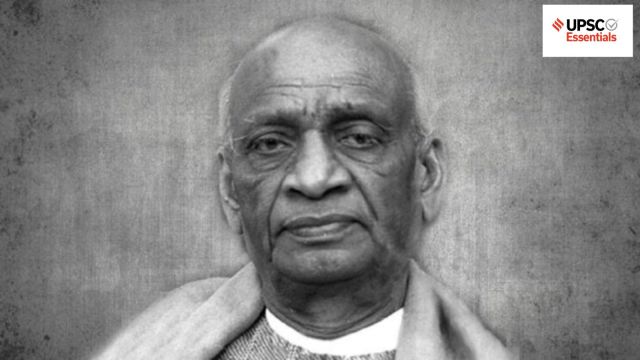 Are you preparing for the Civil Services Exam 2026? Attempt a question on the role of Vallabhbhai Patel in the Bardoli Satyagraha in today's answer writing practice. (Express Archive)
UPSC Essentials brings to you its initiative for the practice of Mains answer writing. It covers the essential topics of static and dynamic parts of the UPSC Civil Services syllabus covered under various GS papers. This answer-writing practice is designed to help you as a value addition to your UPSC CSE Mains. Attempt today’s answer writing on questions related to topics of GS-1 to check your progress.
🚨 Click Here to read the UPSC Essentials magazine for December 2025. Share your views and suggestions in the comment box or at manas.srivastava@indianexpress.com🚨
Discuss the role of Vallabhbhai Patel’s leadership in the Bardoli Satyagraha and analyse how it led to his being honoured with the title ‘Sardar’.
Discuss the strategic and political factors that influenced the British decision to shift the capital of India from Calcutta to Delhi in 1911.
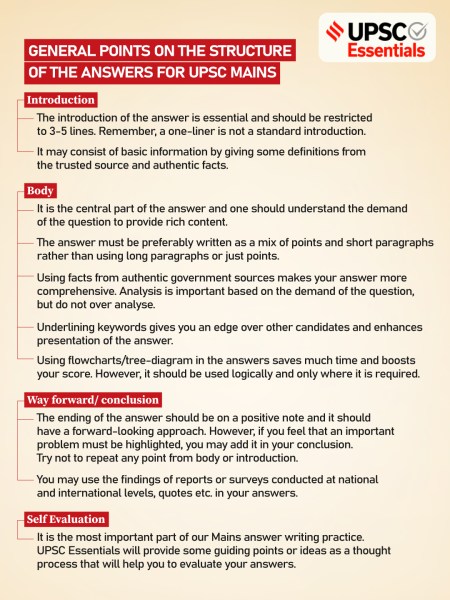
QUESTION 1: Discuss the role of Vallabhbhai Patel’s leadership in the Bardoli Satyagraha and analyse how it led to his being honoured with the title ‘Sardar’.
Note: This is not a model UPSC answer. It only provides you with a thought process which you may incorporate into the answers.
Introduction:
— Sardar Vallabhbhai Patel, often referred to as the “Iron Man of India,” was a prominent Indian statesman and a key figure in the country’s struggle for independence. He played a crucial role in shaping modern India.
— His organisational skills were first prominently displayed during the Kheda Satyagraha of 1918 and the Bardoli Satyagraha of 1928, where he led successful campaigns against oppressive policies and taxation imposed by the British authorities.
Body:
You may incorporate some of the following points in your answer:
Bardoli Satyagraha
— In 1926, the British government raised taxes in Bardoli, Gujarat, despite the region having experienced poor crops for several years. A satyagraha was planned, where peasants would refuse to pay the taxes.
— Patel was put in charge of the movement. True to his style, the satyagraha was efficiently organised, with the region divided into subregions and volunteers in charge of each. When the British government cracked down on the protesters and put up their properties for auction, very few bidders turned up.
— Eventually, the taxes were lowered. Patel’s leadership and organisation skills were greatly admired, and he was given the title of Sardar.
— Bardoli Satyagraha, along with the Kheda Satyagraha of 1918, not only brought him national recognition but also earned him the title “Sardar,” meaning leader or chief. As a senior leader of the Indian National Congress, Patel was instrumental in the party’s activities and strategies. He was a close associate of Gandhi and played a significant role in mobilising support for various non-violent movements, including the Quit India Movement of 1942.
Conclusion:
— December 15 was the death anniversary of Sardar Vallabhbhai Patel, the man who gave modern India its shape. His role in getting princely states to accede to India post-Independence is well-known, there are many inspiring instances from his illustrious life that are not as widely known. From early on in his life, as a student and then as a lawyer, Sardar Patel showed qualities that would define his political life — an iron will, an unwavering commitment to principles, and unparalleled organisational abilities.
(Source: On Vallabhbhai Patel’s death anniversary: how he became ‘Sardar’, the ‘boycott’ he organised in school, and more, culture.gov.in)
Points to Ponder
Read his role in Kheda Satyagraha and Quit India Movement
Read about his contribution in acceding princely states
Related Previous Year Questions
What were the events that led to the Quit India Movement? Point out its results. (2024)
To what extent did the role of the moderates prepare a base for the wider freedom movement? Comment. (2021)
QUESTION 2: Discuss the strategic and political factors that influenced the British decision to shift the capital of India from Calcutta to Delhi in 1911.
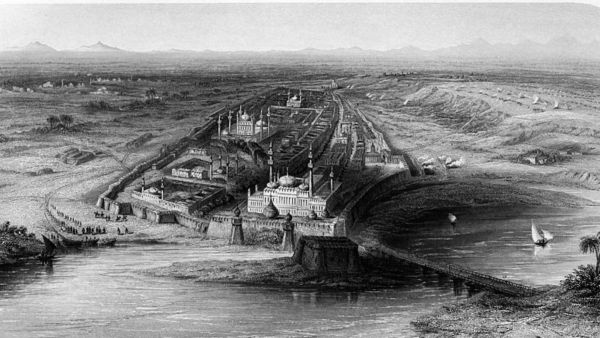 (Wikimedia Commons)
Note: This is not a model UPSC answer. It only provides you with a thought process which you may incorporate into the answers.
Introduction:
— A hundred and fourteen years ago, the British made a decision that would reshape the fate of Delhi and India. The laying of the foundation stones, prepared by the Public Works Department, marked the beginning of the new capital of Delhi. Interestingly, the idea of a capital other than Calcutta had been discussed since the earliest days of the East India Company’s presence on the subcontinent.
— The reasons cited were both strategic and operational: Calcutta, located on the eastern coast, lay at a great distance from many of the promising provinces of the British Empire.
Body:
You may incorporate some of the following points in your answer:
— The national movement was gaining ground, and Indians were aggressively critiquing British rule. The government, under the viceroyalty of Lord Curzon (1899-1905), initially sought to weaken the movement through the divisive measure of partitioning Bengal. Though presented as an administrative measure for better governance, the underlying motive was to divide the large Bengali-speaking population along communal lines.
— The partition failed to suppress the national movement, forcing Curzon’s successors, Lord Minto (1895-1910) and Lord Hardinge (1910-16), to seek political reform.
— There was a rising need to fulfil Indian desires for a greater participation in the country’s governance, since power devolution had long been discussed. At the same time, many officials came to believe that splitting Bengal along sectarian lines was a mistake and explored reversing the decision. These political pressures eventually led to the decision to relocate the capital to Delhi rather than just moving it.
— There were other practical reasons that made Delhi the right choice for the capital of the British Empire in India. Its advantages of location included equidistance from the major commercial centres of Calcutta and Bombay, and closer proximity to Simla. The latter was important because the upper echelons of government used to make an annual migration to Simla, where they spent the summer months.
— Delhi was also easily accessible from different parts of the country, located at the junction of six railway lines. It is located in North India, closer to the majority of the princely states.
Conclusion:
— Since the early thirteenth century, with a few exceptions, Delhi had served as the capital of both the Delhi Sultanate and the Mughal Empire. Significant non-official opposition to the transfer of the capital came mainly from Calcutta, and, in particular, from the commercial interests that were concentrated in the city that had been the centre of British India for over a century.
(Source: Why Delhi was chosen as India’s new capital 114 years ago)
Points to Ponder
Read about Lord Hardinge
Read about Morley-Minto reforms
Related Previous Year Question
The third battle of Panipat was fought in 1761. Why were so many empire-shaking battles fought at Panipat? (2014)
UPSC Essentials: Mains answer practice — GS 3 (Week 132)
UPSC Essentials: Mains answer practice — GS 3 (Week 133)
UPSC Essentials: Mains answer practice — GS 2 (Week 132)
UPSC Essentials: Mains answer practice — GS 2 (Week 133)
UPSC Essentials: Mains answer practice — GS 1 (Week 131)
UPSC Essentials: Mains answer practice — GS 1 (Week 132)
Subscribe to our UPSC newsletter and stay updated with the news cues from the past week.
Stay updated with the latest UPSC articles by joining our Telegram channel – IndianExpress UPSC Hub, and follow us on Instagram and X.

Read UPSC Magazine