


© IE Online Media Services Pvt Ltd
Tags:


UPSC Essentials brings to you its initiative of subject-wise quizzes. These quizzes are designed to help you revise some of the most important topics from the static part of the syllabus. Attempt today’s subject quiz on Environment and Geography to check your progress.
🚨 Click Here to read the UPSC Essentials magazine for November 2025. Share your views and suggestions in the comment box or at manas.srivastava@indianexpress.com🚨

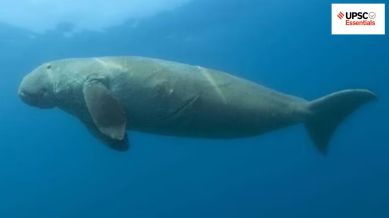
With reference to the sea cows, consider the following statements:
1. They are also known as dugongs.
2. They are primarily found in the Gulf of Mannar–Palk Bay region.
3. The IUCN lists sea cows as Critically Endangered.
4. They are listed under Schedule II of the Wildlife (Protection) Act, 1972.
How many of the statements given above are correct?
(a) Only one
(b) Only two
(c) Only three
(d) All four
Explanation
— In the South Asian region, dugongs, also known as sea cows, are primarily found in the Gulf of Kutch, the Gulf of Mannar–Palk Bay region (located between India and Sri Lanka), and the Andaman and Nicobar Islands. Hence, statements 1 and 2 are correct.
— Currently, the IUCN, which compiles the official Red List of endangered species, lists sea cows as a species vulnerable. In India, they are listed under Schedule I of the Wild Life (Protection) Act, 1972, which grants the species the highest legal protection against hunting and trade. Hence, statements 3 and 4 are not correct.
About Dugongs
— Dugongs (Dugong dugon) are a marine mammal, which are believed to have inspired ancient seafaring tales of mermaids due to their gentle — seemingly benign — disposition. They are related to manatees, with whom they share a plump appearance, but also have a dolphin fluke-like tail. An adult dugong typically grows up to 10 feet and weighs around 420 kilograms.
— The mammals are exclusively herbivorous, and seagrass meadows are their main source of food — the reason why they are also called sea cows.
Therefore, option (b) is the correct answer.
With reference to the Sambhar Lake, consider the following statements:
1. Flamingos visit Sambhar Lake as part of their annual migration along the Central Asian Flyway.
2. Sambhar Lake is India’s largest inland salt lake.
Which of the statements given above is/are correct?
(a) 1 only
(b) 2 only
(c) Both 1 and 2
(d) Neither 1 nor 2
Explanation
— A blush of pink has swept across Rajasthan’s Sambhar Salt Lake, where thousands of migratory flamingos have gathered in a spectacular seasonal display. Along the Central Asian Flyway, a major migratory route, Sambhar is a key destination for migratory birds, with flamingos being the most prominent visitors.
— Flamingos visit Sambhar Salt Lake as part of their annual migration along the Central Asian Flyway. They travel from regions in Africa, the Middle East, and Central Asia, arriving between October and March to breed and feed in the lake’s saline waters. The lake’s shallow waters and abundant food make it an ideal stopover during their long migratory journey. Hence, statement 1 is correct.
— The Sambhar Salt Lake, located in Sambhar Lake Town in Jaipur district of Rajasthan, is India’s largest inland salt lake. Hence, statement 2 is correct.
Therefore, option (c) is the correct answer.
With reference to the ozone layer, consider the following statements:
1. The layer is positioned in the Mesosphere.
2. It is crucial for shielding humans from harmful ultraviolet (UV) radiation.
3. The Kyoto Protocol is the international agreement aimed at phasing out ozone-depleting substances.
How many of the statements given above are correct?
(a) Only one
(b) Only two
(c) All three
(d) None
Explanation
— The Antarctic ozone hole, in 2025, was measured as the fifth-smallest since 1992, according to the NOAA-NASA analysis published on November 24. The development confirms that the ongoing controls established by the Montreal Protocol, the international agreement aimed at phasing out ozone-depleting substances, and its amendments have positively influenced the gradual healing of the ozone layer.
— The National Oceanic and Atmospheric Administration (NOAA) is an American agency that is responsible for monitoring weather, forecasting, and managing and protecting coastal and marine ecosystems and resources. The National Aeronautics and Space Administration (NASA) provides advanced information on weather and collects critical information about changes happening in the Earth’s atmosphere.
— Positioned in the stratosphere at altitudes of 9–22 miles above Earth, the ozone layer is crucial for shielding humans from harmful ultraviolet (UV) radiation, specifically UVB, which is linked to skin cancers and affects marine ecosystems and plant life. Hence, statement 1 is not correct and statement 2 is correct.
— The assessment states that the ozone layer is expected to fully recover by the end of the century, a promising outlook resulting from the global commitment made in 1987 under the Montreal Protocol that has been ratified by all United Nations member states.
— The Kyoto Protocol deals with greenhouse gases and climate change, and not with the phasing out of ozone-depleting substances. Hence, statement 3 is not correct.
Therefore, option (a) is the correct answer.
Rajaji Tiger Reserve (RTR) was recently in the news. The RTR is located in:
(a) Sikkim
(b) Himachal Pradesh
(c) Gujarat
(d) Uttarakhand
Explanation
— After a seven-year hiatus, the Rajaji Tiger Reserve (RTR) in Uttarakhand has resumed elephant safaris for tourists, a forest official said.
— RTR director Koko Rose said two female elephants would be used for the safaris in the Chilla zone of the reserve along two routes, and that each elephant would do a maximum of two safaris per day.
— The elephants that will be used for the safari at RTR are named Radha and Rangeeli — the female elephants of the Chilla Elephant Camp. The department said that through the safari, visitors would not only be able to observe elephant behaviour from close quarters, but also view a range of wildlife found in the landscape of RTR, such as chital, sambar, peacocks, golden jackals, tigers, leopards, hyenas, wild elephants, and various migratory bird species.
Therefore, option (d) is the correct answer.
The Hayli Gubbi volcano recently erupted. It is located in:
(a) Mount Cameroon region, West Africa
(b) Virunga volcanic belt, DR Congo
(c) Great Rift Valley, Kenya
(d) Afar region of Ethiopia
Explanation
— Several flights from and to India have been diverted due to the ash plume from the Hayli Gubbi volcano eruption in Ethiopia. The Hayli Gubbi volcano, located in the Afar region of Ethiopia, erupted on Sunday morning. Ash plumes from the volcanic eruption spread across the Red Sea toward Yemen and Oman up to 14 km in the sky, causing disruption of flight operation in North West India.
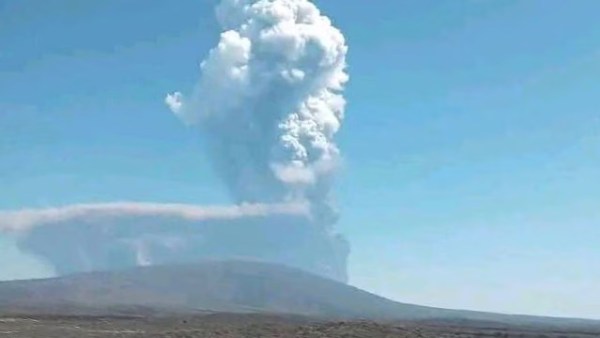
— Following the recent eruption of the Hayli Gubbi volcano in Ethiopia, ash clouds are reported to be drifting towards parts of western India. There is no major impact on Air India flights at this time. We will take all necessary steps under our precautionary plans to ensure the safety of our passengers, crew and aircraft, which remains our top priority.
Therefore, option (d) is the correct answer.
Daily Subject-wise quiz — History, Culture, and Social Issues (Week 133)
Daily subject-wise quiz — Polity and Governance (Week 138)
Daily subject-wise quiz — Science and Technology (Week 138)
Daily subject-wise quiz — Economy (Week 138)
Daily subject-wise quiz — Environment and Geography (Week 137)
Daily subject-wise quiz – International Relations (Week 137)
Subscribe to our UPSC newsletter and stay updated with the news cues from the past week.
Stay updated with the latest UPSC articles by joining our Telegram channel – IndianExpress UPSC Hub, and follow us onInstagramand X.


