7 min read
© IE Online Media Services Pvt Ltd
Latest Comment
Post Comment
Read Comments



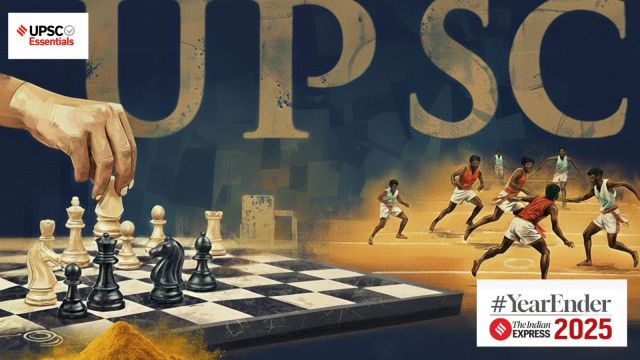 While the 'unpredictable' Union Public Service Commission will continue to surprise us with its questions in the coming years, these were our top 6 picks from the UPSC CSE Prelims 2025. What are yours? (Image source: AI generated)
UPSC is renowned for its challenging questions and its famously unpredictable nature. While most questions test aspirants on the static syllabus or current affairs, a few venture into what can only be called mischievously miscellaneous territory, probing an unusually sharp level of intelligence. These are the questions that aspirants keep debating in coaching corridors and Telegram groups all year long.
Here are our top picks from the UPSC CSE Prelims 2025 that intrigued not just aspirants, but non-aspirants as well.
Consider the following:
I. Cigarette butts
II. Eyeglass lenses
III. Car tyres
How many of them contain plastic?
(a) Only one
(b) Only two
(c) All the three
(d) None
What’s so amusing?
What makes it amusing is that it looks like a harmless everyday-objects question, but quietly turns into a gotcha on how plastic hides in places aspirants never think to revise.
This question revealed the ubiquitous prevalence of plastic by demonstrating that cigarette butts, eyeglass lenses, and even car tyres contain plastic, defying traditional views about pollution. According to the unofficial answer key, the correct answer is option C.
Click here to find our analysis on more such questions of UPSC Prelims paper 2025.
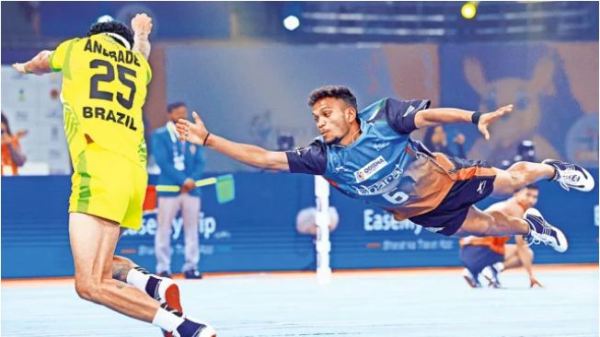 Ramji Kashyap during a match at the ongoing Kho Kho World Cup in New Delhi
Consider the following statements in respect of the first Kho Kho World Cup :
I. The event was held in Delhi, India.
II. Indian men beat Nepal with a score of 78-40 in the final to become the World Champion in men ‘s category.
III. Indian women beat Nepal with a score of 54-36 in the final to become the World Champion in the women category.
Which of the statements given above is/are correct?
(a) I only
(b) II and III only
(c) I and III only
(d) I, II and III
What’s so amusing?
What makes this question amusing is that UPSC turns a school-time sport like Kho Kho into a world-cup-level current affairs question, catching aspirants off guard when they least expect it.
The Kho Kho World Cup question highlighted how indigenous sports have entered global current affairs. According to the unofficial answer key, the correct answer is option D.
Consider the following statements:
I. Anadyr in Siberia and Nome in Alaska are a few kilometers from each other, but when people are waking up and getting set for breakfast in these cities, it would be different days.
II. When it is Monday in Anadyr, it is Tuesday in Nome.
Which of the statements given above is/are correct?
(a) I only
(b) II only
(c) Both I and II
(d) Neither I nor II
What’s so amusing?
What makes this question amusing is that two cities separated by a short flight can’t even agree on what day it is, reminding aspirants that geography can casually mess with time itself.
The Anadyr–Nome question demonstrated how geography can alter the calendar itself through the International Date Line. According to the unofficial answer key, the correct answer is option A.
Consider the following statements about turmeric during the year 2022-23:
I. India is the largest producer and exporter of turmeric in the world.
II. More than 30 varieties of turmeric are grown in India.
III. Maharashtra, Telangana, Karnataka and Tamil Nadu are major turmeric-producing States in India.
Which of the statements given above are correct?
(a) I and II only
(b) II and III only
(c) I and III only
(d) I, II and III
What’s so amusing?
What makes this question amusing is that something every aspirant has used since childhood suddenly expects them to remember export rankings and state-wise production, proving that even haldi isn’t safe from UPSC’s scrutiny.
Questions on turmeric transformed a kitchen spice into a topic of global trade and agriculture. According to the unofficial answer key, the correct answer is option D.
 Grandmaster D. Gukesh of India. ((FIDE/Michal Walusza)
Consider the following statements:
1. In the finals of the 45th Chess Olympiad held in 2024, Gukesh Dommaraju became the world’s youngest winner after defeating the Russian player Ian Nepomniachtchi.
2. Abhimanyu Mishra, an American chess player, holds the record of becoming world’s youngest ever Grandmaster.
Which of the statements given above is/are correct?
(a) I only
(b) II only
(c) Both I and II
(d) Neither I nor II
What’s so amusing?
What makes this question amusing is that UPSC combines ultra-recent chess records with tricky wording, making aspirants juggle between who won what and who holds which “youngest-ever” title, turning a game of kings into a mini brain-teaser.
The chess question punished headline-based assumptions and rewarded factual precision. Gukesh did not defeat Nepomniachtchi in a Chess Olympiad final. Therefore, the correct answer is option b.
Suppose the revenue expenditure is 80,000 crores and the revenue receipts of the Government are ₹ 60,000 crores. The Government budget also shows borrowings of 10,000 crores and interest payments of 6,000 crores. Which of the following statements are correct?
I. Revenue deficit is 20,000 crores.
II. Fiscal deficit is 10,000 crores.
III. Primary deficit is 4,000 crores.
Select the correct answer using the code given below.
(a) I and II only
(b) II and III only
(c) I and III only
(d) I, II and III
What’s so amusing?
What makes this question amusing for aspirants is that it looks like a straightforward maths exercise, but actually checks whether they understand budget deficits beyond mere calculation. Something, which UPSC rarely asks candidates.
This question demonstrated how government borrowings fuel revenue expenditure rather than asset creation, transforming simple mathematics into a fiscal reality check. According to the unofficial answer key, the correct answer is option D.
While the ‘unpredictable’ Union Public Service Commission will continue to surprise us with its questions in the coming years, these were our top 6 picks from the UPSC CSE Prelims 2025. What are yours?
Subscribe to our UPSC newsletter. Stay updated with the latest UPSC articles by joining our Telegram channel – Indian Express UPSC Hub, and follow us on Instagram and X.
🚨 Click Here to read the UPSC Essentials magazine for December 2025. Share your views and suggestions in the comment box or at manas.srivastava@indianexpress.com🚨


An alarming breach of safety norms was reported in Nagaland’s Dimapur late Tuesday, when a man drove his SUV into the railway tracks, triggering panic among bystanders and prompting swift action from authorities. The incident took place around 11.35 pm at Dimapur Railway Station, when the four-wheeler reportedly entered the tracks near the platform area.
Read UPSC Magazine