3 min read


© IE Online Media Services Pvt Ltd



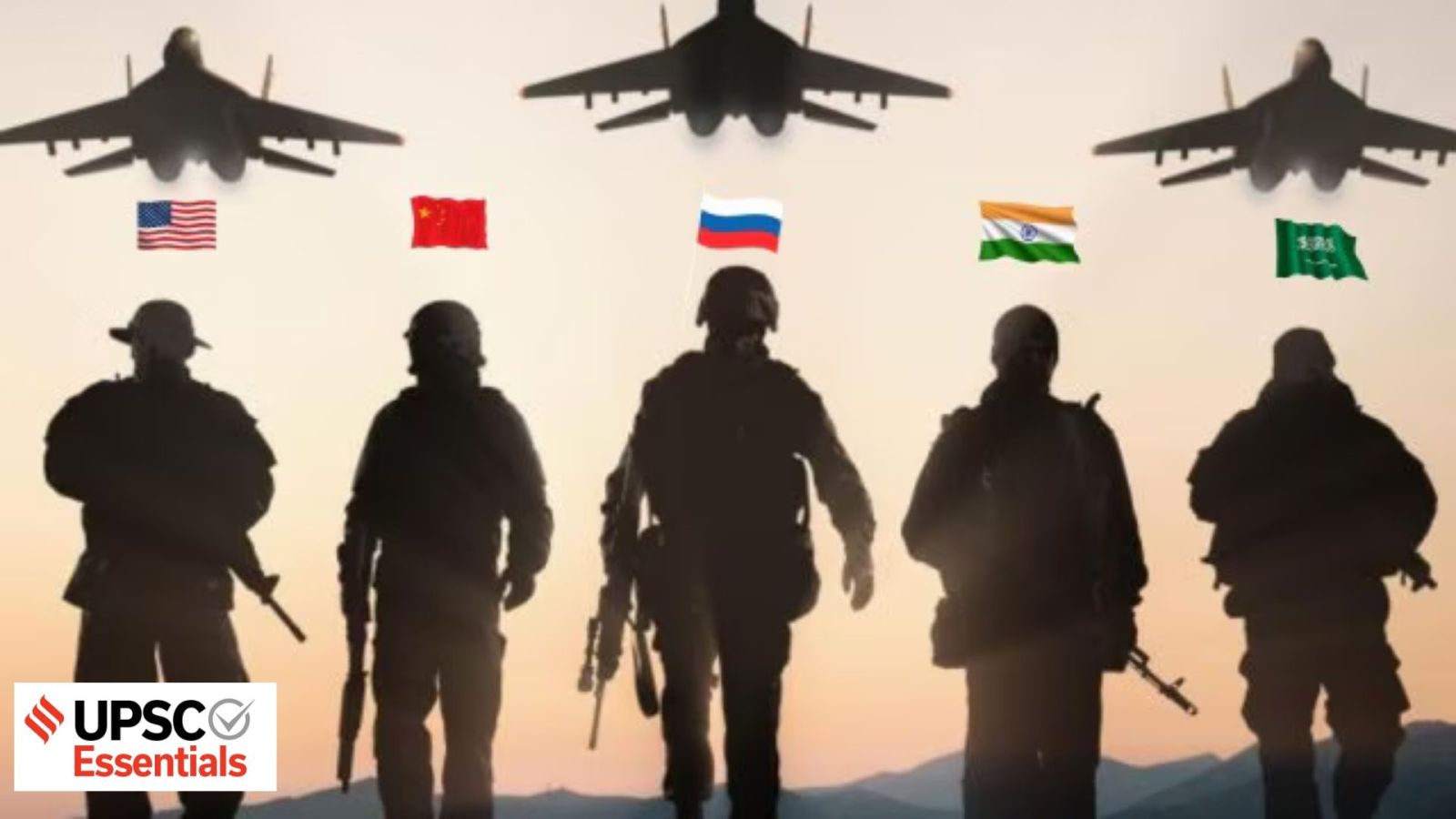 Military expenditure in 2024 marked a steep rise of 9.4 per cent compared to 2023. (File)
Amid widespread geopolitical tension, global military spending in 2024 stood at a record high of $2.7 trillion – an increase of 9.4 per cent compared to 2023. If the current trend persists, the spending is projected to reach $6.6 trillion by 2035, according to the latest study by the Stockholm International Peace Research Institute.
But how is this massive defence expenditure comparable to investments towards development and peace? The framework of the Military-Industrial-Complex (MIC) can partly help us understand this.
The concept was first introduced by the former US President, Dwight D. Eisenhower, during his farewell speech in 1961, when he decided to raise an alarm against the rising power of an immense military establishment and a large arms industry in collusion with Congress, which he described as the military-industrial complex.
He said, “In the councils of government, we must guard against the acquisition of unwarranted influence, whether sought or unsought, by the military-industrial-complex.”
In essence, the Military-Industrial-Complex (MIC) represents a coalition of interest groups within the military, the defence industry, governmental bureaucracies, and the scientific and technical elite that lobby for more military spending than is necessary.
Much of the work on the MIC is focussed on its evolution within the historical context of the Cold War, characterised by a highly polarised and highly militarised ideological confrontation between the two superpowers – the Soviet Union and the United States.
The concept was subsequently developed by social scientists to describe a coalition of vested interests within the state and defence industries. This coalition could influence policy decisions in ways that were in the interest of its members, but not necessarily in the interests of broader national security.
Sociologist C. Wright Mills’ book The Power Elite, published in 1956, formed an influential basis in the development of the idea of the MIC.
We would love to hear what you think about this new initiative. Send your comments at ashiya.parveen@indianexpress.com.
Click Here to read the UPSC Essentials magazine for November 2025. Subscribe to our UPSC newsletter and stay updated with the news cues from the past week.
Stay updated with the latest UPSC articles by joining our Telegram channel – IndianExpress UPSC Hub, and follow us on Instagram and X.

Read UPSC Magazine