


© IE Online Media Services Pvt Ltd
Tags:


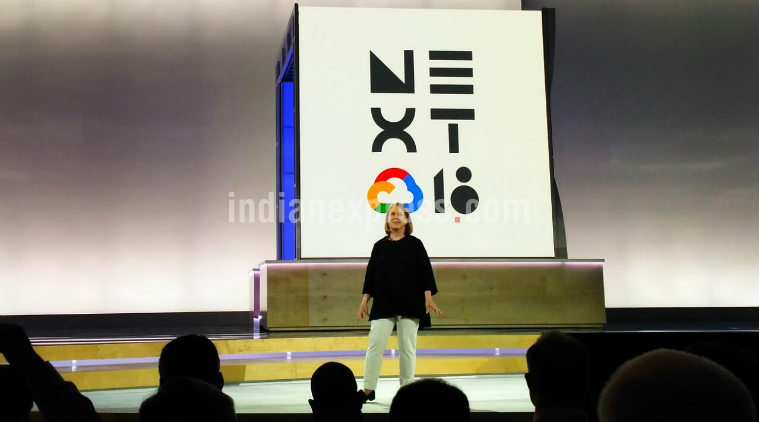
Google kicked off its Cloud Next 2018 summit in San Francisco today by announcing several updates to its Cloud apps and services, along with advancements in AI. Terming security as the top concern and AI as the top opportunity, the company plans to focus and continue to invest heavily into those two aspects going ahead.


The company said its cloud infrastructure includes many football stadium-sized data centers, all running carbon neutral, along with hundreds of thousands of miles of fiber-optic submarine cables for fast machine-to-machine interconnects. The setup also involves big data tools like BigQuery that claims to process an entire Petabyte of data in 3.7 minutes. In simple words that is 1000 Terabytes or a million Gigabytes of data being crunched within minutes.
Also read: As big data starts boosting AI growth, here are some recommended guidelines for India
Google claims security is built into every layer of the Cloud operation with high level of data encryption. They are expected to launch ten new security products and services in the coming week. A combination Chromebook, G Suite and two factor authentication hardware in the Chromebook USB port is said to offer high level of data security for an organisation, while Gmail claims to ward off 99.9 per cent of spam and phishing attacks.
Terming artificial intelligence as the biggest collective opportunity, Greene said, “Today, AI is built into everything we do at Google. From our data center energy usage to BigQuery to Gmail, AI is applied throughout our business. Now we are working to make it easy for you to incorporate the power of AI into what you do. In the last year we introduced automated machine learning model generation, AutoML, and we are announcing new versions today.”
Read more: Google’s Android Oreo now running on 12.1 per cent of devices
Stressing the company’s commitment to open source, she said Google is currently involved in more than 2,000 open source projects, including TensorFlow and Kubernetes. The underlying technology and concepts that make up Kubernetes were being run inside Google for over a decade, and by the time it was introduced in Google Cloud, it had more than 20,000 contributors, making it one of the fastest moving projects in the history of open source.
(The author is attending Google Cloud Next 2018 in San Francisco at the invitation of Google India.)


