2 min read

Journalism of Courage



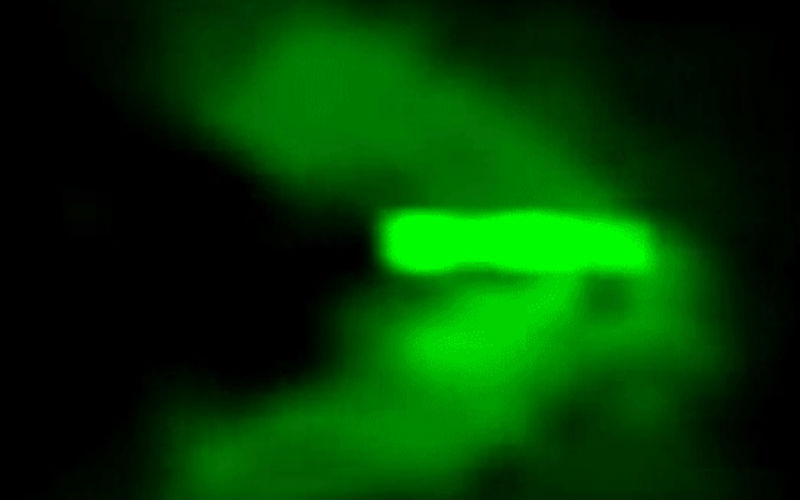 The technology may allow scientists to watch neurons fire and image live activity in the brain in future, researchers said. ( Source: Washington University)
Scientists have developed a super-fast camera that has, for the first time, imaged the elusive pulses of light leaving behind cone-shaped wakes of light, just like aircraft flying at supersonic speeds create sonic booms.
The technology developed by researchers at Washington University in the US may allow scientists to watch neurons fire and image live activity in the brain in future, researchers said. When an object moves through air, it propels the air in front of it away, creating pressure waves that move at the speed of sound in all directions.If the object is moving at speeds equal to or greater than sound, it outruns those pressure waves.
The waves from these speeding objects stack on top of each other to create shock waves known as sonic booms which are confined to conical regions known as “Mach cones” that extend primarily to the rear of supersonic objects. Earlier studies has shown that light can generate conical wakes similar to sonic booms. Now, for the first time, scientists have imaged these elusive “photonic Mach cones,” ‘Live Science’ reported.
Researchers designed a narrow tunnel filled with dry ice fog. The tunnel was sandwiched between plates made of a mixture of silicone rubber and aluminium oxide powder. They then fired pulses of green laser light – each lasting only trillionths of a second – down the tunnel. These pulses could scatter off the specks of dry ice within the tunnel, generating light waves that could enter the surrounding plates.
Also Read: Watch: Asteroid causes sonic boom, lights up sky in Arizona, shows NASA video
The green light travelled faster inside the tunnel than it did in the plates. As a laser pulse moved down the tunnel, it left a cone of slower-moving overlapping light waves behind it within the plates.
The findings were published in the journal Science Advances.