


© IE Online Media Services Pvt Ltd
Tags:


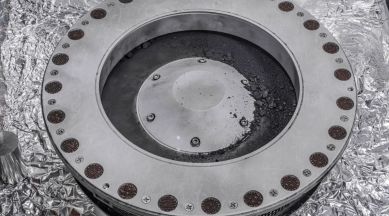
An initial study of the samples of asteroid Bennu brought back to Earth has revealed evidence of high carbon content and water. This indicates that the building blocks of life on our planet can also be found on the 4.5-billion-year-old asteroid.
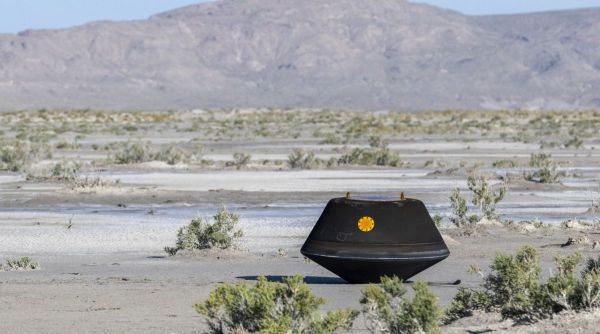
The National Aeronautics and Space Administration (NASA) on Wednesday made the announcement from its Johnson Space Center in Houston. Scientists and leaders from the space agency showed off the asteroid material for the first time since the OSIRIS-REx mission dropped it to Earth.

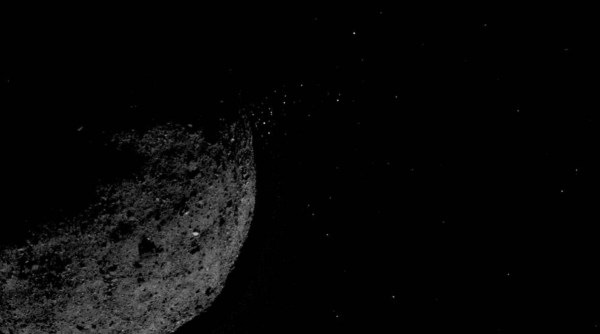

The objective of the OSIRIS-REx mission was to collect 60 grams of asteroid material from Bennu and bring it back to Earth for analysis. NASA experts have spent more than ten days carefully disassembling the hardware used to return the sample. When the lid of the sample canister was first opened, scientists discovered “bonus” material covering the outside of the collector head, lid and base. There was so much material that it slowed the collection process, according to the space agency.
Scientists began with a “quick-look” analysis of the initial material, where they collected images from a scanning electron microscope along with infrared measurements, X-ray diffraction and chemical element analysis. They also used X-ray computed tomography to produce a 3D computer model of one of the particles. This early “quick-look” gave evidence for the abundant presence of carbon and water in the sample.


