


© IE Online Media Services Pvt Ltd
Tags:


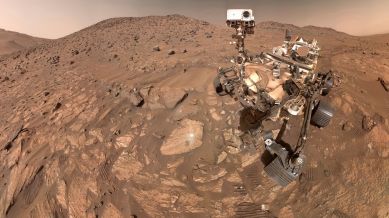
The National Aeronautics and Space Agency (NASA) is planning to send humans to our closest extraterrestrial neighbour – Mars by 2035. As part of the Artemis program, the space agency said the objective is to understand the red planet and search for possible signs of life.
The trip to Mars is expected to take anywhere between 6 to 7 months and will cover a distance of about 402 million kilometers. And for those wondering, the astronauts may spend up to 500 days on the planet’s surface, which is expected to give them enough time to gather more information about the planet.


Mars may be devoid of any liquid water today, but its polar caps are still covered in frozen water. At the South Pole in summer, the water layer is exposed when the thin Carbon Dioxide layer fades away. And while NASA already knows quite a bit about the red planet thanks to robotic missions, there are several unanswered questions that still need to be investigated.
According to AP, NASA has also formed a panel named the Human Exploration of Mars Science Analysis Group to plan the upcoming mission, which has come up with “recommendations for several important questions for human investigation on Mars.” The mission might also help scientists understand the environmental changes that took place on the planet.


