There’s a lot happening internally at Meta…billions of dollars are being spent in the artificial intelligence space with the aim of competing head-to-head with OpenAI and Google, yet the social media giant is still nowhere to be seen. Over the past few months, Meta has been on a hiring spree, poaching talent from rivals and even spending $14.3 billion in June to hire Scale AI founder Alexandr Wang along with several of his top engineers and researchers. Meanwhile, Turing Award winner Professor Yann LeCun, Meta’s chief AI scientist, left to start a new firm, while CEO Mark Zuckerberg barely mentions the company’s Llama family of AI models, which he once touted as set to become the “most advanced in the industry” and “bring the benefits of AI to everyone.” This suggests that something is amiss with Meta’s AI strategy. Despite internal revamps, Meta has fallen behind in the AI race, while rival AI models are increasingly being adopted by consumers and businesses. One wonders why Meta, once a strong proponent of open-source models, no longer supports them and how the company plans to rebuild its AI strategy from scratch to regain trust.
Failure of Llama 4 and backtracking on open-source models
Unlike peers such as OpenAI and Google, which pursue closed models, Meta initially had confidence in its open-source strategy with its Llama models. Simply put, open-source models can be downloaded, modified, and improved by researchers. However, the underwhelming response to Llama 4 has been a setback for Meta. The Llama 4 ‘Behemoth’ model has faced months of delays, with discussions about possibly abandoning it altogether, and developers have been largely unimpressed with the available Llama 4 models. The company has also faced criticism for publishing misleading benchmark figures for Llama 4, which were seen as making the models appear more competitive than they actually are.

Meta has yet to launch models with advanced “reasoning” capabilities, causing it to lose ground to rivals such as OpenAI, Anthropic, Google, DeepSeek, and Alibaba’s Qwen. This has sparked internal debate about Meta’s AI direction and how the company plans to make a comeback. Zuckerberg has since indicated that Meta may rethink its open-source approach, emphasising the need for greater caution and risk mitigation in what it chooses to open source.
Meta will help advertisers to fully create and target campaigns using artificial intelligence tools by the end of next year. (Representational Image)
Betting on ‘Superintelligence’ and a new closed AI model
With OpenAI and Google winning the AI wars, Mark Zuckerberg has no plans to sit back and watch the company lose out in artificial intelligence. Under his watchful eye, Meta has set up a new Superintelligence Labs, an AI division created by spending billions of dollars on top talent and acquisitions to build a dream team. This includes Alexandr Wang, CEO of Scale AI (a company known for data labeling rather than model development), who has been appointed Chief AI Officer; Nat Friedman, former CEO of GitHub; Daniel Gross, former Apple employee and co-founder of the short-lived Safe Superintelligence; Ruoming Pang, former head of Apple’s LLM team; and dozens of hires from OpenAI, all of whom have been offered multi-million-dollar packages.
Meta has assembled a dream team to work on new frontier AI models, and the company has been trying to show that it is moving away from the ‘ship fast and fix later’ approach. Even if this reflects Zuckerberg’s sense of desperation, and questions remain about what ‘superintelligence’ really means and how it differs from the competition, Meta appears to be moving forward. The company has reportedly been working on a new model, known internally as ‘Avocado,’ which could mark the first step away from its previous open-source approach to AI development. Essentially, it would be a proprietary model, similar to GPT-5 and Gemini 3.
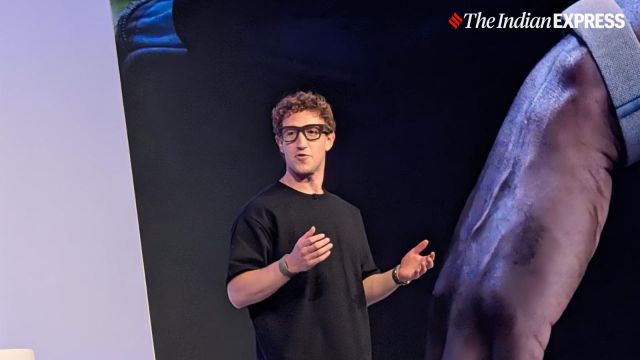
Meta’s Ray-Ban smart glasses are a new type of AI devices. (Image: Anuj Bhatia/The Indian Express)
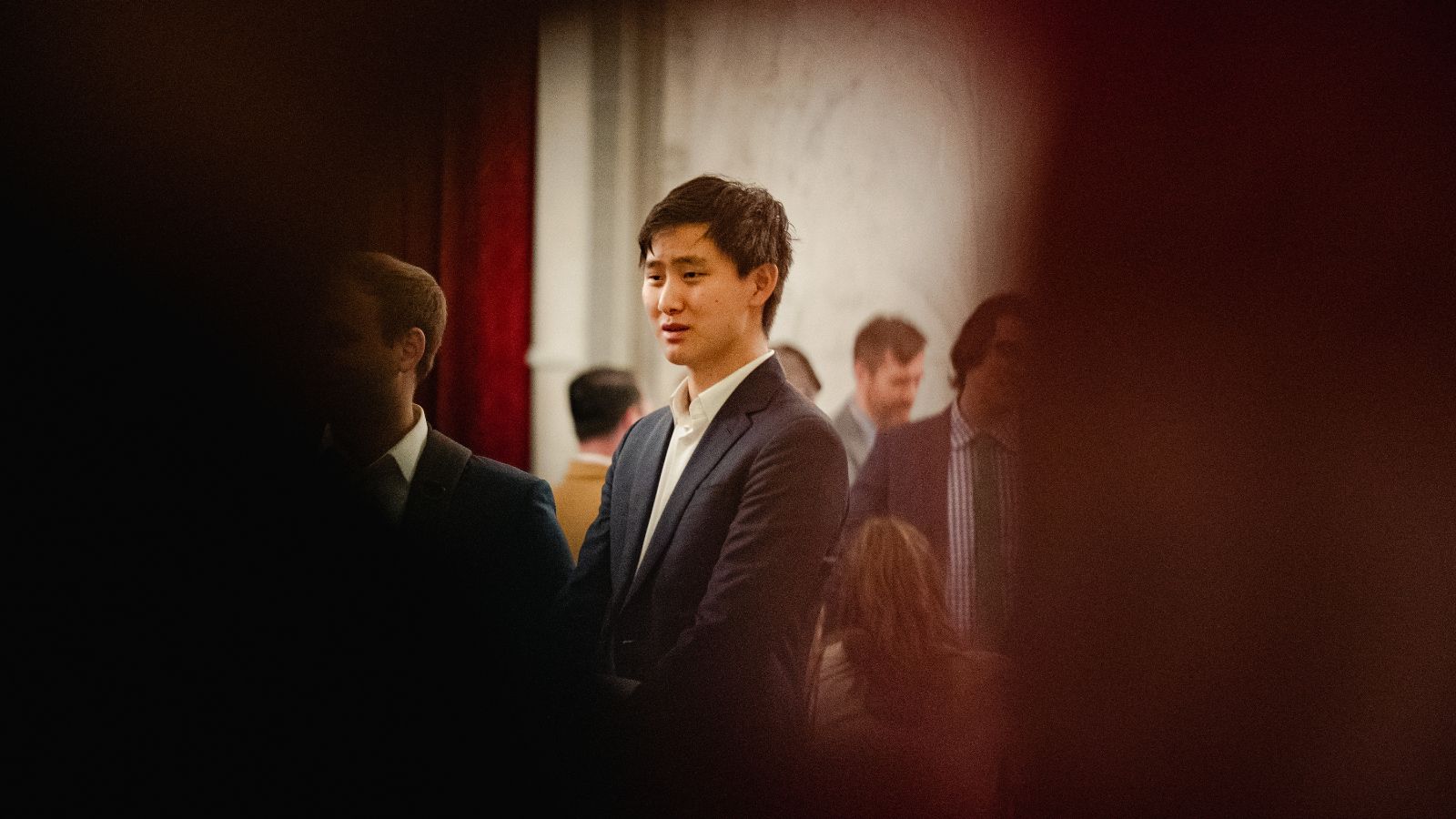
The 28-year-old Wang faces pressure to deliver a top-tier frontier AI model. While it is still unclear how powerful the large language model (LLM) might be, Meta’s end goal is to monetise its AI models and make them profitable over time. This may explain why Zuckerberg brought in outsiders like Wang and Friedman to lead the company’s AI efforts, a major cultural shift for a company that has historically promoted veteran Meta employees to top posts.
Meta has also been developing an ecosystem of AI products, such as its Ray-Ban AI glasses. A new closed AI model is what the company needs to make these products genuinely useful and designed from the ground up. However, for Meta, its social apps, used by billions every day, remain critically important. The question is how Meta will integrate a new interface with the upcoming AI frontier model, because right now, Meta AI feels severely limited, and the interface feels dated when interacting with AI on traditional apps like WhatsApp. There are also issues like inconsistency, lack of personalisation and frequent hallucinations, resulting in an underwhelming experience.
Story continues below this ad
‘Ship fast, fix later’ attitude
The biggest problem with Meta lies in its approach to product development, which aims to ‘ship fast and fix later.’ This strategy has allowed chatbots to flirt with minors and generate harmful content. When AI systems are built without structural guardrails, trust is compromised as has been the case with Meta.
Without trust, it is nearly impossible to win over average consumers and businesses. For Meta, governance, AI safety, and accountability were treated as afterthoughts. No matter how many times the company insists its AI systems are safe or relies on disclaimers and promises to do better, it continues to lose the battle. While Meta fumbles with its AI chatbot, OpenAI and Google have gained both user and enterprise support. In just a few months, Google unveiled Gemini 3 to positive reception, OpenAI announced new updates to its GPT-5 model, and Anthropic debuted its Claude Opus 4.5 model in November, shortly after releasing two other major models. All of these developments at Meta have also impacted its stock, which has underperformed compared to its Silicon Valley rivals.
The failure of Meta’s AI strategy shows that AI development cannot rely solely on speeding up development and shipping features quickly. This approach has cost Meta billions of dollars, and it is difficult to fix what is already broken. Scaling AI systems may be an important goal but it cannot be done without simultaneously ensuring safety, accountability, and trust. All three must come together alongside scalability, which is needed to make technology accessible and reach out to billions.
Meta’s Superintelligence Labs is being co-led by ex-Scale CEO and cofounder Alexandr Wang. (Shuran Huang/The New York Times)
The pressure to win over investors and wall street
Meta has the resources to spend billions of dollars to secure AI talent and reestablish its AI efforts, thanks largely to its cash-flow-generating core business – its social media empire, which continues to funnel in revenue. Wall Street, however, expects a clear return on investment. Meta is now at a point where it needs a world-class AI frontier model capable of competing with GPT and Gemini, while at the same time ensuring that its future remains anchored in artificial intelligence to sustain and expand its dominance in digital advertising.
Story continues below this ad
With annual sales exceeding $160 billion, largely driven by its ad-targeting business, Meta plans to automate nearly every aspect of advertising from generating creatives and setting bids to identifying audiences and optimising campaigns with minimal human input.
As the company becomes increasingly dependent on AI, the need to understand how its algorithms make decisions and influence users and advertisers will grow multifold. This is why Meta is investing tens of billions of dollars in infrastructure, data centers, and custom hardware in an effort to secure a leading position in the AI era. Consumer apps may not be the only way people experience Meta’s AI in the future, which helps explain the rationale behind Meta’s latest move.


 8 min read



 Meta will help advertisers to fully create and target campaigns using artificial intelligence tools by the end of next year. (Representational Image)
 Meta’s Ray-Ban smart glasses are a new type of AI devices. (Image: Anuj Bhatia/The
  Meta’s Superintelligence Labs is being co-led by ex-Scale CEO and cofounder Alexandr Wang. (Shuran Huang/The New York Times)