This is an archive article published on October 15, 2019
Google Pixel 4, Pixel 4 XL will not come to India thanks to the new Soli radar chip
The reason is that the Soli radar chip users the 60Ghz spectrum, which is not allowed for commercial use in India. The Pixel 4 phones rely on the Soli radar for Motion Gesture and Face ID.
Google Pixel 4 will not be coming to India and you can blame the Motion Sense driven by Soli-radar chip for that.
Google just announced the Pixel 4 and Pixel 4 XL phones in New York, but there’s bad news for India fans who were waiting to upgrade. The new phones will not be coming to India and that’s thanks to the Soli radar chip on the front, which is driving the new Motion Sense and the Face Unlock feature. Google officially confirmed it is not bringing Pixel 4 to India in a statement.
A statement from an official spokesperson said this, “Google has a wide range of products that we make available in different regions around the world. We determine availability based on a variety of factors, including local trends, and product features. We decided not to make Pixel 4 available in India. We remain committed to our current Pixel phones and look forward to bringing future Pixel devices to India.”
The reason is that the Soli radar chip users the 60Ghz spectrum, which is not allowed commercially in India. While most countries have already unlicensed 60 GHz band, India has not delicensed the 60 GHz band and it is not available for commercial use. The 60 GHz band is also known as WiGig band (Wi-Fi at 60 GHz) using IEEE 802.11ad protocol.
According to the Google US store, the Motion Sense feature is functional in the US, Canada, Singapore, Taiwan and most European countries. Interestingly it will not be functional in Japan till Spring 2020, but it looks like the phone is launching there if one goes by the detailed support page.
Google also that if one travels to a country where Motion Sense is not supported, the feature will not work. According to the Motion Sense page, “Check that you’re in a country where Motion Sense is approved. Currently, Motion Sense will work in the US, Canada, Singapore, Australia, Taiwan, and most European countries. If you travel to a country where it’s not approved, it won’t work. If you travel to a country where it’s not approved, it won’t work.” So clearly if you were to buy a Pixel 4 from abroad, the Motion Sense feature will not work here.
“It is understandable the reasons for why Google had to give India a miss with its Pixel 4, mainly, the Soli Radar chip, that is not listed for commercial use in India, as per National Frequency Allocation Plan (NFAP). Given that Pixel phones, in the past, have had a rather lukewarm reception in India, the Pixel 4 skipping India will not have significant implications for the company. Google did have a herculean task ahead of itself, to rectify the mistakes of the past, whether it be in terms of marketing, or getting the go-to-market approach right”, Prabhu Ram, Head-Industry Intelligence Group (IIG) at CMR, said in a statement to indianexpress.com.
Google has not given more details on why the Pixel 4 is not launching in India. There is also the question of whether Google could have disabled the Soli chip and still introduced the phone in India. It is unclear if buying a Pixel 4 from abroad will be deemed legal for use in India.
Anuj Bhatia is a seasoned personal technology writer at indianexpress.com with a career spanning over a decade. Active in the domain since 2011, he has established himself as a distinct voice in tech journalism, specializing in long-form narratives that bridge the gap between complex innovation and consumer lifestyle.
Experience & Career: Anuj has been a key contributor to The Indian Express since late 2016. Prior to his current tenure, he served as a Senior Tech Writer at My Mobile magazine and held a role as a reviewer and tech writer at Gizbot. His professional trajectory reflects a rigorous commitment to technology reporting, backed by a postgraduate degree from Banaras Hindu University.
Expertise & Focus Areas: Anuj’s reporting covers the spectrum of personal technology, characterized by a unique blend of modern analysis and historical context. His key focus areas include:
Core Technology: Comprehensive coverage of smartphones, personal computers, apps, and lifestyle tech.
Deep-Dive Narratives: Specializes in composing longer-form feature articles and explainers that explore the intersection of history, technology, and popular culture.
Global & Local Scope: Reports extensively on major international product launches from industry titans like Apple and Google, while simultaneously covering the ecosystem of indie and home-grown tech startups.
Niche Interests: A dedicated focus on vintage technology and retro gaming, offering readers a nostalgic yet analytical perspective on the evolution of tech.
Authoritativeness & Trust
Anuj is a trusted voice in the industry, recognized for his ability to de-jargonize trending topics and provide context to rapid technological advancements. His authority is reinforced by his on-ground presence at major international tech conferences and his nuanced approach to product reviews. By balancing coverage of the world's most valuable tech brands with emerging startups, he offers a holistic and objective view of the global technology landscape.
Find all stories by Anuj Bhatia here.
You can find Anuj on Linkedin. ... Read More


 3 min read


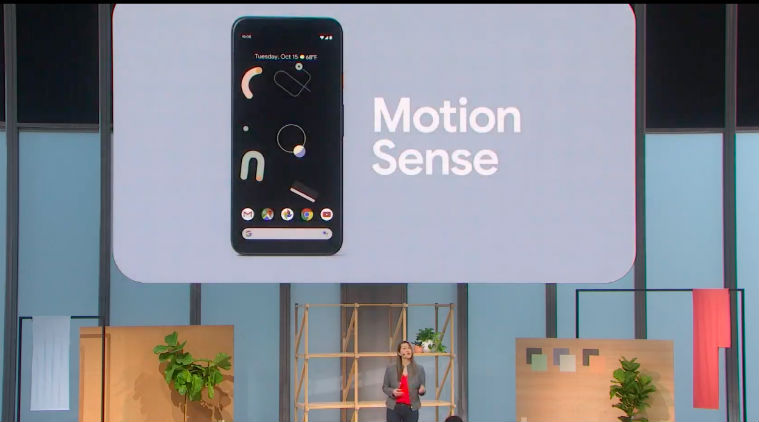 Google Pixel 4 will not be coming to India and you can blame the Motion Sense driven by Soli-radar chip for that.