6 min read


© IE Online Media Services Pvt Ltd



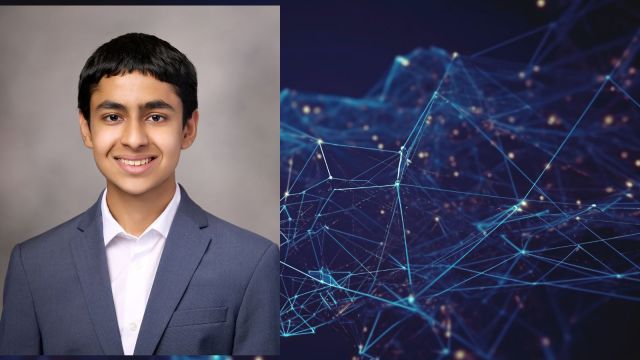 At 12, Adrift Rao won Apple's Worldwide Developers Conference Swift Student Challenge. (Express Image)
At just 16, Adrit Rao is already a coding prodigy and AI enthusiast trying to leave a mark in the world of app development and digital health innovation. The teenager from Palo Alto, California, has already won accolades from Apple, published a handful of apps, and is currently working on cutting-edge research at Stanford University to harness AI for transforming healthcare.
“Apps are so engaging and exciting because you can write code and see your inventions come to life right in front of you,” Rao told indianexpress.com.
“My journey into coding started when I was 8 years old. I was introduced to simple block programming, which is putting blocks together to program. That was my first introduction to computer science. I found it very engaging and interesting,” he added.
Rao got deeper into computer science and began exploring traditional programming languages. “I didn’t have the same level of interest because I couldn’t see my code come to life. During the COVID-19 pandemic, I had a lot of free time and wanted to explore coding, but in a more fun and exciting way that could have an impact on people. That’s when I thought of apps on the App Store,” said Rao who also revealed that he self-learned app development during the pandemic through YouTube and online resources.
At 12, Rao won Apple’s Worldwide Developers Conference Swift Student Challenge. The event also earned him the rare opportunity to meet Apple CEO Tim Cook. “It was super exciting because I was just actually around two to three weeks into my app development journey. Honestly, that experience motivated me to continue my journey,” said Rao describing his meeting with Cook.
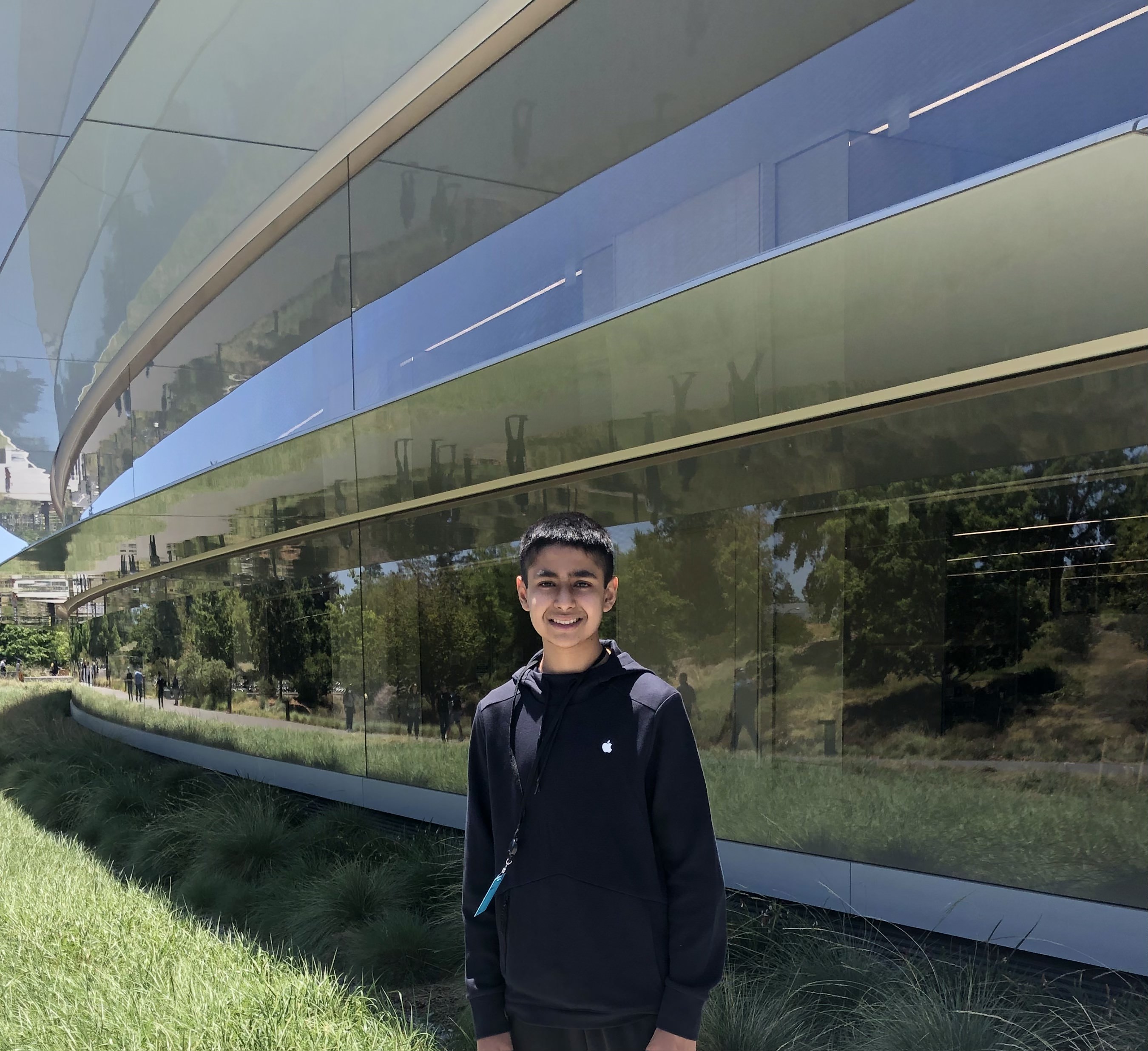 Adrit Rao at Apple Park to attend WWDC.
Rao has a range of innovative apps, with four available on the App Store, to his credit. Among them is MoTV, which helps users in finding movies and TV shows. ShopQuik, a crowd-sourced app for tracking local grocery store wait times during the pandemic (it was removed by Apple due to its obsolescence).
Virtuthon is an app that offers a virtual walkathon experience, inspired by pandemic restrictions. Another creation, Get Involved Service Hours, is a collaboration between Rao’s company, Arètech Inc., and the Get Involved Foundation, facilitating volunteer work. Signer, an AI-powered app, translates sign language gestures into speech via iPhone camera input.
“First I researched statistics on how many people are deaf worldwide and the communication gap between deaf and non-deaf communities, which motivated me. Then I had the idea to convert gestures from the iPhone camera to speech. Around that time, Apple had just introduced hand pose tracking and classification at WWDC using their machine learning models. So I could train my own AI algorithm on that new technology to enable the sign-to-speech conversion,” said Rao about the process behind the creation of Signer.
In his pursuit to apply AI to solve healthcare problems, Rao embarked on a research internship at Stanford University when he was 13. Over the past three years, he has been dedicated to building accessible apps that leverage AI to diagnose vascular diseases.
His standout innovation, AutoABI, is an iPhone app that can detect peripheral arterial disease by listening to arterial sounds. The groundbreaking technology is currently in clinical trials and patent process. Rao has also contributed to detecting aneurysms in CT scans using AI and published over 10 scientific research papers, showcasing his prowess in digital health solutions that could revolutionise patient care delivery.
 Rao has been interning with Dr Oliver Aalami (left) and Dr Paul Schmiedmayer (right). Dr Aalami is a Clinical Professor of Vascular Surgery and Director, of Biodesign for Digital Health at Stanford Byers Center for Biodesign, while Dr Schmiedmayer is the Assistant Director of Digital Health. (Photo: Tomas Ovalle)
“We’re currently working towards a patent for it. So that app is one of my passion projects, for sure. Because it showed me that I was able to apply my app development and AI knowledge to actually build a medical solution, which was able to be put into clinics and tested and now has the ability to reach so many people,” he said while talking about AutoABI.
Beyond AutoABI, Rao continues to push the boundaries with an AI system for detecting aneurysms in CT scans, as well as contributions to Stanford’s Spezi ecosystem for empowering modular digital health app development. His work on the LLMOnFIRE application exemplifies generative AI’s game-changing possibilities in improving health literacy.
“This app specifically is a chat interface where a patient can go in and chat with their health records. And that whole experience of being able to contribute towards that ongoing project really opened my eyes to the potential of generative AI,” Rao explained.
Rao’s interest in Artificial Intelligence was piqued after he came across an article when he was 13. According to him, it was his interest in the boundless potential of AI to transform patient care that paved the way for the prestigious research internship at Stanford University.
While most of his work focuses on AI applications in Silicon Valley, Rao recognises the urgency of driving equitable healthcare access worldwide through scalable technologies. “I don’t think AI should replace doctors. But I know that it can help doctors, especially in areas where there’s a shortage”.
Beyond his coding wizardry, Rao has founded the non-profit Aretech Inc to teach virtual app development through boot camps for aspiring young innovators.
When asked what he would like to tell young Indian aspirants, he said, “I would just say, age is not a barrier and anyone can make a really big difference if they just put the time into it. And if they’re really passionate about it”.
“Having a passion, along with the ability to learn from resources online, can really set up anyone no matter how old they are, to make a huge impact.”