4 min read
© IE Online Media Services Pvt Ltd



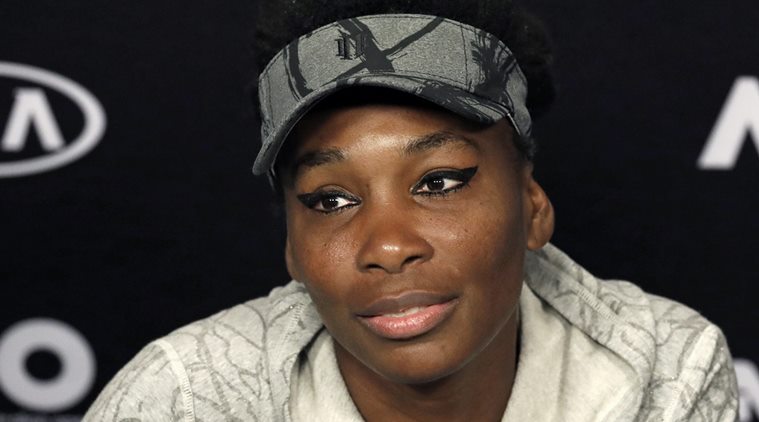 Serena Williams plans to defend her Australian Open title in 2018. (Source: AP File)
Serena Williams won the Australian Open this past year while she was pregnant. So expecting her to make a comeback within months of giving birth shouldn’t be a massive ask for a superhuman that she is. And yet the entire idea of such a comeback is an outrageous plan – the now dethroned World No 1 admits.
“It’s the most outrageous plan,” she said in an interview to Vogue. “I just want to put that out there. That’s, like, three months after I give birth. I’m not walking anything back, but I’m just saying it’s pretty intense.” Serena is expected to give birth at the end of the year and add to her already impressive tally of 23 Grand Slam titles.
But with a year away from the sport, Serena knows it will be a difficult ask with voices expected to grow louder if she doesn’t win outright. “In this game you can go dark fast,” she said. “If I lose, and I lose again, it’s like, she’s done. Especially since I’m not 20 years old. I’ll tell you this much: I won’t win less. Either I win, or I don’t play.” Serena isn’t the first tennis player looking to make a successful return to the court. Belgium’s Kim Clijsters retired at 23 having won a US Open but after a 28-month layoff, she returned having given birth to once again win at Flushing Meadows.
 Serena Williams also featured on the cover of Vanity Fair. (Source: Cover Junkie, Serena Williams/Instagram)
Another level of criticism that has been aimed at Serena has been her unorthodox style of play. Known to obliterate her opponents with sheer power on serve and in her groundstrokes while grunting her way around, her style isn’t known to attract fans. But the American thinks a lot of that expectation may have to do with her race. “Not only me, but women in general sometimes feel that power is a bad word,” said the 35-year-old. “As I’ve gotten older I’ve started to feel differently about it. Power is beauty. Strength is beauty. So now on the court I want people to think that I’m powerful. But I also want them to be shocked at how I play. I want people to expect something, then get something different.”
“I feel like people think I’m mean,” she said. “Really tough and really mean and really street. I believe that the other girls in the locker room will say, ‘Serena’s really nice.’ But Maria Sharapova, who might not talk to anybody, might be perceived by the public as nicer. Why is that? Because I’m black and so I look mean? That’s the society we live in. That’s life. They say African Americans have to be twice as good, especially women. I’m perfectly OK with having to be twice as good.”
Appearing on the cover of Vogue for a third time, Serena said her inclusion was a positive step for African American women. “Being black and being on the cover was really important to me,” she said. “The success of one woman should be the inspiration to another, and I’m always trying to inspire and motivate the black girls out there. I’m not a model. I’m not the girl next door. But I’m not hiding. Actually, I look like a lot of women out there. The American woman is many women, and I think it’s important to speak to American women at a time when they need encouragement. I’m not political, but I think everyone is worried, to a degree.”