Kento Momota had won 46 matches on the badminton circuit before he came up against Indian Sameer Verma. There were a few withdrawals and these were Tier 2 meets for a man who’s a Japanese genius. But it took effort beating him into defeat. It came from an Indian who is firmly behind Kidambi Srikanth, HS Prannoy and Sai Praneeth and P Kashyap, India’s 5th best men’s singles shuttler, who has set about reviving his career after a slump of the last year.
Winning the Swiss Open this last weekend at St Jakobshalle for the Swiss Open, beating Jan O Jorgensen 21-15, 21-13 in the final, World No 46 Verma nicked an important title at the start of the year, to stay in the mix, even if it’s well down the pecking order. 2018 is filled with tournaments, and Verma senses he could prove to be more useful in medal-collecting for the country, than what his ranking in mid-40s currently suggests.

But, first about the awkwardness. “2017 was terrible. I kept saying ‘performance nai aa raha’, ‘performance nai aa raha.’ And I made some big mistakes in trying to play everything so I could win somewhere at least. Nothing went right,” he surmises. He went into the World Championships at Glasgow ahead of Prannoy who was in the middle of a purple-patch, owing to a ranking he had compiled slowly. He lost miserably at the Worlds, and spent rest of the season dawdling between injury and semi-fitness. He would miss out on spending enough time with Indonesian Mulyo Handoyo, but learnt just enough about long practice sessions and how they prop confidence.
Coach Gopichand would be around though to ask him all the correct questions, like: ‘Is your recovery for the day done?’ after every match at Basel – singularly the most important question to ask a player like Verma, who is bright in thinking on his feet, but misses out always owing to a body that plays truant.
Verma’s game is not exceptional in terms of strokes – there’s no grand weapons, but he wins much more than your average talented guy because he operates at breathless speed. Albeit, when he fetches up fit for a match. His reaction times in picking shuttles can cause some funk in the opponents’ mind as his feet and hands buzz away. He’s a whippy pingpong ball on a shuttle court with his racquet speed and leg rate, relying on short rallies, minimal drift (because he wants to rustle up all the storms), trick shots and a body that needs to respond to his quick thinking brain.
His body, though, breaks down often — given he runs much more than others (he’s not very tall) and maintains that pace with great anticipation. The Swiss Title might have changed some of those. Not all titles can be won by blitzing opponents to a smoothie. Some wins need a slow brew.
It’s what happened with his biggest scalp — Kento Momota — in the semifinal. Momota is a Japanese wunderkid, and an heir apparent to global dominance. Verma rates him high.
Story continues below this ad
“His strokes quality is very good. He was probably the youngest to win a World Championship bronze. And from the younger lot, the first to win at Indonesia. He’s never lost to Viktor, I think,” Verma says. In short, nothing short of a demon in minds even before you reach the court. Sameer would pull out a rehearsed quality that doesn’t come easy to him, but one that he’s nursed through his many injuries. “Patience,” he starts. “I decided to be patient in closing stages this time, because I’d made mistakes closing out matches because of my impatience against him 2-3 times before,” Verma says.
“I had set my mind to staying patient. I wanted to stay in the rallies, and kill when I got the chance. But wait for my chances,” he added. It was very different from the way he’d approached playing the Japanese before. Verma, from Dhar in MP and training at Hyderabad, led 13-9 in the opener. Kento would kickstart his storming rally, reaching 16-14. “At 13-15 down, I changed my game,” he recalls.
It bothered the Japanese whiz enough to again botch his 15-11 advantage in the second, and succumb to his first loss (though there’ve been a couple of walkovers) since his return from a gambling ban.
All of the three – Momota, Kashyap and Verma are returning to top flight, except Momota spent 2017 not losing at all staggeringly, even if it was in the second-tier events. Verma was no favourite going into the match, though his slingy game can wreck havoc on days. But Verma was like a catapult that day – pulling patiently long enough, and then snapping quickly to hand the Japanese a straight sets defeat.
Story continues below this ad
Verma’s first SS final at Hong Kong had been equally surprising, but his sparse sudden sizzles might well be a pattern. “The win was important because I’d not been winning matches, let alone titles. But I felt from inside that this week would be good,” he says. “It’s when I’m not thinking or worrying about fitness. That’s my zone,” says the man, forced to always think about his fitness owing to frequent breakdowns. Verma’s got a physio working with him now, with an aim to strengthen his shoulder. “There’s a routine thrice a week for the shoulder and the wrist suggested by John Gloster. I want to be fit now. I know if I stay fit, results will come,” he adds.
The other lesson learnt chasing “performance” was that he’s started listening to his own body’s creaks and strains. “When body says Rest, I should listen,” he says, hoping there are no more seasons where he’s scampering like a headless chicken. “Not listening cost me. Last year also I made India Open quarters. This time, I want a good follow up,” he states.
He concedes that the final at Basel was easy. “Jan O wasn’t 100 percent. Its difficult to get points off him. He’s more attacking. I played calmly,” he says, adding that his deception from back-court has improved too, even as he denied Jan O a chance to drive.
There’s another challenge for this season. “I want to do well on courts with drift. Ek din Indonesia jeetna hai. I love that crowd. But stadium has too much wind. If I can overcome that, I’ll know I’m good,” he says.
Story continues below this ad
Sixth reserve at All England, he’s not too hopeful of getting in, and will continue on a lower rung. But trust Sameer Verma to lie in wait patiently, and then ambush opponents.


 7 min read


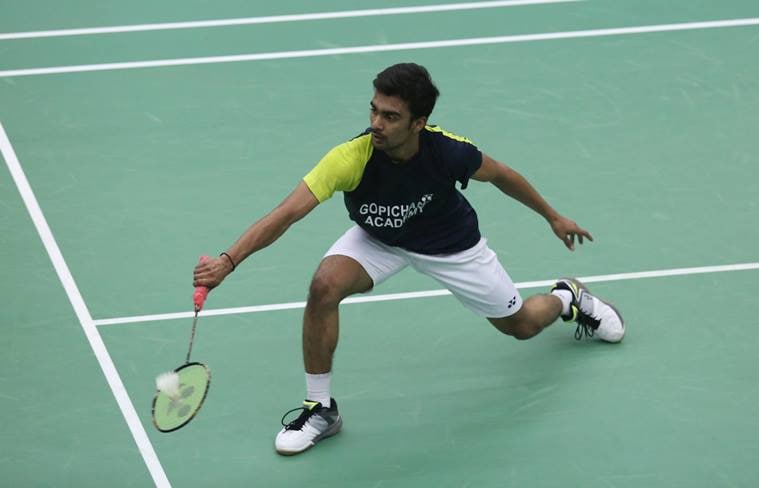 Sameer Verma lifted his first title of the season at the Swiss Open on Sunday, beating former world no 2 Jan O Jorgensen of Denmark. (Source: Express Photo by Kamleshwar Singh)