This is an archive article published on February 9, 2023
Why 2001 Gujarat earthquake remains a milestone for Narendra Modi
Referred to it again after the Turkey-Syria quake; as BJP national gen secy and then CM in 2001, Modi oversaw much of Kutch's rehabilitation, resurgence.
Written by Parimal A Dabhi
Gandhinagar | Updated: February 10, 2023 04:08 AM IST
4 min read
Whatsapp
twitter
Facebook
Reddit
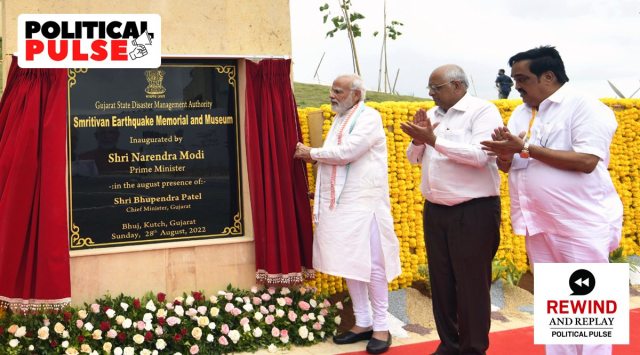
Prime Minister Narendra Modi inaugurates ‘Smriti Van Memorial’ for 2001 Bhuj earthquake victims, in Bhuj in August 2022. (ANI Photo)
Listen to this article
Why 2001 Gujarat earthquake remains a milestone for Narendra Modi
The 2001 disaster, with its epicentre in Kutch but with impact across, including Ahmedabad — leaving around 20,000 dead — has a lot of significance in the political life of Modi, as it was its aftermath that saw him eventually take over the reins of Gujarat as Chief Minister.
When the earthquake struck on Republic Day, January 26, 2001, the CM was Keshubhai Patel, the BJP’s first ever CM in Gujarat, while Modi was the party’s national general secretary. The government at the Centre was also led by the BJP.
Then-Prime Minister Atal Bihari Vajpayee holds a video conferencing with the then-Chief Minister of Gujarat, Narendra Modi, and the Panchayati Raj chiefs at a village Chapredi, Bhuj, Gujarat to review the quake relief and rehabilitation measures in New Delhi on January 25, 2002. (Express archive photo)
A senior party leader said that as the national general secretary, Modi closely monitored the post-earthquake situation for the party, and accompanied the CM on an aerial survey of the affected areas. “And as the BJP was in power at the Centre as well, he (Modi) was also coordinating several things.”
With the earthquake coming just over a year ahead of the Assembly elections, the BJP on October 7, 2001, replaced Keshubhai Patel with Modi as CM – perhaps to deflect public anger over the rehabilitation efforts.
A retired Gujarat-cadre IAS official, who held a key position in the relief, rescue and rehabilitation operations in Kutch after the earthquake, said that by the time Modi took over, the rescue and relief part was over. “However, he played a huge role in the rehabilitation task, which I think was the most crucial and important.”
The former official added: “Under Modi, a regulatory framework was established for such natural calamities. The Gujarat State Disaster Management Authority was formed after the 2001 earthquake. Similarly, Standard Operating Procedures for calamities were framed under him. Recently, when Cyclone Tauktae hit Gujarat, it were these SOPs which were followed by the state authorities.”
Story continues below this ad
Rescuers and local people during search and rescue operations after the Bhuj earthquake in 2001. (Express archive photo)
According to the official, Modi took several other mid-term and long-term initiatives to ensure Kutch got back on its feet. “Modi ordered almost all the department heads / secretaries to visit Kutch every weekend and submit their reports on things to be done on Mondays and Tuesdays… In long-term measures, he took steps to boost economic activities to generate employment. A lot of industries were brought to Kutch. He promoted tourism in Kutch in a big way. The culture, handicraft and beaches of Kutch were promoted, with augmentation of related infrastructure. ”
On Wednesday, the first meeting of the Tourism Working Group of G20 was inaugurated at Dhordo in Kutch. At the event, current CM Bhupendra Patel talked about how Modi had revived Kutch after the earthquake, putting it on the global tourist map.
Modi too frequently refers to Kutch’s resurgence and rehabilitation in his speeches. On August 28 last year, when he inaugurated two memorials for the earthquake victims, he talked about how Gujarat turned “adversity into opportunity” and “leaving behind every conspiracy” brought in a new industrial policy and charted a new path of development, from which Kutch benefited the most.
Parimal A Dabhi works with The Indian Express, focusing on the state of Gujarat. Leveraging his seniority and access, Dabhi is recognized for his reporting on the complex interplay of law, politics, social justice, and governance within the region.
Expertise & Authority (E-E-A-T)
Core Authority (Social Justice and Law): Dabhi is a key source for in-depth coverage of caste-based violence, discrimination, and the state's response to social movements, particularly those involving Dalit and OBC communities. His reporting focuses on the societal and legal fallout of these issues:
Caste and Discrimination: He has reported extensively on social boycotts and instances of violence against Dalits (such as the attack on a Dalit wedding party in Patan), the community's demands (like refusing to pick carcasses), and the political responses from leaders like Jignesh Mevani.
Judicial and Legal Affairs: He tracks significant, high-stakes legal cases and judgments that set precedents in Gujarat, including the convictions under the stringent Gujarat Animal Preservation Act (cow slaughter), and developments in cases involving former police officers facing charges of wrongful confinement.
Political and Administrative Oversight: Dabhi provides essential coverage of the inner workings of the state government and the opposition, ensuring a high degree of Trustworthiness in political analysis:
State Assembly Proceedings: He frequently reports directly from the Gujarat Assembly, covering Question Hour, debates on budgetary demands for departments like Social Justice, and ministerial statements on issues like illegal mining, job quotas for locals, and satellite-based farm loss surveys.
Electoral Politics: His work details key political developments, including election analysis (voter turnout records), party organizational changes (like the end of C R Patil’s tenure as BJP chief), and campaign dynamics. ... Read More


 4 min read



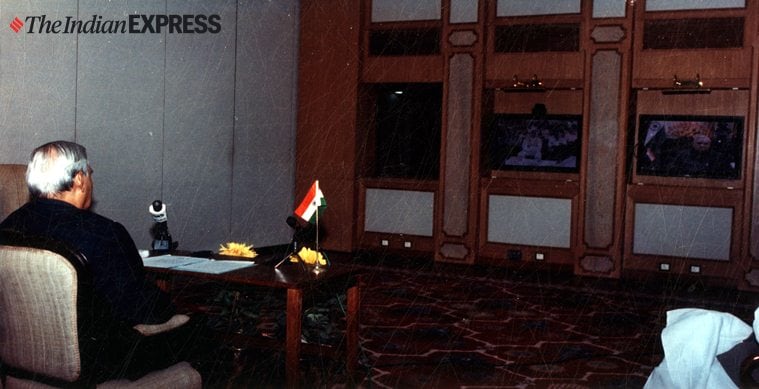 Then-Prime Minister Atal Bihari Vajpayee holds a video conferencing with the then-Chief Minister of Gujarat, Narendra Modi, and the Panchayati Raj chiefs at a village Chapredi, Bhuj, Gujarat to review the quake relief and rehabilitation measures in New Delhi on January 25, 2002. (Express archive photo)
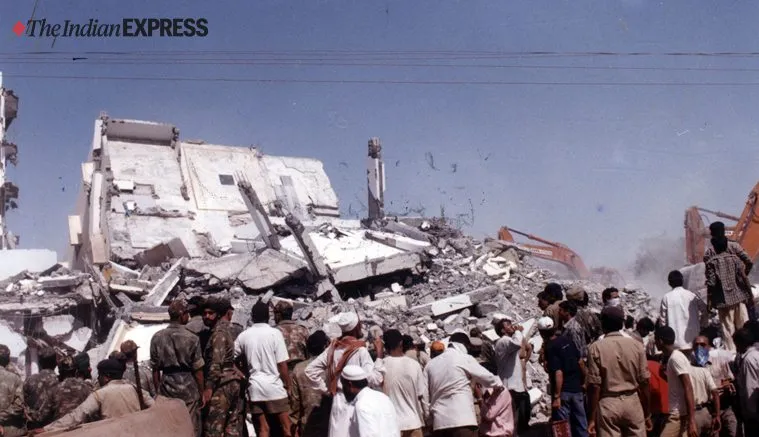 Rescuers and local people during search and rescue operations after the Bhuj earthquake in 2001. (Express archive photo)