5 min read


© The Indian Express Pvt Ltd



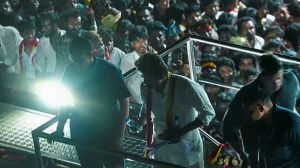
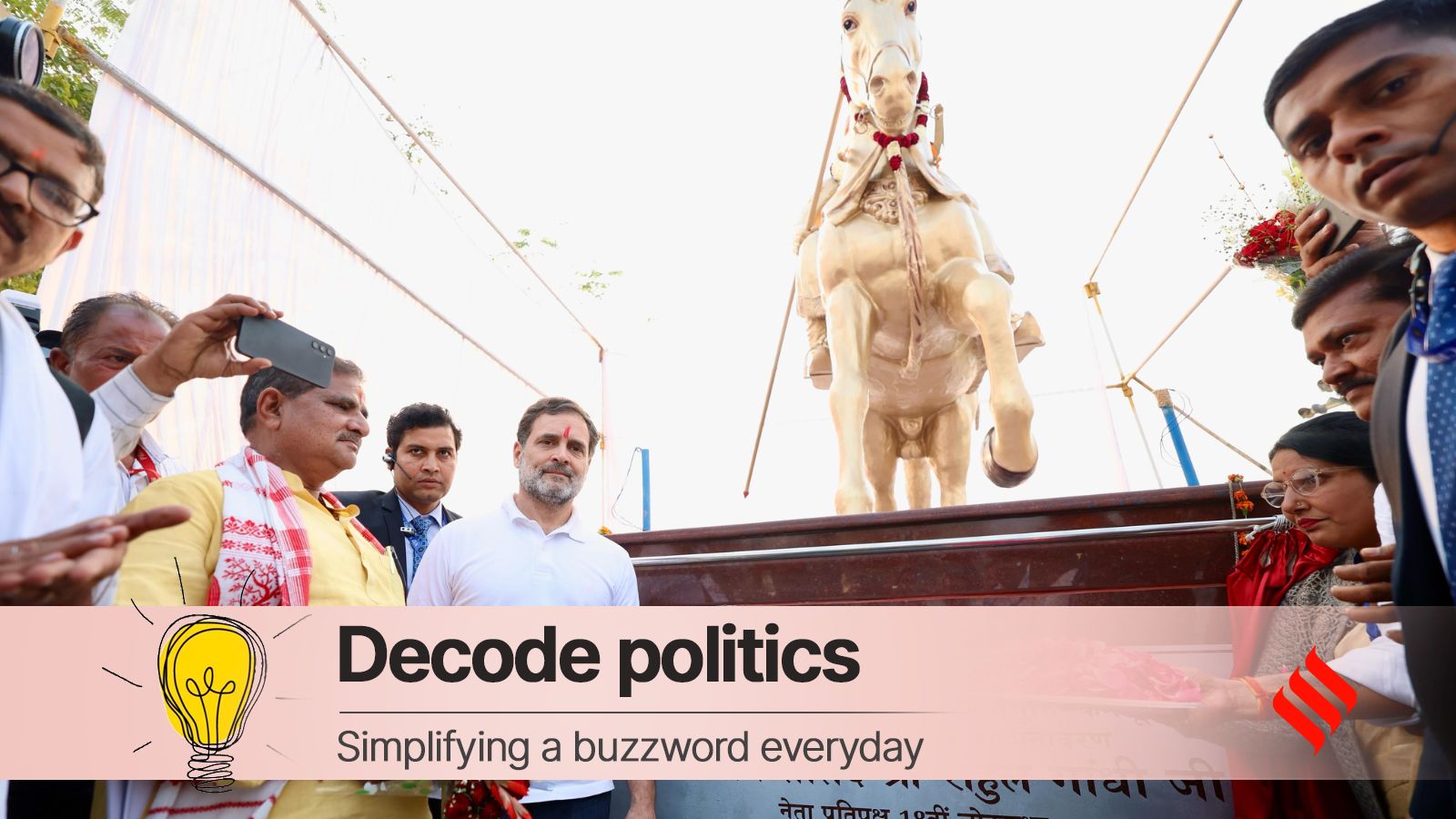 While Congress has called Rahul Gandhi’s two-day visit to Rae Bareli as “routine”, the statue-unveiling event has highlighted the LoP's continuing focus on the Independence struggle. (Express Photo)
Leader of the Opposition (LoP) in the Lok Sabha Rahul Gandhi unveiled the statue of Rana Beni Madho, a revolutionary belonging to the Awadh region, in his parliamentary constituency Rae Bareli in Uttar Pradesh on Thursday.
While the Congress has called Gandhi’s two-day visit to Rae Bareli as “routine”, the statue-unveiling event has highlighted the LoP’s continuing focus on the Independence struggle.
Madho, the ruler of Shankarpur estate (now in Rae Bareli district), played a key role in the Indian rebellion of 1857, the first major uprising against the British rule.
Belonging to the Bais clan of Rajputs, Madho played a crucial role in the Oudh (now Uttar Pradesh) region. Seen to be one of the most powerful leaders in the region, he was appointed as the administrator of Jaunpur and Azamgarh regions by the then Nawab of Awadh, Brijis Qadar.
According to historians, Madho led one of the biggest armies, comprising 15,000-20,000 soldiers and firearms, during the 1857 revolt. He also assisted Begum Hazrat Mahal, the second wife of Nawab Wajid Ali Shah.
Historical records show that Madho’s army had killed a British officer in Salon town (now in Rae Bareli). Subsequently, the British went after Madho’s army, forcing most of them to flee, signalling the end of the revolt in South Oudh. However, Madho managed to escape and was martyred in 1859 while fighting in Nepal.
He was immortalised in a folk song following his death. The song says that a British governor tried to bribe Madho by offering him a suba (province) in the Oudh region. To this Madho responds, “As long as I breathe, my only resolve is… to dig up the very foundations of you and throw you out!” The song goes on to describe Madho’s efforts to unite disparate zamindars of the region against the foreign rule.
According to Congress insiders, Gandhi is attempting to bring back memories of the Independence struggle to make it a part of the narrative against the BJP and the RSS.
Recently, the LoP had hit out at RSS chief Mohan Bhagwat over the latter’s remarks that “India got true Independence only after the Ram Temple in Ayodhya was consecrated”. Gandhi said Bhagwat’s remarks would have amounted to “treason” in any other country.
Earlier this month, Gandhi participated in a programme in Patna to celebrate the 130th birth anniversary of Pasi community icon Jaglal Choudhary, who hailed from Saran and played a key role in the Independence movement.
“We want to bring back memories of the freedom struggle and associate it with current politics. Our leader (Gandhi) has said multiple times that the present BJP government is similar to the British and we need to free the country from the BJP-RSS, who had no role in the freedom struggle,” a senior Congress leader said.
Sources said the Congress has also been focusing on icons like Mahatma Gandhi and B R Ambedkar while party leaders are being trained in the “Gandhian ideology”. “The party wants to reclaim Mahatma Gandhi and Ambedkar’s legacy. The country got Independence in 1947 because the Congress fought the British,” a party leader said.
In December last year, the party also held an extended Congress Working Committee (CWC) meeting and termed it as the “nava Satyagraha Baithak”. It also announced a nationwide “Jai Bapu, Jai Bhim, Jai Samvidhan” programme.
Invoking Madho’s role in the 1857 uprising, Gandhi said: “The result of these revolutionary activities is our Constitution. All those who fought the British, sacrificed their life, went to jail for the Constitution. If the poor workers, farmers and small traders have a voice in India, it is because of the Constitution. Gandhi, Ambedkar ji and Nehru ji gave us this Constitution, for which Madho ji and Veera ji fought for.”
Attacking “Adanis and Ambanis”, Gandhi said there must be “one India” where everyone can dream.
Born in 1835 in present-day Rae Bareilly district, Veera Pasi was a Dalit leader who was a commander in Madho’s army and fought the British during the 1857 revolt. He also executed a jail break plan for Madho.