More than two years after the Gujarat government announced that it would introduce a Uniform Civil Code (UCC), the state on Tuesday formed a five-member committee headed by retired Supreme Court judge Justice Ranjana Desai to “assess the need” for the same and prepare a draft law.
If the UCC promise was made just before the 2022 Assembly elections in Gujarat, the announcement of the panel comes a day before Delhi votes and less than a fortnight before local body polls in the state.

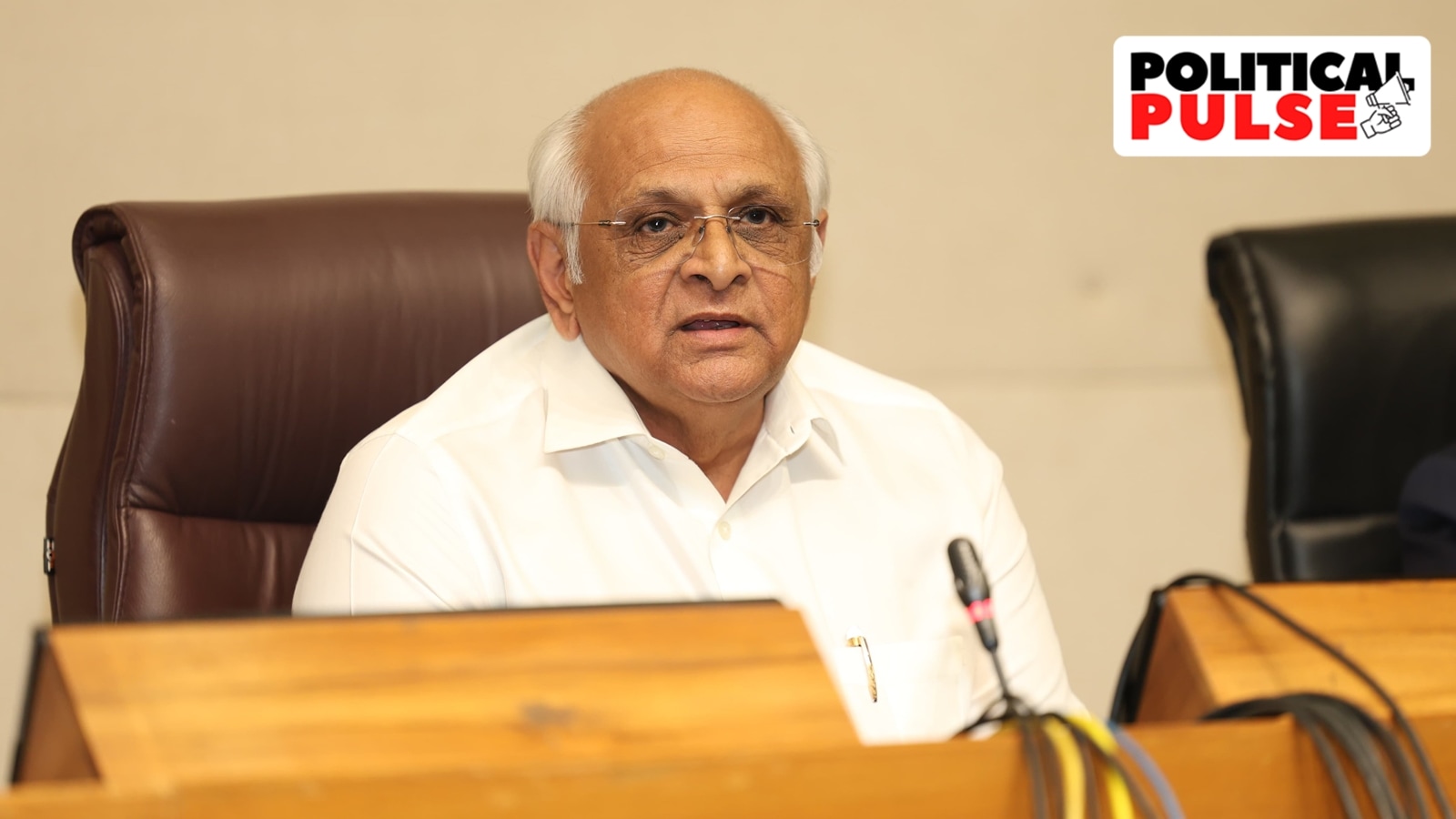
Announcing the committee, Chief Minister Bhupendra Patel said that it would submit its report within 45 days. His government was committed to fulfilling Prime Minister Narendra Modi’s resolve of implementing UCC across the country, he said, adding: “We all are citizens of such a great nation where ‘Bharatiyata (Indianness)’ is our religion, and the Constitution our holy book. The Constitution guides us all to perform our ‘nagrik dharma (duties as a citizen)’.”
Apart from Justice Desai, other members of the committee are retired IAS officer C L Meena, advocate R C Kodekar, former vice-chancellor of Veer Narmad South Gujarat University Dakshesh Thakar and social worker Gita Shroff.
Uttarakhand became the first state in the country to implement a UCC a week ago. Unlike Uttarakhand, though, Gujarat has substantial numbers of both Muslims (around 9% of the population) and tribals (about 14%) – two groups which are most apprehensive of a uniform law overruling their personal laws and customs.
In Uttarakhand, tribals were exempted from the state UCC, and Gujarat Minister of State for Home Harsh Sanghavi said that Gujarat will follow the same. “The UCC implemented by Uttarakhand presented a model before the country because it protects the customs and traditions of tribals. (Union) Home Minister Amit Shah also clarified in Jharkhand that a UCC will protect the traditions followed by tribals,” Sanghavi said.
Sanghavi, who was present at the press conference where the committee was announced, said the committee will prepare its report after consulting religious leaders, including those from the Muslim community, and take the views of people from different walks of life.
Story continues below this ad
The Opposition denounced the Patel government’s move as aimed at “diverting attention” from pressing issues ahead of the local body polls. Congress Legislature Party leader Amit Chavda said the BJP is doing “politics of vote bank”.
“In Gujarat, 14% of the population comprises tribals. A UCC will affect the culture, customs, religious rites and marriage system of the tribal society. Similarly, the Jain community of Gujarat, and the Devipujaks will also be affected,” the Congress leader said, adding that the Constitution gives freedom to certain communities to pursue their customs and culture.
Implementation of UCC falls under the jurisdiction of the Central government and not the state, Chavda added. “But since there is internal fighting in the BJP all over Gujarat, and the government here has failed in every way, this announcement is an attempt to divert people’s attention ahead of the local body elections.”
Congress spokesperson Manish Doshi said, “The BJP government which is facing problems from all directions has made the UCC announcement, to cover up internal factionism, corruption etc…Whenever elections are round the corner, the BJP makes such announcements.”
Story continues below this ad
Aam Aadmi Party state head Isudan Gadhvi also linked the UCC announcement to the coming elections. “Even today, 80% of domestic disputes in the Maldhari community are resolved by its own leaders. There is polygamy in tribal society, and all this will end if a UCC is implemented. Therefore, we believe a UCC is going to be a hindrance for Christians, Sikhs, Muslims as well,” Gadhvi said, warning that the BJP won’t win a single tribal seat if it went ahead with a UCC.
“I would like to tell the BJP that it is not right to look at everything from the perspective of Hindu-Muslim or vote bank politics… The BJP has done nothing about inflation or unemployment, it does not create jobs,” Gadhvi said.
As per a PTI report, Danish Siddique, the leader of the AIMIM that contested Assembly elections for the first time in Gujarat in 2022, said a UCC was a means to target the Muslim community, and said his party does not have much hope from a committee formed by the government to consider divergent views without a bias.
If tribals are kept outside the proposed law, it would not be a UCC, he added. “We will put our side before the panel. When BJP targets Muslims over polygamy, it should know this is prevalent in other communities too. When one community is allowed (to have polygamy) and not others, then it is not a UCC.”
Story continues below this ad
In October 2022, when the Gujarat Cabinet first announced its decision to form a committee for implementation of a UCC, an official BJP party release quoted then Union minister Parshottam Rupala as saying that a UCC was among the core issues for the BJP, along with Ram Janmabhoomi and abrogation of Article 370.
While the BJP was voted back in 2022, a senior party office-bearer said it had taken the state government over two years to form a committee given the sensitivity of the issue. “It has the potential to cause communal disharmony. So, the BJP adopted a wait and watch policy. After Uttarakhand set the process in motion, our party decided to see the response to a UCC there and its repercussions (before acting).”
The BJP leader said what they had seen was that “the UCC has had more or less smooth sailing, without much uproar, in Uttarakhand”. If a bigger state like Gujarat manages to also implement a UCC “without much uproar”, he said: “I believe a UCC will be implemented in all BJP- and NDA-ruled states in the next two-three years.”
On why an announcement for a UCC had been made just before the 2022 Assembly elections, the BJP office-bearer said it was “reiteration of the party’s commitment to the cause”.
Story continues below this ad
Sources said that if the UCC committee submits its report within the 45-day deadline, the Gujarat government could bring a Bill by the end of the Budget Session, scheduled between February 19 and March 28, in the state.
A source pointed out that the same judge, Justice (retired) Ranjana Desai, who headed the Uttarakhand UCC committee has been picked for Gujarat, and this would smoothen the process. “Much of the work is assumed to have been done theoretically.”
A PTI report quoted committee members Thakar and Shroff as saying the state government’s approach was “sensitive” and showed its “commitment” to plugging loopholes in laws and ensuring justice for all.
Shroff said she firmly believed that a common law had many benefits. “In the past 30 years, I have seen difficulties faced by women and children in their fight for justice. A UCC will help resolve this,” she said.
Story continues below this ad
Thakar said women are especially adversely affected due to personal laws, and the Supreme Court had directed in the Shah Bano case that contradictions in such cases be removed and a uniform law be framed.


 7 min read