3 min read
© The Indian Express Pvt Ltd



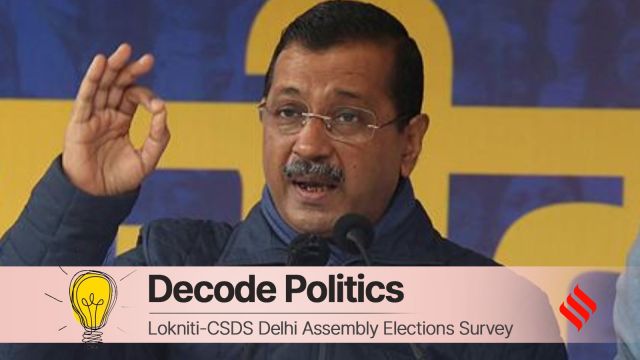 Despite the Aam Aadmi Party’s (AAP) emphasis on developmental initiatives and its promise of good governance, voter dissatisfaction was evident, with a significant proportion of the electorate perceiving shortcomings in the party’s governance record. (Express photo/ Amit Mehra)
The Delhi Assembly elections underscored the centrality of governance and development-related issues in shaping voter preferences and the overall electoral outcome.
While a broad spectrum of concerns — including unemployment, cleanliness, price rise and corruption — was evident, governance and development emerged as the predominant factors influencing voting decisions. The election result reflected a preference for the party that effectively addressed these issues in their campaign.
Despite the Aam Aadmi Party’s (AAP) emphasis on developmental initiatives and its promise of good governance, voter dissatisfaction was evident, with a significant proportion of the electorate perceiving shortcomings in the party’s governance record.
Voter concerns in Delhi extended beyond economic distress to encompass broader issues of governance and civic amenities. According to a Lokniti-CSDS Survey, while unemployment was a key concern for one-fifth of the voters, issues such as cleanliness (15%) and lack of development (11%) also featured prominently, along with price rise (10%).
Corruption, a major focus of the BJP’s campaign against senior AAP leaders, was cited by 7% of voters. The non-availability of drinking water has consistently remained one of the critical concerns for Delhi voters. Although the incumbent party frequently highlighted its success in providing safe drinking water, 7% of respondents identified this issue in an open-ended question. A small but notable segment (4%) expressed a desire for change in government.
The AAP government’s education and welfare initiatives received comparatively limited attention, with only 3% of voters citing each of them as decisive factors in their electoral choices (Table 1).
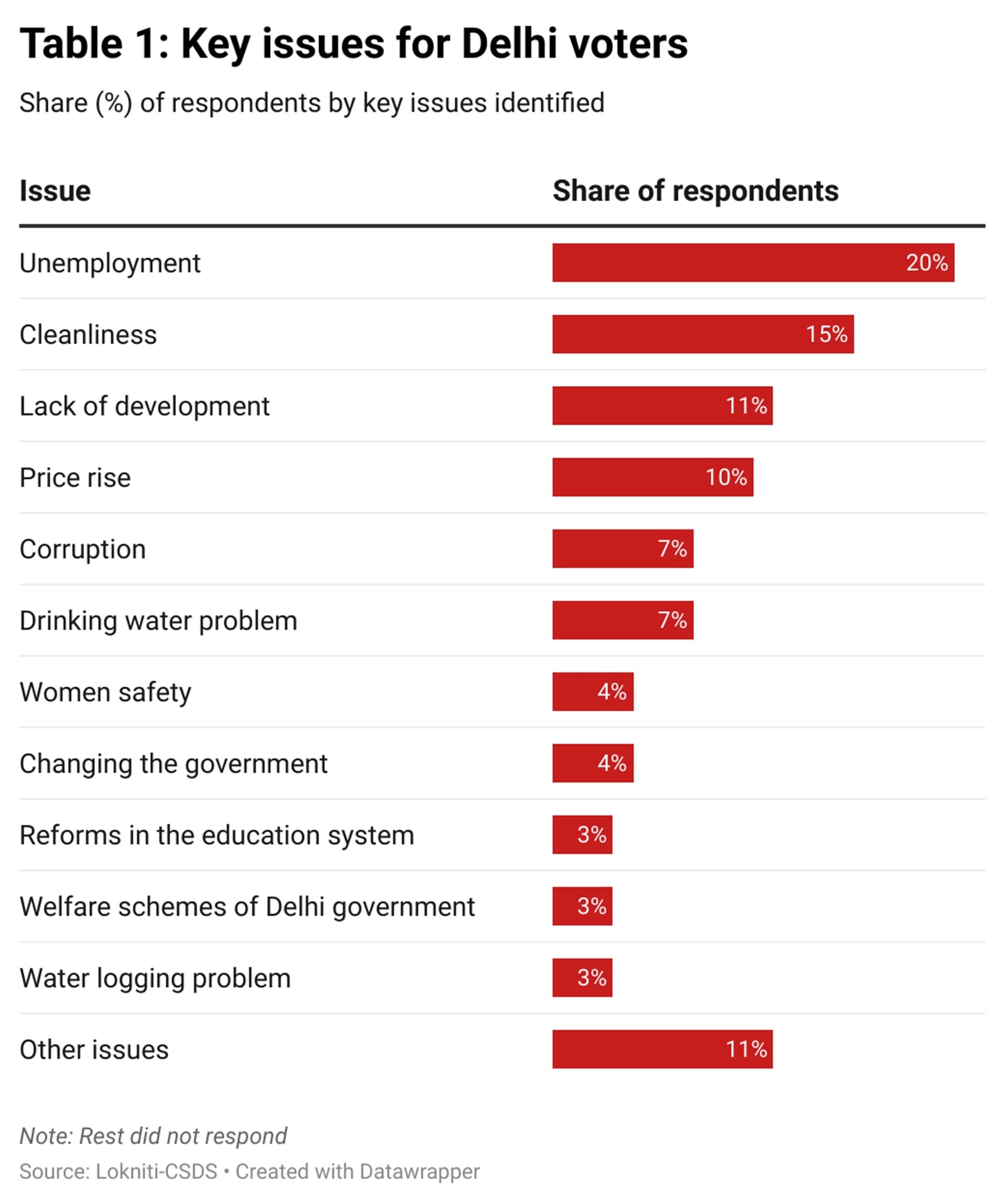 Table 1: Key issues for Delhi voters.
When voters were directly asked about the impact of different issues on their vote choices, a substantial majority viewed governance and quality of life issues as critical. Almost nine out of 10 voters identified cleanliness as a major concern, highlighting a gap between the promises and perceived performance of the AAP. Concerns such as women’s safety (87%), education (86%), drinking water (86%), and air pollution (85%) were also regarded as highly important. In contrast, religion ranked lower in priority, with three in five (61%) respondents considering it a significant factor in their voting decision (Table 2).
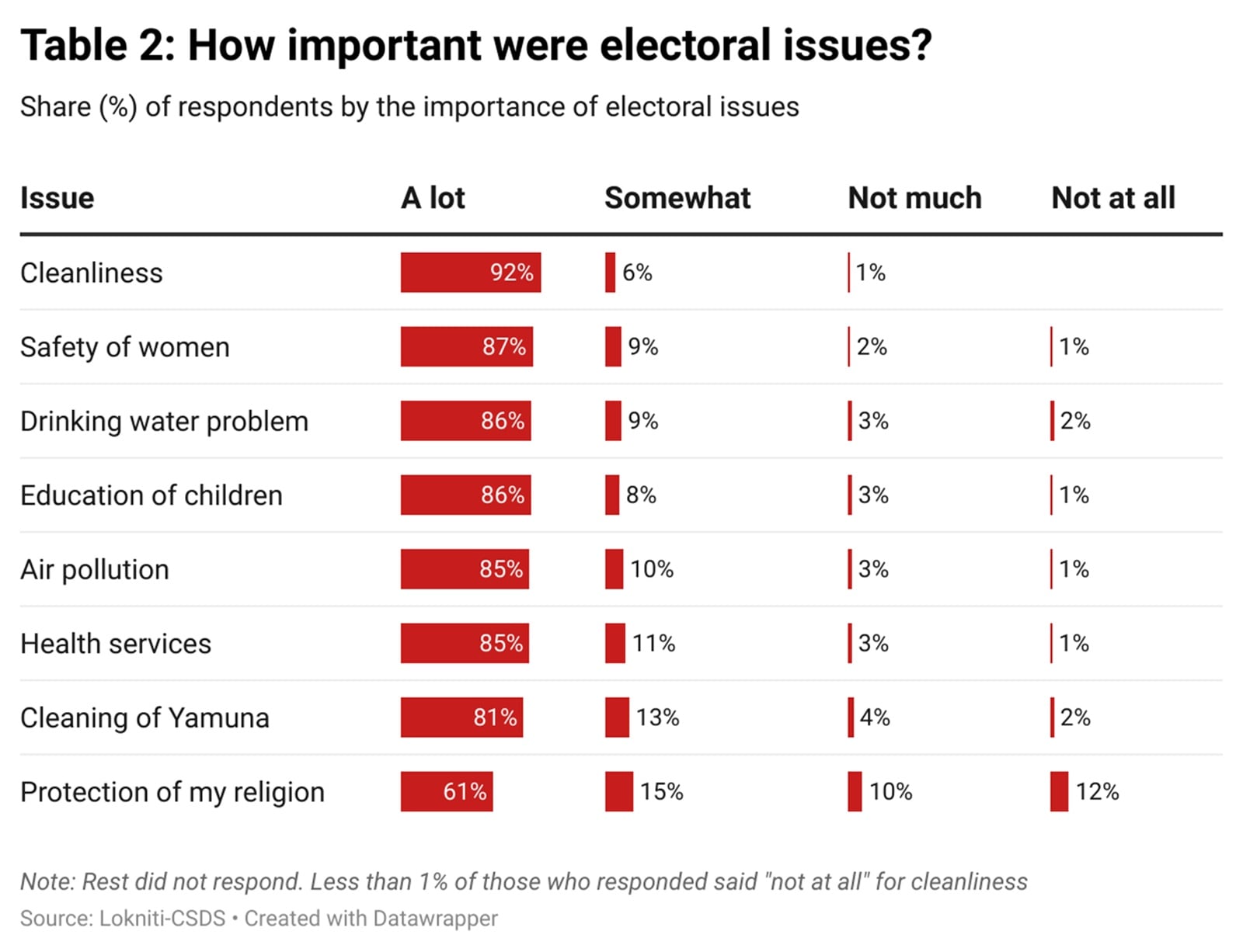 Table 2: How important were electoral issues?
This prioritisation of issues translated into distinct patterns of partisan support. The AAP retained an electoral advantage among those prioritising unemployment (55%) and price rise (52%) whereas the BJP and its allies garnered substantial backing from voters concerned with corruption (76%), lack of development (59%), and cleanliness (46%) (Table 3).
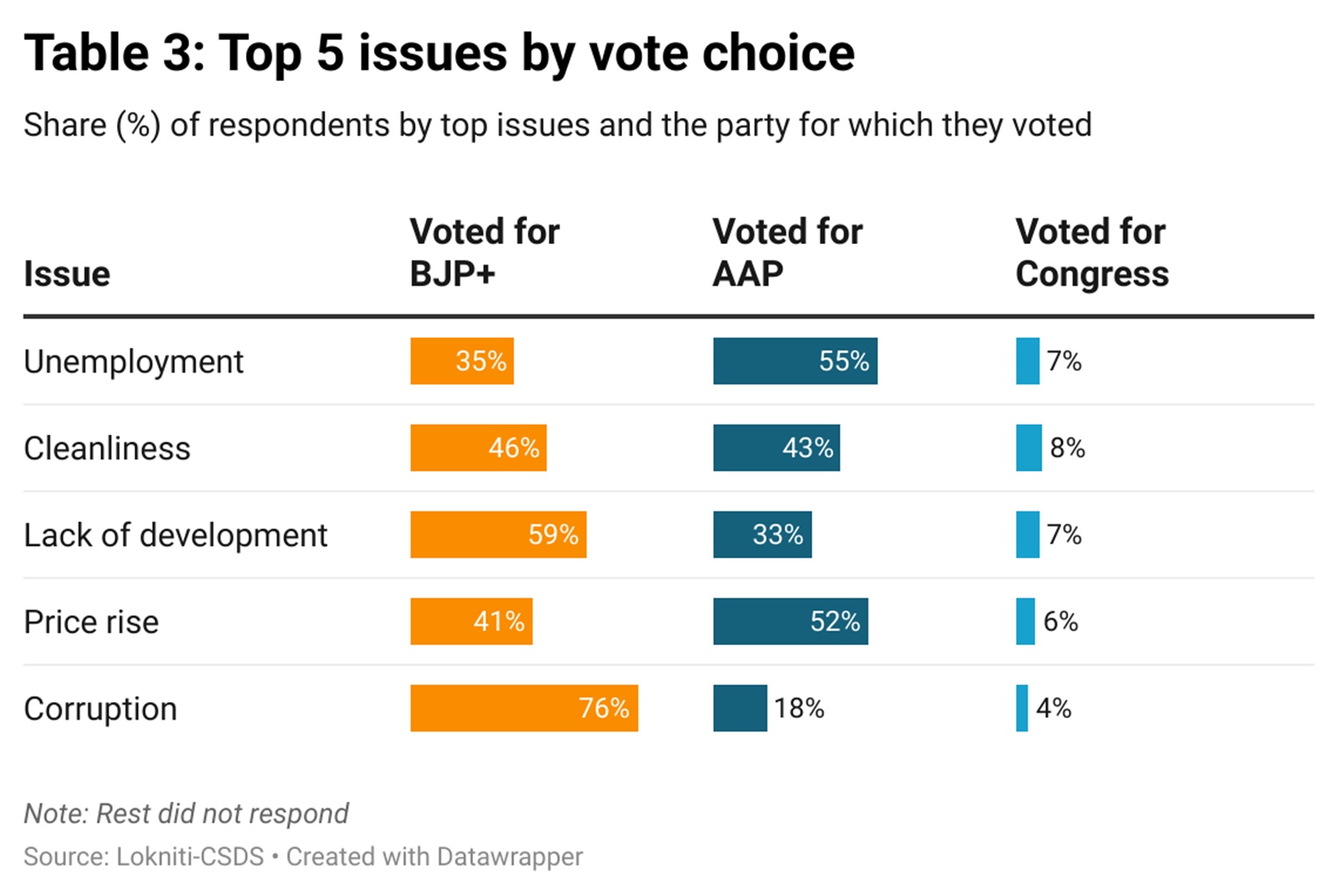 Table 3: Top 5 issues by vote choice.
The election results reinforced the significance of issue-based voting in Delhi’s political landscape. While the AAP maintained support among those affected by economic challenges and inflation, the BJP effectively mobilised voter sentiment by focusing its campaign on governance, corruption, and development. The Congress’s inability to articulate a compelling policy agenda further contributed to its continued political marginalisation.
Mishra is a Research Associate at Lokniti-CSDS.