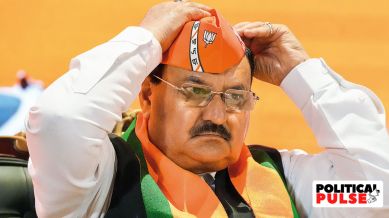
Amidst BJP overhaul, calls for better coordination with RSS
Coordination meetings were earlier held around once a month between the BJP and Sangh to discuss issues with “a national focus”. According to sources, these have become "more and more rare” over the last five to six years
As the BJP revamps its organisation ahead of election of its new president, senior representatives from the party and RSS are also working towards close coordination between their top leaders.
A BJP source told The Indian Express: “Strengthening internal units such as the parliamentary board and the Central Election Committee are said to have figured in discussions between the top brass of the BJP and the RSS over the last couple of days. Ensuring regularity of samanway baithaks (coordination meetings), which have become somewhat rare over the last few years, is also among the expectations the RSS has from the new national team of the BJP.”
You’ve Read Your Free Stories For Now
Sign up and keep reading more stories that matter to you.
These “coordination” meetings were earlier held around once a month on issues “with a national focus”, sources said. But since 2019, these have “beome more and more rare”.
The focus on better coordination follows disquiet in the RSS over BJP chief J P Nadda’s statement to The Indian Express in an interview that the party no longer required hand-holding by the RSS. In the wake of the interview, the RSS had held back during the campaign for the 2024 Lok Sabha polls, with the fall in the BJP’s tally seen as partly a result of that.
Since then, the BJP has tried to make amends. In March, Prime Minister Narendra Modi visited the RSS headquarters in Nagpur, becoming was the first sitting PM to do so.
BJP sources said the process of the election of the next BJP national president — which mandates that at least 18 of the party’s 36 units should have undergone organisational elections — is “running behind schedule” due to decisions related to the appointment of presidents in crucial states such as Uttar Pradesh, Gujarat and Madhya Pradesh. These are expected to be done soon. “Once the rejig of these state units is achieved, the process (of the appointment of the national BJP president) will pick up speed,” a source said.
According to the BJP’s constitution, members of the party’s national council and state councils together vote for the party’s national president. “A delay occurs only when there is a lack of consensus regarding a decision. The recent move in Tamil Nadu, where the state unit chief was replaced, took time and consideration,” a source said.
Story continues below this ad
The tenure of J P Nadda, who became BJP national president in January 2020, was supposed to end in January 2023. It was extended due to the 2024 Lok Sabha polls and the Assembly elections that followed.
Nadda’s successor will hold the party’s reins during the Bihar Assembly elections later this year as well as through polls in West Bengal, Tamil Nadu, Kerala and Assam next year.
Jatin Anand is an Assistant Editor with the national political bureau of The Indian Express. With over 16 years of experience in mainstream journalism, he is a seasoned expert in national governance, electoral politics, and bureaucratic affairs. Having covered high-stakes beats including the Election Commission of India (ECI), intelligence, and urban development, Jatin provides authoritative analysis of the forces shaping Indian democracy. He is an alumnus of Zakir Husain Delhi College (DU) and the prestigious Asian College of Journalism (ACJ), Chennai, where he specialized in Print Journalism.
Expertise
High-Stakes Beat Coverage: Throughout his decade-and-a-half career, Jatin has covered some of the most sensitive and influential beats in the country, including:
The Election Commission of India (ECI): Monitoring electoral policy, reforms, and the conduct of national and state polls.
National Security & Intelligence: Reporting on the internal mechanisms and developments within India's security apparatus.
Urban Development: Analyzing the policies and bureaucratic processes driving the transformation of India’s cities.
National Political Bureau: In his current role, he tracks the intersection of policy and politics, offering deep-dive reporting on the Union government and national political movements.
Academic Credentials:
Zakir Husain Delhi College (DU): Alumnus of one of Delhi's premier institutions.
Asian College of Journalism (ACJ), Chennai: Specialized in Print Journalism at India's most prestigious journalism school. ... Read More