8 min read
© The Indian Express Pvt Ltd



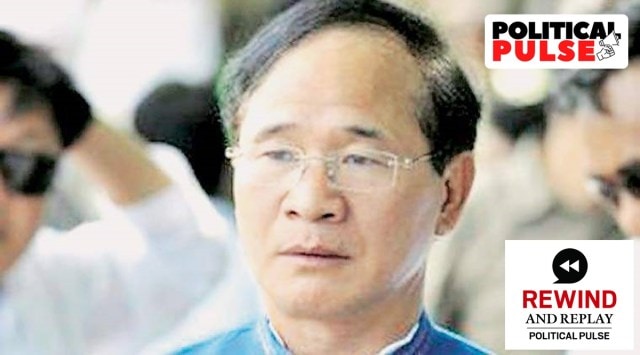 Former Arunachal Pradesh Chief Minister Nabam Tuki (File)
 Delivering its verdict on the petitions relating to the June 2022 Maharashtra turmoil Thursday, the Supreme Court referred to a larger Bench its 2016 ruling in an Arunachal Pradesh case, when it held that the Speaker of a House can’t decide a disqualification petition under the anti-defection law while a notice for his or her removal is pending.
The 2016 case was key to the arguments in the Sena versus Sena tussle. The Eknath Shinde-led faction had cited the Nabam Rebia ruling (as the Arunachal order was called) to contend that Deputy Speaker Narhari Zarwal — who was in charge at the time, as the Speaker’s post was vacant – could not seek disqualification of 16 of its MLAs as they had already moved a notice for his removal.
Contesting this, the Uddhav Thackeray camp had told the Bench that MLAs who wanted to defect could misuse the Nabam Rebia ruling, and pre-empt and stall disqualification proceedings against themselves by seeking the Speaker’s removal through a notice.
The Supreme Court referred this particular issue to a larger Bench in its order Thursday.
The Nabam Rebia case stemmed from a political crisis in Arunachal Pradesh between 2015-16. Rebia was the Speaker of the Arunachal Assembly at the time. It marked the first time the Court had reinstated a government even after a new government was formed in its place.
A breakdown:
On December 9, 2015, a group of rebel Congress MLAs in the state approached then Governor J P Rajkhowa, seeking to impeach Speaker Rebia. A cousin of then Congress Chief Minister Nabam Tuki, Rebia was seen as biased towards him, and the rebel MLAs alleged he was trying to get them disqualified from the Assembly.
Though Tuki had led the Congress to a remarkable victory in the Assembly election, he had to drop and induct ministers often in order to quell rebellion within the Congress Legislature Party (CLP). In December 2014, veteran minister Kalikho Pul was dropped and expelled from the Congress.
This coincided with the Centre appointing former Assam chief secretary J P Rajkhowa as Governor on June 1, 2015. On October 6 that year, two young rebel Congress MLAs, Gabriel Denwang Wangsu and Wanglam Sawin, alleged that they had been forced to submit resignation letters during a dinner at the CM’s residence. Two days later, Tuki dropped four more senior ministers. And then two weeks later, minister Pema Khandu resigned, accusing Tuki of being “inefficient”.
By then, Tuki had already developed a strained relationship with Governor Rajkhowa and almost half his MLAs were against him.
While the Assembly was not in session, Rajkhowa agreed to a request by the rebel MLAs and called for an emergency session of the Assembly on December 16, 2015, to take up an impeachment motion against the Speaker. The Congress approached the High Court and later the Supreme Court against the Governor’s move. Meanwhile, the Centre imposed President’s rule in the state under Article 356.
The Congress cried foul, saying this was the first instance of Article 356 being imposed while the case was being heard in court.
On December 16, the special session of the House was convened, but had to be held in a community hall as the government and Speaker prevented it from being held in the Assembly. Deputy Speaker T N Thongdok, believed to be on the anti-Tuki side, presided over the special session, which was attended by 20 rebel Congress MLAs (of the total 42 in the House), 11 BJP MLAs and two Independents. The rebels, along with the 13 others, passed the impeachment motion first, and then moved a no-confidence motion against CM Tuki.
At the end of the session, Tuki was ‘defeated’ in a floor test and the ‘House’ ‘elected’ Kalikho Pul as the new Leader of the House. The same day, Speaker Rebia issued an order disqualifying 14 of the rebel Congress MLAs.
On January 5, 2016, Justice B K Sarma of the Gauhati High Court stayed the disqualification. The Speaker’s plea for his case to be heard in another court was turned down, prompting him to approach the Supreme Court.
The case subsequently took many twists and turns.
On January 15, 2016, the Supreme Court referred the entire batch of petitions filed by the Speaker to a Constitution Bench.
On January 29, displaced CM Tuki filed a fresh petition in the Supreme Court challenging the imposition of President’s rule in the state. The Centre justified it, claiming complete breakdown of law and order in the state, and saying the Congress government was in a minority there.
On February 2, Governor Rajkhowa said the President’s rule in the state was temporary and that a new elected government would soon be formed in its place.
Two days later, the Supreme Court, examining the powers of Governors, took strong note of a submission that all decisions of the Governor are not open to judicial review and said it cannot be a mute spectator when democratic processes are “slaughtered”.
The top court subsequently rejected the pleas of the rebel Congress MLAs against the Speaker and lifted President’s rule in the state.
On February 20, 2016, dissident leader Kalikho Pul was sworn in as the ninth Chief Minister of Arunachal Pradesh with the support of 18 rebel Congress MLAs, and two Independents and 11 BJP MLAs who gave outside support. Pul’s swearing-in came a day after the Supreme Court vacated its interim order to maintain status quo in the Arunachal Assembly, paving the way for government formation.
On February 23 that year, the SC observed that it was empowered to “set the clock back” if there were constitutional violations in the manner in which the Arunachal Pradesh Governor issued orders that have eventually led to formation of a new government in the state.
Meanwhile, two days later, Pul won the vote of confidence without any opposition on the first day of the Assembly session, with 17 Congress MLAs including former chief minister Nabam Tuki remaining absent from the House.
The following month, 30 rebel Congress MLAs who sided with CM Pul merged with the People’s Party of Arunachal (PPA), leaving no scope for the Congress to take any legal action against them. The merger took place with the CM announcing it at Naharlagun. He said they were “compelled” to take the decision as the Congress had “shut all its doors” despite all of them asserting that they continued to belong to it.
On May 6, top leaders of the Congress took out a march from Jantar Mantar against what it called the ‘undemocratic’ policies of the Centre with regard to the imposition of President’s rule in the states of both Arunachal and Uttarakhand. Some of the leaders courted arrest before they were released by the police.
Subsequently, on July 13, 2016, the Supreme Court turned the clock back and restored the Congress government in the state. The court said the Governor’s actions were ‘illegal’.
The top court censured the Governor for “humiliating the elected government of the day”, and restored the Congress government in Arunachal Pradesh, and declared as “unconstitutional” all decisions of Governor Jyoti Prasad Rajkhowa that had first led to imposition of President’s rule in the state and later formation of a new government led by the Congress breakaway faction.
A five-judge Constitution Bench ordered status quo ante as it prevailed on December 15, 2015 — in effect, paving the way for Tuki to be reinstated at the helm once again.