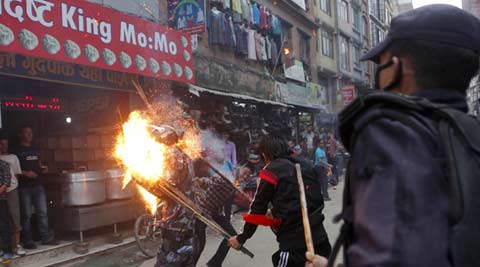

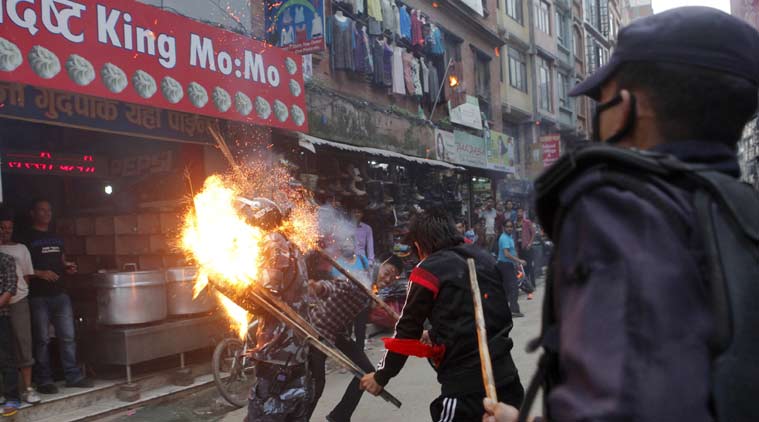
The violence in western Nepal over the demand for a separate province is the worst the Himalayan country has witnessed since the end of the Maoist insurgency in 2006. It has compelled Prime Minister Narendra Modi to express New Delhi’s concerns about political instability in India’s northern neighbour and offer his counsel to his Nepali counterpart Sushil Koirala, urging the latter’s government to resolve all outstanding issues through widespread consultations.
Nepal’s Constituent Assembly is in the process of adopting a long-awaited new constitution that, unfortunately, has led to largescale protests, given allegations that due parliamentary debate and public opinion had been dispensed with, including on issues of federalism. While Nepal has come a long way in the peace process since 2006, Kathmandu hasn’t managed the process of transition well. There have been six PMs in this period and the constitution has missed several deadlines. Political conflict has been exacerbated by the contest over the country’s identity and institutions. As a result, no PM since 2006 has been able to deliver governance. This manifested itself brutally in the aftermath of the recent earthquakes in Nepal, when a state lacking in capacity scuppered the chances of international aid, including India’s, having the desired effect.


