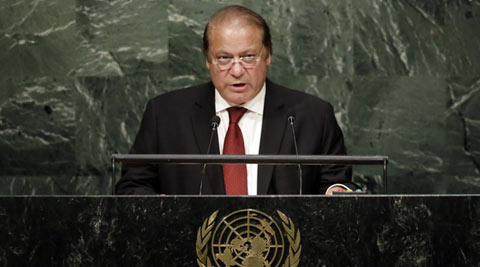


Behind the cordial notes emerging from Pakistan Prime Minister Nawaz Sharif’s visit to Washington, the Obama administration, with Afghanistan on its mind, seems to have done some straight talk on terror groups thriving on Pakistani soil. The joint statement issued after the two leaders met last week is telling. Nawaz “reaffirmed that Pakistan’s territory will not be used against any country”; both sides “affirmed that regional peace… required the prevention of attacks across the Pakistan-Afghanistan border”; Nawaz apprised Obama about “Pakistan’s resolve to take effective action against… Lashkar-e-Taiba and its affiliates, as per its international commitments and obligations”.
During the visit, the Pakistani side also reportedly handed over dossiers containing “evidence” supporting an alleged Indian hand in violence in the Federally Administered Tribal Areas, Balochistan and Karachi. The joint statement contains a veiled reference to this, noting the “mutual concerns” of India and Pakistan on terrorism, and Nawaz’s observation that reining in terrorism is “an obligation of all countries in the region”.


What India can justifiably complain about, however, is that the US demands on counter-terrorism are being made of the wrong Sharif. Despite its expression of support for Pakistan’s civilian democracy, the US knows only too well that in this third year of the Nawaz Sharif government, real power has moved into the hands of army chief Raheel Sharif. The relationship between Pakistan’s security establishment and terror groups in its territory, whatever the nomenclature, is not a secret either.
If at all anyone has to pull the plug, it is General Sharif, not PM Sharif. The Pakistan PM, for his part, is right to point out that the US must decide whether it wants Islamabad to help bring the Taliban to the table for the so-called reconciliation process in Afghanistan, or a cross-border crackdown on it— after all, the second in command of the Taliban is Sirajuddin Haqqani of the Haqqani Network fighting the US-led Nato forces. What will ultimately count is US messaging to the other Sharif — by all accounts the more important one — when he visits Washington next month.


