

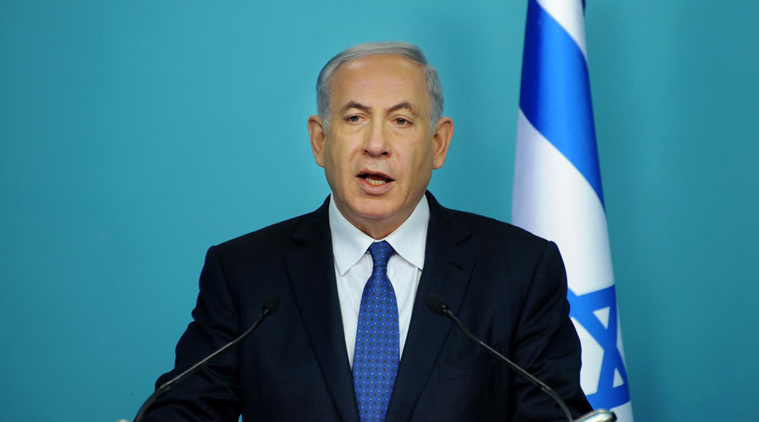
The spate of stabbing and shooting attacks on Jewish Israelis carried out by young Palestinians and Arab Israelis, as well as Israel’s heavy security deployment, demonstrate that the status quo of the past few years is now effectively over. Both the Israeli government and the Palestinian Authority (PA) had been warned since 2010 that things might come to this pass. PM Binyamin Netanyahu is facing increasing criticism for failing to protect Israeli citizens, while the erasure of the last remnants of Palestinian President Mahmoud Abbas’s authority explains why Israel’s current policy of “conflict management”, in the absence of a diplomatic process, is untenable.
This spiral of violence was triggered in mid-September, when clashes erupted at the Temple Mount due to rumours that Israel was planning to alter the longstanding status of the site. The Israeli government denied the rumours, but two Israelis travelling with four children were soon shot dead in the West Bank. The knife attacks began two days later. Both the Israeli forces and Palestinian police are finding it difficult to stem the violence since it’s being carried out by individuals. The lack of visible organisational support and arms transfers means there’s little help from surveillance. On the other hand, praise for the attacks on social media from the Palestinian media and militant outfits like Hamas, as well as inciteful anti-Arab rhetoric from Israelis, seem to fan the violence.


