
Opinion Lowering the bar
Liquor bans have never worked. Why must Bihar reinvent the wheel?
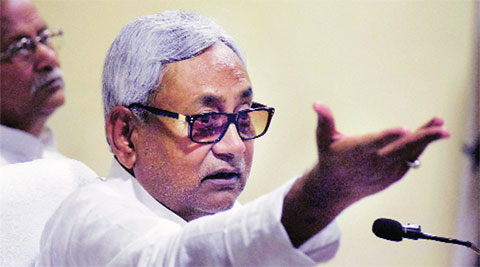


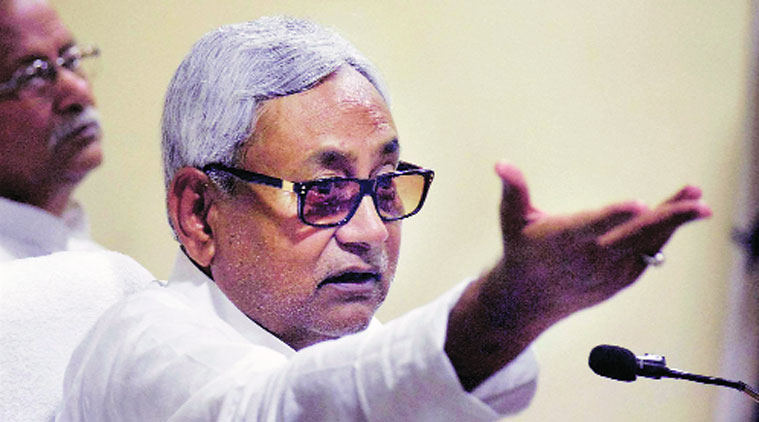 Nitish Kumar, like many others before him, clearly sees a constituency that could be wooed with the promise of a liquor ban.
There must be something intoxicating about the idea of prohibition, which attracts politicians to it all too frequently. The latest leader to promise prohibition is Bihar Chief Minister Nitish Kumar, who told a gathering of women that he would ban liquor if he is voted back to office. Kumar, like many others before him, clearly sees a constituency that could be wooed with the promise of a liquor ban. But surely he knows that total prohibition has not worked anywhere on earth. The Indian experience is that it leads to the creation of a black market and a rise in the consumption of spurious liquor, leading to hooch tragedies, crime syndicates that patronise bootlegging and rent-seeking by the authorities. The sharp decline in excise revenue also ruins state finances and affects welfare programmes. Kumar must rethink his promise.
It is not at all surprising that the issue cropped up at a meeting with women, who have led movements seeking prohibition in many states.
They are backed by valid social and economic reasons. Alcoholism among men, especially in the economically vulnerable sections, wreaks havoc in families. Women have to face physical violence and must protect their families against economic ruin. But there is not sufficient evidence — though many states have experimented with prohibition since Independence — that a liquor ban could be an effective remedy against economic impoverishment or social violence caused by alcoholism. Prohibition only pushes the sale of liquor underground, causing a rise in prices and the spread of adulterated liquor. States like Andhra Pradesh and Tamil Nadu tried prohibition in the 1980s and ’90s, but withdrew the policy after a few years, admitting to its futility. Mizoram, which had enforced a liquor ban for 17 years, called if off last year for the same reason. Alcoholism, no doubt, is a pressing social and public health issue. But the way to combat it is through outreach programmes and de-addiction centres.

Kumar’s government has instituted a gamut of progressive policies aimed at empowering women. The reservation of seats in panchayati raj institutions, incentives for the education of girls and distribution of bicycles are concrete steps that would give a voice to Bihar’s women. Political empowerment and economic independence would provide women the agency to rein in their menfolk. And a peg or two is unlikely to derail the process of social change.
 Share
Share


