
Opinion Hurt by Bahubali
A debate about representation that is in danger of being reduced to mere muscle-flexing.


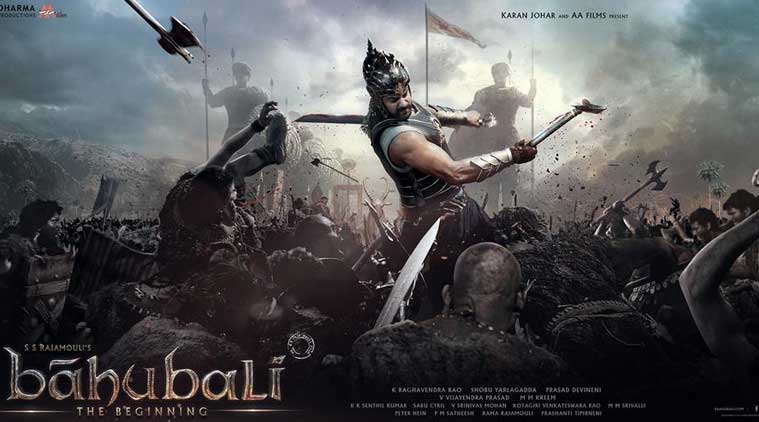 Baahubali Poster
Bahubali: The Beginning, the mega-budget, multi-starrer, multi-lingual blockbuster, which is a period epic, has courted controversy, at least in one state. Last week, members of a caste outfit attacked a theatre in Tamil Nadu that was screening the film. Their ire was provoked by a piece of dialogue they felt alluded to their community in a derogatory way. The scriptwriter, Madan Karky, called it a misunderstanding, but apologised for causing hurt inadvertently. The protestors were promised that the controversial dialogue would be muted during screening.
The controversy has thrown up some questions. Karky’s lament that it has become increasingly difficult to write dialogue or discuss an idea on film without being personally attacked may have a point. In Bahubali’s case, the word pagadai (gambler) that caused the flare-up wasn’t a caste slur, but a usage with generally derogatory undertones. It is true that filmmakers are not always sensitive to caste and community sentiments and histories. In fact, Bahubali, like many other blockbusters, has been criticised for its portrayal of women. Yet, at the same time, it is also true that people are becoming increasingly sensitive to their communitarian pasts and identities. The clamour for “respect” in artistic representations is due to the rise of identity politics. When seen through the prism of subaltern resistance, this assertion has a positive resonance. Yet it also runs the risk of being reduced to mere muscle-flexing in the hands of caste or community bahubalis, who target unsuspecting writers, artists and filmmakers to further their self-interest.

Also, debates about representation often ignore the period and context of an artistic creation and seek to impose a contemporary political correctness with retrospective effect. Artistic expression, from fiction to film, now faces a threat from the self-appointed custodians of community pride, who seek legitimacy from misplaced notions of the past.
 Share
Share


