

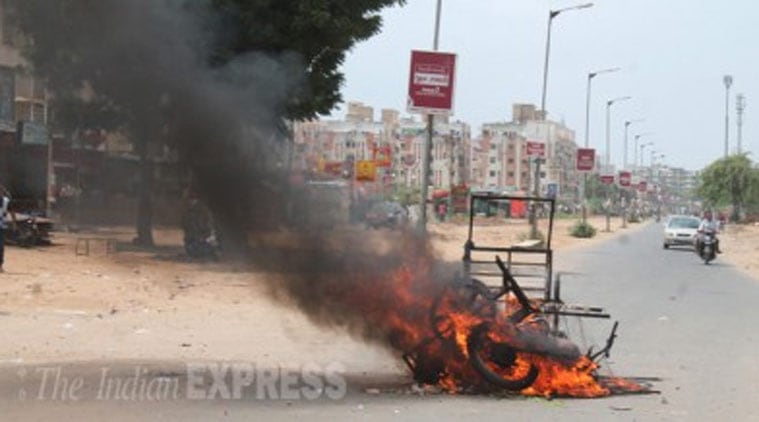
Now playing in Gujarat are scenes of street agitation and protest that the state has not seen for some time — since the 1980s, in fact. Ironically, almost three decades later, the lead players have switched sides. If in the early ’80s and then again in the middle of that decade, it was the Patels who led fierce uprisings against reservations for Dalits and OBCs, now the Patels are leading a campaign whose demand is reservation for themselves in government jobs and colleges. The seeming incongruity of one of Gujarat’s most affluent and politically influential communities insisting that it be treated as a backward group is indeed arresting, but the government has no time to waste. The current agitation has turned ugly and threatens to get worse, with Tuesday’s mega rally by the 20-something Hardik Patel in Ahmedabad followed by lathi charges, arrests, vandalisation of public property, curfew, deployment of the army — seven deaths have been reported. Prime Minister Narendra Modi has appealed for calm and called for talks. The Anandiben Patel government in Gujarat, which is resisting the reservation demand of the Patels, must ensure the PM’s counsel is heeded immediately.
The fact that the Patels earlier opposed reservations as aggressively as they are now demanding them, and that they are far from disprivileged as a community, are not the only paradoxes in the unfolding situation in Gujarat. It is also that this caste group has been regarded as a fixed BJP votebank, constituting a major chunk of its majority support in the state since the 1990s. This was after it had turned away from a Congress that appeared to have decided to court a social alliance that excluded the Patels — the KHAM, comprising the Kshatriyas, Harijans, Adivasis and Muslims. Patel restiveness now, that has taken the form of a demand for reservations addressed to a regime they have staunchly supported so far, may also speak of new economic anxieties that have overtaken them in recent years. The micro, small and medium enterprises that the Patels transitioned to from agriculture have suffered a slump; the diamond industry has laid off workers in large numbers, increasingly shutting down units. The Patel’s cry for reservations could be an articulation of the community’s growing discomfitures and anxieties in an economy that has not accommodated or kept pace with their changing aspirations.


