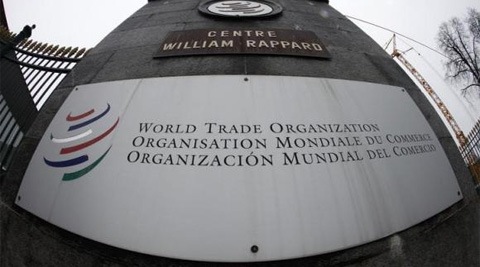

Several obituaries have been written of the Doha Development Round of the World Trade Organisation. But the three-day ministerial conference in Nairobi, which starts today, points to signs of life.
Representatives from the 162 member countries will meet yet again to search for a consensus that has eluded since 2001. For long, India, along with China, South Africa and several other developing countries, has tried to push for “special and differential treatment”. The developed countries, led by the US, the EU and Japan, have tried to prise greater market access for their domestic producers. Not for the first time, things came to a head during the Bali ministerial in 2013, when India put its foot down on its sovereign right to give production subsidies to its farmers. The leverage, of course, was the Trade Facilitation Agreement (TFA) involving relaxed customs duties. The TFA was a demand by the developed countries and it provided developing countries, especially India, with a bargaining chip. Last year, India let go of that chip when it agreed to the TFA without any commitment from the developed world on farm subsidies. The question, then, is: What is at stake for India in Nairobi?


For India, at the WTO, there is little to gain but much to lose. So while the negotiators wrestle it out in Nairobi, the government must realise that it is time to speed up reform of India’s unsustainable and inefficient subsidy regime. Shifting to direct income transfers will not only make such subsidies WTO-compliant but also reduce the strain on the Central exchequer.


