
Opinion Colombo beginnings
Sirisena-Wickremesinghe 2.0 must build on their project of good governance with reconciliation.
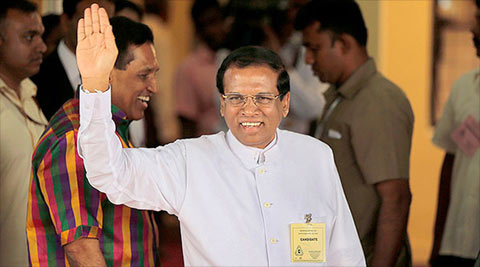


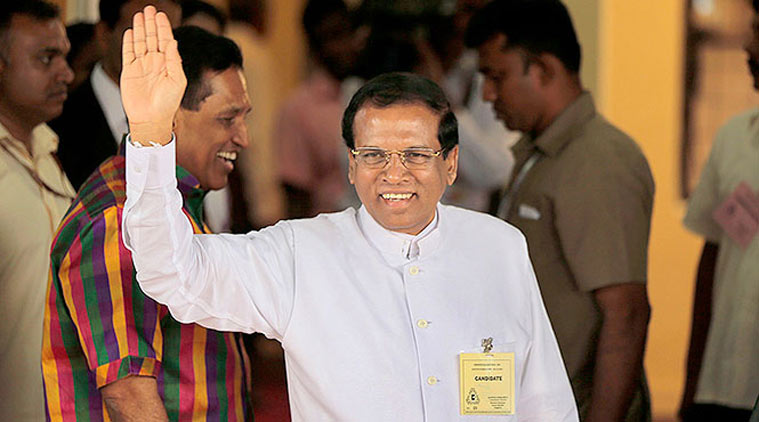 Maithripala Sirisena. (Source: AP photo)
Mahinda Rajapaksa’s audacious bid to return as Sri Lanka’s prime minister despite his defeat in the presidential elections by Maithripala Sirisena just eight months ago has been foiled. The United People’s Freedom Alliance, the coalition he headed from 2005 until his January defeat, polled fewer votes in the southern Sri Lankan Sinhala heartland than Rajapaksa got from the same region in the presidential contest. The beneficiary was Prime Minister Ranil Wickremesinghe’s combine, the United National Front for Good Governance (UNFGG). Though voters gave neither side an outright majority, the UNFGG has emerged as the single largest group, just short of the halfway mark in the 225-seat parliament.
The Sirisena-Wickremesinghe combine brought in changes in governance that Sri Lankans have welcomed. Sirisena, especially, won praise for his efforts to bring in transparent government, and Wickremesinghe was seen as someone who could help him continue with that task. Sirisena, too, had publicly declared during the campaign that he did not want to work with Rajapaksa. Had the former president returned to office, voters knew the war between him and Sirisena would have paralysed governance, and that the clock would be turned back in Sri Lanka.

While Sirisena-Wickremesinghe 2.0 have promised to continue with their programme of bringing in good governance, the new government must also pay attention to the country’s most important problem: the Tamil question. Sirisena’s January victory came on the back of votes from the Tamil and Muslim minorities. With the Tamil National Alliance (TNA) sweeping the northern province and doing well in the east too, its representative status is now beyond doubt. Voters have cast aside others in the north who were more extreme and who campaigned on a “two-nation” platform. Wickremesinghe may not need the TNA’s seats, but that should not push to the backburner this moderate party’s demand for a political solution. Somewhere between the UNF’s “maximum devolution within a unitary state” and the TNA’s “federalism and self-determination” that respects Sri Lanka’s territorial integrity, a meeting ground has to be found. More immediately, Wickremesinghe should launch a reconciliation programme by returning to Tamil families their land, release Tamils still detained in prisons, and start the work of tracing the missing and counting the dead from the war. This is crucial for any reconciliation process in Sri Lanka, and is not separate from the good governance Sri Lankans have voted for.
 Share
Share


