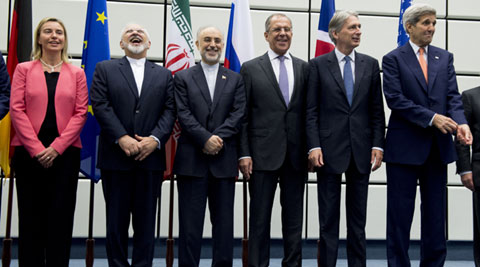

The 70th anniversary of the atomic bombing of Hiroshima next month lends a certain symbolism to the announcement of the nuclear deal between Iran and the P5+1 (five permanent members of the UN Security Council and Germany). After more than two weeks of negotiations in Vienna, during which both breakdown and breakthrough seemed equally possible, a deal has been reached to limit Iran’s nuclear programme in return for the lifting of sanctions. This final agreement — following the provisional deal of April — was held up over the contentious issues of international supervision of Iran’s nuclear programme, the UN arms embargo and the pace of sanctions relief. Tuesday’s announcement followed a compromise whereby Tehran will allow UN inspectors to monitor its military sites, but their access will not be automatic and requests for access can be challenged by Tehran. While sceptics are likely to pounce upon this, it’s a climbdown for the Iranians, who had vowed not to allow the IAEA into their military sites. Tehran has further agreed that, should it be found in violation of the deal, sanctions can be restored within 65 days. The UN arms embargo and missile sanctions stay in place for five and eight years respectively.
The nuclear dispute has been at the heart of the long confrontation between Washington and Tehran. Notwithstanding the veneer of multilateralism, therefore, the deal is primarily political and bilateral, necessitated by the need for constructive engagement in resolving one of the most difficult issues in an extremely volatile region. That’s why US President Barack Obama and Iranian President Hassan Rouhani see the deal as a triumph for diplomacy. Obama and Iranian Supreme Leader Ali Khamenei deserve credit for persisting with the negotiations, despite stiff opposition in both capitals. If Obama sought to break from congealed ideological narratives about the Middle East in America, Khamenei cut enough room for Rouhani to explore a compromise. Otherwise, enforcing rigorously monitorable restrictions while ending one of the most expansive sanctions regimes could have remained an insurmountable obstacle.


