
Opinion Why security situation in J&K demands a unified command
The desired outcomes for successful counter-terrorism in the region need to be a balanced blend of tactical operations by men in uniform and psychological operations that address the people of J&K.
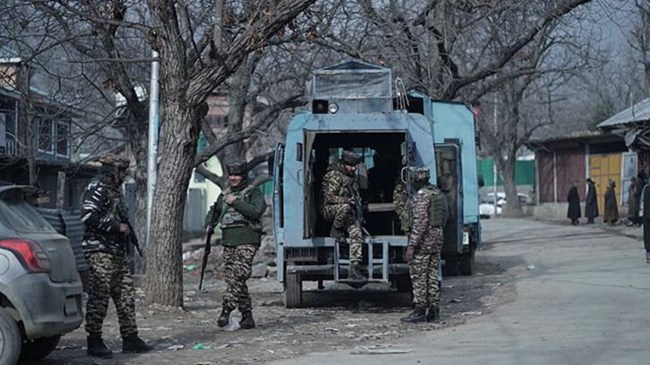 Amidst recent security concerns, the J&K LG, on February 12, chaired a high-level security meeting in Srinagar. (Express Archive Photo)


The developing security situation – since the beginning of February — on the line of control (LoC) in the Jammu region has been worrying. On February 1, the army successfully neutralised two terrorists attempting to cross the LoC in the Khari Karmara sector, Poonch. On the night of February 4-5, an infiltration attempt in Poonch’s Krishna Ghati sector was foiled when a suspected terrorist triggered a landmine. On February 8, an army patrol was fired upon near Baratgala in the Keri sector of Rajouri by suspected terrorists from across the LoC in a possible bid to infiltrate or with the intent of carrying out a stand-off fire assault. Another instance of sniper fire from across the LoC injuring an Indian soldier was reported on February 10 at a forward post in the Kalal area of the Nowshera sector. A day later, an IED blast was reported in the Laleali area in the Akhnoor sector on February 11, killing two soldiers of the Indian Army, including a captain. On February 12, a ceasefire violation by the Pakistani Army was reported along the LoC in the Balakote area of Jammu’s Mendhar sub-sector in the Poonch district. The emerging pattern is that of an attempt to disturb the status quo all along the LoC in the Jammu region with obvious, nefarious designs in the hinterland.
As per media reports, Pakistani troops resorted to unprovoked firing, prompting the Indian army to give a befitting response. Reports have also indicated that there is intelligence suggesting an increase in the number of terrorists in launchpads in PoK. There is nothing peculiar about such developments, which are part of the traditional playbook comprising ceasefire violations to aid infiltration bids, waiting terrorists in launchpads, stand-off fire assaults, tactical level operations by border action teams and resultant escalation. Of course, such actions by the Pakistan Army over the last fortnight or so hurt the ceasefire between India and Pakistan. They have also underlined that developments along the LoC are likely to have a direct bearing on the security situation in the hinterlands of J&K.

In the context of this developing situation, the army, paramilitary, state police and various intelligence agencies are the direct stakeholders. Indirectly, of course, the local population plays multiple roles – from sufferers to facilitators; for the terrorists as guides and over-ground workers and for the security forces as a source of human intelligence or HUMINT.
Amidst recent security concerns, the J&K LG, on February 12, chaired a high-level security meeting in Srinagar. The meeting was attended by DGP J&K, Nalin Prabhat; ADGP Hqrs, MK Sinha; ADGP CID, Nitish Kumar; IGP Kashmir, Vidhi Kumar Birdi; IGP Crime, Sunil Gupta; IGP Security, Sujit Kumar; IGP Railways, Vivek Gupta; Range DIGs, SSPs, Commandants of Armed Police Battalions, in person and through virtual mode.
As was brought out, since the security apparatus facing the challenge involves various agencies from the army to paramilitary to state police to civilians, the attendance of the LG’s meeting leaves one wondering as to why the representatives from agencies other than state police were conspicuous by their absence. Combatting terrorists aided by Pakistan warrants a whole-of-government approach and different agencies cannot be seen as operating in silos.
Presently, the status in J&K is that the legislature, though responsible for the people, has no stake in the overall security arrangement, except for voicing concerns. Also, any infiltration that takes place has to have an army connect, which not only is deployed on the LoC but also counters infiltration in successive tiers and combats terror in the hinterland through Rashtriya Rifles units. Similarly, paramilitary units have their tasks cut out as part of the counter-terrorism campaign. Unless all the agencies operate in tandem, driven by unity of purpose, the outcomes shall always be wanting. The desired outcomes for successful counter-terrorism in the region need to be a balanced blend of tactical operations by men in uniform and psychological operations that address the centre of gravity — the people of J&K.
In the past, the erstwhile state had a structure of unified command in place, comprising the agencies with stakes. The unified command may be headed by the LG, although the CM is a better bet owing to the connection of his office with the people. In the same stead, since we have an elected legislature in J&K, it is time to reinstate the state police under the control of the CM in view of the police’s responsibility to the people. As a spin-off of making the state police accountable to elected representatives of the people, it shall be a confidence-building measure, paving the way to the restoration of statehood to J&K, as promised by the central government.
The writer is a retired Infantry officer with substantial years of service experience in J&K. He currently teaches at OP Jindal Global University, Sonipat, Haryana.

 Share
Share


