
Opinion Why Pahalgam? Asim Munir’s desperation is telling
Munir surely feels the pressures of an economy in a spiral, caged politicians and a restless population. His most important task — most desperate mission — is to keep the lid on the growing pressure. And the only way he sees of doing this is to create fear and hatred for India.
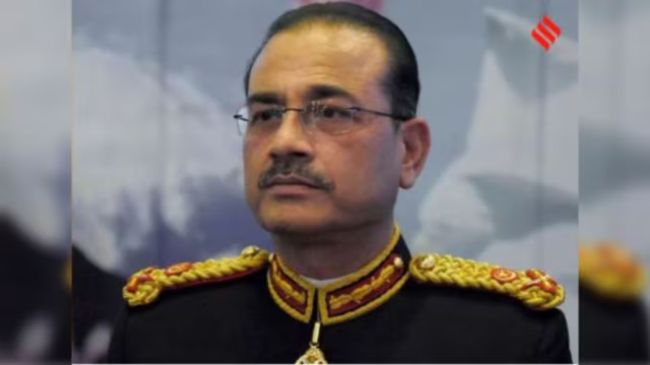 Pakistan army chief General Asim Munir. (File Photo)


Over the past few days, there has been some speculation over the reasons that led the Pakistan military leadership to allegedly order the Pahalgam attack of April 22.
We might achieve greater accuracy if we shift our stance to perceive the target from another angle. In nature and scale, the Pahalgam action was way over the top, almost an act of desperation. What could have motivated an order to upscale action above and beyond the normal pattern? Especially when adverse consequences for Pakistan could far outweigh any tactical psychological gain over India? Pahalgam does not make much sense as retaliation for Baloch insurgent activity (which Pakistan alleges is instigated by India) or as something connected with Army Chief General Asim Munir’s consolidation of his position or otherwise.

It does make sense as a means to jolt ordinary Pakistanis back to the role the military has prescribed for them. To be loyal subjects who must live in perpetual fear of the Indian bogeyman and in perpetual gratitude to the holy warriors who protect them. An attack that goads India into fury fits the bill. There is nothing that Rawalpindi dreads more than the prospect that its subjects will finally comprehend the fraud perpetrated on them for 78 years and stop providing nourishment to the uniformed parasites.
There have been signs that Pakistani civil society has been moving in that direction. The infatuation with Imran Khan on both sides of the border is probably misplaced, but there is no denying that the outrage at his ouster was strongly infused with disgust for the military. People also tend to forget that the politicians currently in office have spent years trying to curb the military and are at present only in uneasy accommodation with it. It is unthinkable that Dinesh Kaneria could have made the statements attributed to him unless he felt that the mass force of society was behind him.
Objective conditions leading people to become fed up with the way the country has been run are easily identifiable. The economy is stagnating, and avenues for a breakout are not opening. China has finally had enough of pushing investments down an endless drain of corruption. The Arabs learned the lesson even before and are not interested in doing more than tossing a few crumbs of charity. Migration to the United States and Europe is now in jeopardy, and there are hardly any goods that the Pakistanis can sell.
Pakistan’s options are narrowing to a point where normality with India and conversion of itself into a transit route between the subcontinent, West and Central Asia might be the only way forward. Their young cricketers, actors and software engineers can see that a switch around can lead to prosperity, whereas on the current course, they are headed for a dead-end. And in all this, there is only one constant – a military that not only feels entitled to an unfair share of national resources for professional purposes but also for the pleasures of its personnel. Will the military keep grabbing agricultural land for defence housing societies as the number of retirees grows?
Munir surely feels the pressures boiling beneath his skin. His most important task — most desperate mission — is to keep the lid on the growing pressure. And the only way he sees of doing this is to create fear and hatred for India. This is not to say that we should not be provoked by the atrocity committed in Pahalgam, but only to suggest that many options may be available. We don’t need to only kick Munir where it hurts. We can also squeeze him.
(Kesava Menon is a journalist who was once based in Pakistan. He is the author of the book ‘Never Tell Them We Are The Same People: Notes On Pakistan’)

 Share
Share


