
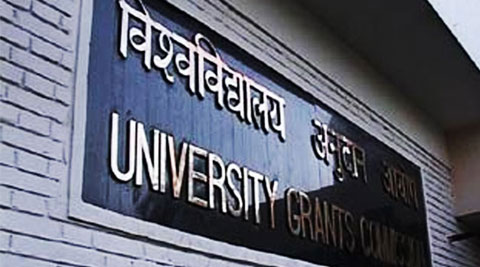
The UGC’s role in higher education has been a talking point recently. It started with the rollback of Delhi University’s four-year undergraduate programme, then came up again with regard to degrees being offered by IISc Bangalore and some other institutions. Now, the commission’s letter to the IITs on the conformity of their degrees with those recognised by the UGC has generated more controversy.
The UGC Act applies to “universities”, as defined in Section 2(f): “‘university’ means a university established or incorporated by or under a Central act, a provincial act or a state act, and includes any such institution as may, in consultation with the university concerned, be recognised by the commission in accordance with the regulations made in this behalf under this act”. In Section 3, deemed universities are defined and also included in the purview of the UGC. That the IITs are not universities and the provisions of the act do not apply to them is implied in Section 22(1): “The right of conferring or granting degrees shall be exercised only by a university established or incorporated by or under a Central act, a provincial act or a state act or an institution deemed to be a university under Section 3 or an institution specially empowered by an act of Parliament to confer or grant degrees.” The IITs fall under the last category, institutions specially empowered by an act of Parliament to confer or grant degrees. However, Section 22(3) states, “For the purposes of this section, ‘degree’ means any such degree as may, with the previous approval of the Central government, be specified in this behalf by the commission by notification in the official gazette.” So if we take sections 22(1) and 22(3) together, it implies that the IITs are bound to award only those degrees specified by the commission.
This is the only point on which the UGC has a say in IIT matters. So the UGC is right in asking the IITs to follow the provisions of Section 22 of the UGC Act.


I do not think the UGC aims to encroach on the autonomy of the IITs and other Centrally funded institutions, but that is the consequence of its recent steps.
The problem is that everyone agrees that “good” institutions should be allowed flexibility with their programmes and degrees, so that they can make changes according to emerging requirements. And that “bad” institutions need strict monitoring and restrictions to ensure minimum standards. But how does one distinguish the “good” from the “bad”? What follows is a rule to fit all, which becomes overly restrictive. Is there a way out? The UGC should go back to its earlier practice of only listing the names of degrees. All other restrictions, such as minimum duration, entry qualifications and guidelines should be issued as a separate rule applicable only to universities. But this means that while the IITs and NITs will be spared, all universities, good and bad, will lose flexibility.
There must be a wider debate on the best way to maintain standards while ensuring flexibility. Perhaps accreditation could play a role in maintaining standards, reducing the need for regulation. The fact that education is on the concurrent list makes the problem complex.
The writer, a former director of IIT Guwahati, is mentor director, IIIT Guwahati
express@expressindia.com


