
Opinion The humane economist
Arjun Sengupta was our conscience in the corridors of power
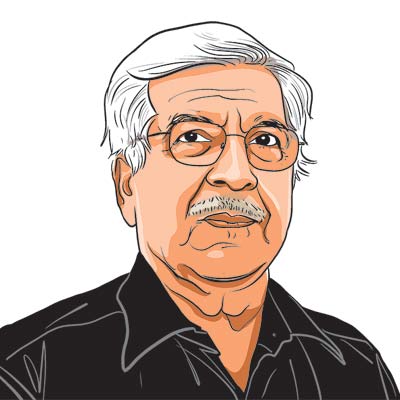

When Arjun Sengupta passed away unexpectedly,I lost a real and old friend. I knew him from a time when he was not the diplomatic,soft-spoken,somewhat saintly figure he had come to be,but a Delhi University firebrand. He was to join the government,and his first hour of glory was to help P.N. Dhar and Sukhomoy Chakravarti build bridges with the nascent state of Bangladesh. In the mid-70s,I went on deputation to the Planning Commission,heading its Perspective Planning Division. My office was the adda for university economists working with the government. Arjun was,by then,well on his way to being the strategist. He was working for the then commerce minister,Pranab Babu. N.K. Singh,then a deputy secretary,would also come. Arjun knew the tricks that modellers play. He was all for the basket of currencies to float the rupee and regularise excess capacity,and was building up the case for later reform including the matter of minimum scale. He was our industrial conscience in those days. He was also the first one among us to wear safari suits. When a member of the lunch adda nonchalantly asked why he was wearing a blouse,he got some choice abuse in return.
When I told him I was going back to my research job,he told me that most people dont leave the laddus in Delhi. I went anyway,and he went to the prime ministers office. I would say no when he wanted me back,until he arranged for me to chair the Agricultural Prices Commission and then worked on Raksha,my wife,to persuade me not to be a stick-in-the-mud. That stint was the best time we had together. We would lunch together once a week. He was not happy about the 1982 IMF loan and wanted much to be done for agriculture and small farmers. We plotted and worked out the small farmers and landless labourers programmes,which the then PM,Indira Gandhi,told us was her constituency.

Arjun was in full throttle by this time,and his forte was the foundation of the 80s reform. By now,the miasma of misinformation on the period is lifting.
Arjun steered the two vital groups the Narasimhan Committee,which developed the architecture of giving up quantitative controls and replaced them with tariff and fiscal steps,and the Sengupta Committee on public sector reform. These were our own,not big bang IMF/ World Bank,reform initiatives. By now,his years of being a shadow to authority had given him the self-assurance and quiet,almost saintly tone he carried later. We were designing our own paths. Arjun was clear on the need for an arms-length relationship with the political authority in PSUs. K.V. Ramanathan,then planning secretary,went on a global tour and to formulate the idea of the MoU between the government company and the sarkar. In the Bureau of Industrial Costs and Prices,I worked on the details. Profit was not a dirty word but the public sector could work on other objectives. In the Narasimhan Committee,we worked in a different direction. Arjun was always clear that the strategic plan was not to be given up,but much else could,and should go. The long-range marginal cost was the principle that explained the long-term vision. Tariff and fiscal policy was to be tuned to that. Harmonisation was needed because if you were efficient and your input supplier was not,you would suffer with reform. So groups of related industries had to be reformed together. The BICP worked out examples,and the two committees found the path. Arjun Sengupta pushed it.
The prime minister was assassinated in October 1984,and that period took a toll on Arjun. Two years later at a breakfast in Boston,a well-known Indian psychiatrist was to say,Dr Sengupta,you are not adjusting very well from being one of the more powerful men anywhere. But Arjun did adjust and some of his best work was in the Planning Commission and later at JNU,where I invited him. The rest is recent history. When he walked down from giving a superb discourse on rights-based development and the rights of the unorganised worker at an Amartya Sen valediction,I told him,Saala,you can still be a brilliant economist. He prodded me and said,Saala,what else can one expect from a thug like you?
Farewell my friend you will be in saintly authority wherever you are,but I will miss you.
The writer,a former Union minister,is chairman,Institute of Rural Management,Anand express@expressindia.com
 Share
Share


