
Opinion The Goa fire exposed many abdications
Goans who migrated under Portuguese citizenship cannot raise their voices against development policies — whether in host states or in Goa — for fear of losing their OCI cards
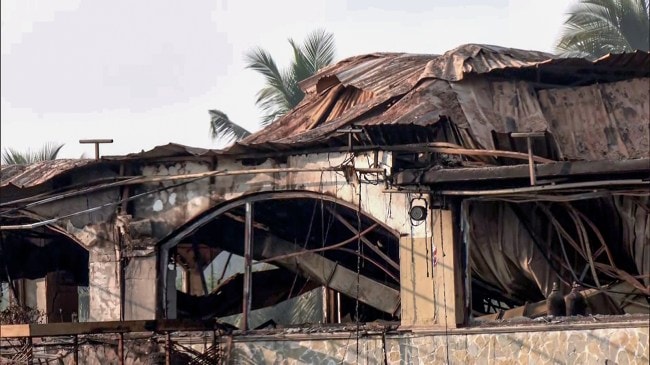 Charred remains of the Birch by Romeo Lane restaurant after a fire broke out, claiming the lives of 25 people, in Arpora on Monday. (Source: ANI)

The Arpora fire at the Birch by Romeo Lane nightclub that claimed as many as 25 lives is the visible flame of India’s broken development model that fuels migration, enables corruption, and serves the powerful. At the cremation of a migrant worker, grief mingles with reports of poor roads and scarce jobs in the home state. Yet, this is the story of countless migrant workers.
In Goa, many migrant workers live in shanties, their conditions worsening during the monsoons. On the eve of the recent Bihar elections, some vented: “We have rice, wheat, dal, channa, masoor, matar, moong — not just rice and coconuts like you. And fish, too — rohu and other freshwater fish.” Why then migrate? “Because we don’t have employment,” one worker, a fisherman back home in Bihar, explained: “There was tax-lordism. We couldn’t manage, and others captured our waters.”

This is not the first tragedy of this magnitude. On January 4, 2014, 31 workers — mostly migrants — died when the Ruby Residency building collapsed in Chaudi-Canacona. Many victims were from Jharkhand, reflecting the state’s large migrant workforce in Goa. Families bore the brunt of delayed justice. Yet, it did not receive the coverage the Arpora fire has, because the victims were poor workers, not tourists, not the likes of those patronising nightclubs.
The Jha Commission, then set up under the Commission of Inquiry Act to “fix responsibility”, cited structural flaws and administrative lapses of the Town and Country Planning Department and the local municipal body. Its report lies buried. Officers were suspended, then reinstated. Now, a magisterial inquiry committee has been constituted for Arpora. Will it
follow the same trajectory? Who are the perpetrators of what may rightly be called institutional murders?
Here lies the need to revisit the question of “outsiders”. Poor migrants are branded outsiders, but the real outsiders are the powerful who bring tainted money (and this includes some local big businesses, too), to corrupt Goa’s governance systems, once famed for a certain measure of integrity. The Luthras from Delhi, owners of the Birch by Romeo Lane, have reportedly been flouting zoning, noise pollution and licensing laws, among others, with complicity from those in power. Approvals are granted, rules bent, accountability evaded.
Those who raise these issues in Goa are conveniently branded xenophobic. Goans who migrated under Portuguese citizenship cannot raise their voices against development policies — whether in host states or in Goa — for fear of losing their OCI cards. The idea of a cancellation process, introduced under the Citizenship Amendment Act, 2019, is insidiously restrictive. Migrant workers in Goa face similar silencing. Lacking support systems, they remain vulnerable, pitted against Goan workers who see them as lowering labour standards or opportunities for employment. This wedge benefits the rich migrants — who expand unchecked — and their political patrons.
The Arpora fire is thus more than a local tragedy. It is a mirror reflecting the failures of national development policy, the corruption of governance, and the exploitation of the most vulnerable. Migrant workers die in silence, while accountability — even when recommended by commissions — lies buried.
The writer is a Goa-based advocate and human rights activist

 Share
Share


