
Opinion Why can’t doctors with disabilities pursue specialisation?
Decisions concerning disability policies have consistently been crafted by individuals without disabilities, marginalising the voices of those most affected. Hopefully, courts will uphold the constitutional principles of equality and non-discrimination
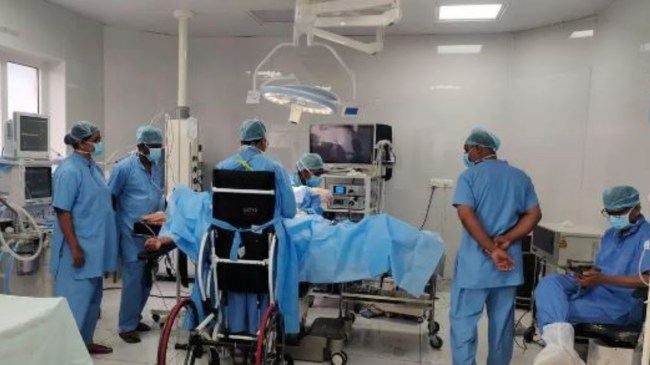 A pan-India group, Doctors with Disabilities: Agents of Change, submitted their recommendations, citing global best practices, but none of them were taken into consideration. (Representational Photo/File)


In the hallowed chambers of justice, the Supreme Court uttered words that reverberated hope: “Who knows, someday she may become an excellent doctor.” These words carried the weight of a compassionate verdict, helping a girl whose dreams of pursuing a career in medicine were nearly shattered. Denied admission to the MBBS course due to a 55 per cent language and speech disability, she faced the repercussions of the controversial National Medical Commission (NMC) guidelines, losing a year in the process. The medical board of the Post Graduate Institute of Medical Education & Research, Chandigarh (PGIMER), however, saw beyond the disability, finding no valid reason to bar her from studying medicine. Empowered by Article 142 of the Constitution, the Supreme Court intervened in Vibhushita Sharma v Union Of India, 2022 granting her admission to the next academic year. As she embarked on her journey in August of the preceding year, little did she realize that her battle was far from over.
With the dawn of the new year came the Gazette notification for the Post-Graduate Medical Education Regulations, 2023. Though the worldwide disability rights movement has ushered in a new era of thinking, one that advocates for people with disabilities to also be provided with equal opportunities, regrettably, the recent NMC Gazette outlining the guidelines for candidates with disabilities in postgraduation admission presents a disturbing trend. These new guidelines cast a shadow over the aspirations of numerous meritorious students with disabilities, including Sharma, as NMC regulations now barred those with equal to or more than a 40 per cent speech disability from pursuing postgraduation. Courts often refuse to intervene in guidelines prepared by medical experts. However, as we saw above, doctors may differ in their opinion. A pan-India group, Doctors with Disabilities: Agents of Change, submitted their recommendations, citing global best practices, but none of them were taken into consideration.

The NMC not only disregards the lived experiences of experts — doctors with disabilities — but this time, they have violated the recommendations of their own panel of experts too. The NMC guidelines state that individuals with autism and mental illness are currently not recommended due to the lack of an objective method to establish the presence and extent of mental illness. This stance echoes their position with the MBBS guidelines, which faced scrutiny from the West Bengal High Court in Tathagata Ghosh vs Union Of India (2018), where admission was granted to a candidate with mental illness. Similarly, the Delhi High Court in Neha Pudil vs UOI (2022) directed the NMC to explore the possibility of candidates with disabilities pursuing medical education, considering advancements in science and technology. This compelled the NMC to engage experts from the 16 NMC disability certification centres for NEET to revise the guidelines on December 19, 2022.
In contrast to the previous guidelines, which were formulated in consultation with a single psychiatrist, this revision involved two experts from premier institutions like the National Institute of Mental Health and Neurosciences (NIMHANS) and Dr Ram Manohar Lohia Hospital (RML). They criticised the guidelines as “untenable,” considering that the government had issued them for the assessment of mental illness through formal gazette notifications. The NMC’s previous position contradicts this, leaving it susceptible to legal challenges. If there is a lack of an objective method to establish the presence and extent of mental illness, how is it that the NMC disqualifies individuals with disabilities equal to or above 40 per cent from pursuing the MBBS course?
The experts agreed that individuals with disabilities who complete the MBBS programme, including passing entrance exams and all levels of exams and internships, would be just as capable of ensuring patient safety as those without disabilities. The minutes were also signed by the president of the Ethics & Medical Registration Board, former director, NIMHANS and a psychiatrist. However, these progressive guidelines were never made public (according to an RTI response), and the NMC opted for the old discriminatory format.
Another argument is that pigeonhole categorisations of 40 per cent or 80 per cent disability cut-offs (in specific disabilities, as mentioned), lack a nexus with the objectives of the Disability Act. Consequently, this categorisation violates Articles 14, 15, and 16 of the Constitution. The Preamble to the Constitution assures equality of opportunity to every person, and by neglecting to recognise talents at the PG level, the legislature’s move blatantly infringes upon constitutional ideals of a truly egalitarian society. The Gazette excludes affirmative action and unmistakably denies the right to inclusive, non-discriminatory access to education, and reasonable accommodation, as recognised by the SC in Vikash Kumar v UPSC (2021). Additionally, perplexing new terms such as “moderate” dyslexia have been introduced, which do not align with the provisions of the Act.
Decisions concerning disability policies have consistently been crafted by individuals without disabilities, marginalising the voices of those most affected. Even with the Chief Commissioner for Persons with Disabilities’ order (Satendra Singh v DGHS, 2023) directing the NMC to include doctors with disabilities in formulating new guidelines, discriminatory guidelines persist. The burden repeatedly falls on individuals with disabilities to demonstrate their competence and wage legal battles due to the inherent structural ableism within the NMC. We fervently hope that the courts will champion disability justice and uphold the constitutional principles of equality and non-discrimination. The judiciary must recognise the profound impact its decisions can have on shaping a more inclusive and just society.
Singh is co-chair of the International Council for Disability Inclusion in Medical Education. Tripathi is an advocate. Views are personal

 Share
Share


