
Opinion Marking the teachers
Measuring quality of university faculty cannot be on a numerical formula....

The University Grants Commission has recently issued a regulation detailing the metrics that should be used for hiring and assessment of performance of academic staff members in Indian universities. This is indeed an impressive document. It covers many disciplines and almost all designations encountered in a university.
Unlike a manufacturing organisation,a university is a knowledge organisation. A university deals with creation of knowledge as well as dissemination of knowledge. Besides these two activities,a university is also expected to develop a roadmap of the process of conversion of knowledge into wealth for a society. The creation of intellectual property from the knowledge created in a university is also an important activity. Developing a metric for recruitment and assessment of the academic activities indeed is a difficult task. Academicians all over the world are engaged in developing better models. No one has found the final solution not even the UGC regulation.

Let us start our discussion regarding the process of recruiting of academic staff. It is well known in India that there is a huge shortage of faculty in higher education. Many institutions,hence,try to compromise on qualifications and try to recruit the academic staff so as to ensure that there are an adequate number of teachers to teach the courses being offered by the organisation. Obviously,the UGC norms get violated. There is a big hue and cry about not confirming to the UGC regulations. In short,the question of setting up the metrics of recruitment for an ideal world is a good exercise. However,it may not work in the real world. Many professional courses in architecture,medicine,law and engineering do not get enough faculty members with doctoral or even masters qualifications. How does one reconcile this with such a situation? UGC will have to consider and address these ground realities.
There are some procedural variations not covered by the regulation. For instance,many institutions would like to advertise the posts on their website and recruit the faculty against a web advertisement. Such a situation is not covered in the regulation. In some cases,a department wishes to search in a specific area and indicate the posts available. In short,there is a search and not a reactive process of selection from those responding to an advertisement. In fact,due to an acute shortage of faculty,an organisation would like to pursue various options of recruitment with enormous flexibility. Unfortunately,the regulatory criteria reduce the flexibility rather providing it.
Developing numerical points for a variety of factors is a good scheme. However,it should be clear that the final evaluation should consider both the numerical score as well as quality potential of a candidate. In many cases the numerical weight of an applicant is proportional to the years spent as a post-doctoral researcher in a big group. However,the intrinsic scholastic level of the same person may be average. In such cases,the candidate looks good at the time of recruitment. However,the candidate does not blossom well as a faculty member who can impress students as well. In short,over-quantification of parameters in academic decision-making should be carefully tracked.
The process of assessment is even more dangerous. Scientists and academicians have developed several numerical schemes for measuring the productivity of their research. Once again,the perspectives vary from basic science areas to professional fields. In case of theoretical sciences,the productivity numbers are low as compared to applied areas. In case of professional fields,the activities related to technology development may not result in publications. In such cases,the same measure of productivity may not be applicable. In case of university teaching,student advising,research publications,research contracts,academic support activities,professional activities matter a lot besides the research work alone. In that sense,an approach of one metric fits all may not be successful.
In India,the academic world has been grappling with the issue of development of suitable metrics for performance evaluation of academic staff. In that sense,the UGC regulation is a step in the right direction. At least,a very comprehensive document covering all aspects has been put forward. It is hoped that the academic councils as well as the executive councils of different universities will study these regulations. The Association of Indian Universities should call upon the vice chancellors to review this regulation. Universities should discuss this regulation and try to see how it can be implemented for improving the quality of faculty and effectiveness of the process of recruitment and promotion of faculty members.
Transparency is a key element for successful implementation of the regulation. Academic administrators will have to develop a transparent process of recruitment and assessment based on the regulation guidelines. Communication with the academic staff is another key element. The details of the regulation need to be communicated effectively. It may be necessary to hold some workshops or seminars for explaining different parameters and numerical weights attached to these parameters. Finally,the academic community will have to become aware of the importance of this methodology and contribute towards its improvement.
UGC should also remain open for taking feedback from the academic world. In fact,the norms outlined in the regulation should be improved upon based on this feedback. If any flexibility is required to be introduced at a later stage,it should be possible for making the regulation more flexible. Assessment or performance evaluation process is something similar to a medical check-up. Both these activities are considered to be psychologically stressful. However,once the individual as well as the system gets acclimatised,the system becomes an effective tool for quality improvement. In short,the implementation of the regulation is indeed going to be stressful in the beginning. However,eventually it will be helpful to all.
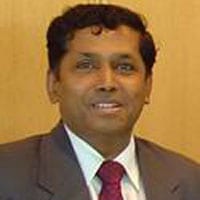
The writer is director of the Indian Institute of Technology,Kanpur. The views expressed are personal and do not represent policy statements of any organisation
express@expressindia.com
 Share
Share


